A closed backyard shed on a summer afternoon can run 20 to 30 degrees hotter than the air outside, and that heat cooks paint cans, warps plastic bins and speeds up rust on tools. The right vent for shed use is a pair: a low intake that lets cooler air in and a high exhaust that lets hot, moist air out. One vent alone rarely fixes the problem, because air needs a path in as well as a path out.
For most sheds up to about 10×12, two gable vents (one on each end wall) or a pair of soffit intakes plus a roof or ridge exhaust will do the job. Larger sheds, workshops and metal-roofed buildings often add a solar exhaust fan. The rest of this article covers how to size the openings, which vent types fit which roofs, how to deal with condensation, and how to do the work without a fall.
- Why a Vent for Shed Ventilation Matters
- How Shed Ventilation Works: Intake and Exhaust
- Types of Shed Vents
- Tools and Materials
- Step-by-Step: Installing a Gable Vent
- Working Safely on a Shed Roof
- Condensation on Metal Shed Roofs
- Storing Fuel and Chemicals in a Vented Shed
- Troubleshooting
- General Cost Ranges and When to Call a Pro
- Frequently Asked Questions
Why a Vent for Shed Ventilation Matters
Heat is only half the story. Sheds collect moisture from damp soil, wet lawn equipment and humid air, and when the temperature drops at night that moisture condenses on the underside of the roof. Metal roofs are the worst offenders: they can literally drip on your stored items by morning. Over time the result is mildew on wood walls, rusted hand tools, swollen particleboard shelves and a musty smell that never leaves.
Choosing a good vent for shed airflow also matters for safety. If you store gasoline, two-stroke oil mix, paint thinner, pool chemicals or fertilizer, vapors can build up in a sealed shed. Flammable vapors from fuel cans are heavier than air and collect near the floor, so a shed that holds fuel needs a low vent as well as a high one.
How Shed Ventilation Works: Intake and Exhaust
Warm air rises. Good shed roof ventilation uses that natural stack effect: cooler outside air enters through low openings (soffit vents, low wall vents or the lower half of a gable), picks up heat and moisture, and exits through high openings near the peak (ridge vents, roof vents or the upper portion of a gable vent). Wind adds pressure on one side and suction on the other, which helps cross-flow between two opposite gable vents.
Aim for balanced intake and exhaust, meaning roughly equal net free area in and out. If the exhaust area is much larger than the intake, a fan or ridge vent can pull air through gaps around the door, or even pull rain through a roof vent on the lee side. If the intake is much larger, hot air lingers at the peak.
Sizing the Openings
A common rule of thumb borrowed from attic ventilation is 1 square foot of net free vent area for every 150 square feet of floor, split evenly between intake and exhaust. For a 10×12 shed (120 sq ft), that is about 0.8 sq ft total, or roughly 58 square inches of intake and 58 square inches of exhaust. Check the “net free area” printed on each vent’s label, because screens and louvers block a lot of the nominal opening. For sheds that store fuel or get very hot, err on the larger side.
Types of Shed Vents
| Vent type | Role | Best for |
|---|---|---|
| Gable vent | Intake and exhaust (cross-flow) | Gable-roof sheds, easy wall install |
| Soffit vent | Intake | Sheds with overhangs |
| Ridge vent | Exhaust | Shingled gable roofs |
| Roof (box) vent or turbine | Exhaust | Any pitched roof |
| Low wall louver | Intake | Fuel storage, lean-to sheds |
| Solar exhaust fan | Powered exhaust | Large, hot or metal sheds |
Gable Vents
Gable vents are the simplest option because they go in a wall, not the roof. Mount one high on each end wall under the peak, cut the opening with a jigsaw, and fasten the louvered frame with the screen facing in. They work best when the wind blows along the shed’s length, and they need no roof penetration.
Soffit and Low Wall Vents
Soffit vents sit under the roof overhang and pull in air without letting rain in. If your shed has no overhang, small louvered wall vents near the floor do the same job. For sheds storing fuel or chemicals, a low vent is especially valuable because it lets heavier-than-air vapors escape.
Ridge and Roof Vents
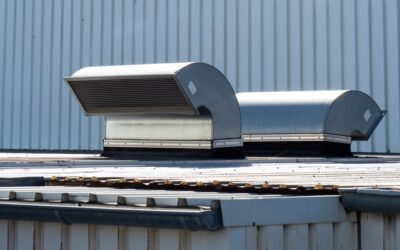
A shed roof vent at or near the peak is the most effective exhaust. Ridge vents run along the peak under a cap of shingles; box vents and turbines mount a foot or two below the ridge. Both require cutting the roof deck and flashing correctly, which is more demanding than a wall vent.
Solar Shed Exhaust Fans
A solar shed exhaust fan has a small panel that powers a fan when the sun is out, which is exactly when the shed is hottest. There is no wiring to the house, so no electrician is needed for a self-contained solar unit. Pair it with enough passive intake so the fan does not pull air (and dust or rain) through random gaps.
Tools and Materials
- Vents sized by net free area, plus screws or roofing nails
- Jigsaw or reciprocating saw, drill and hole saw
- Exterior sealant or roofing cement, and flashing if cutting the roof
- Tape measure, level and pencil
- Safety glasses, gloves and hearing protection
- A sturdy extension ladder or step ladder rated for your weight, plus a helper
Step-by-Step: Installing a Gable Vent
- Pick locations high on opposite end walls, centered under the peak and between studs or framing members.
- Hold the vent in place, level it and trace the inside opening.
- Drill pilot holes at the corners and cut the opening with a jigsaw.
- Run a bead of exterior sealant around the back of the flange (top and sides; leave small weep gaps at the bottom so water can drain).
- Screw the vent to the siding and framing, keeping the louvers angled down so rain sheds out.
- Repeat on the other end wall, then check from inside that the insect screen is intact.
For a roof vent, the steps are similar but the flashing matters more: the upper edge of the vent flange slides under the shingles above it, and the lower edge sits on top of the shingles below. If you are unsure about flashing, a roofer can do it quickly.
Working Safely on a Shed Roof
Short falls cause serious injuries. A shed roof is low, but it is often steep, slick with dew or pollen, and built from thin sheathing that may not hold your weight between rafters. Set an extension ladder on firm, level ground at about a 1-to-4 angle (1 foot out for every 4 feet up), extend it at least 3 feet above the roof edge, and have a helper steady the base. Keep three points of contact, and never stand on the top rungs.
Avoid walking on the roof when it is wet, windy or very hot. Work from the ladder where you can. If the shed is tall, the roof is steep or the sheathing feels soft, hire a roofer or handyman. On any building two or more stories high, leave roof work to a pro.
Condensation on Metal Shed Roofs
Metal roofs sweat because the thin panel cools quickly at night. Ventilation helps by moving moist air out before it hits the dew point, but it is not always enough. Options include a roof with a factory anti-condensation felt backing, rigid foam insulation board fastened under the roof, or a vapor barrier over the floor if the shed sits on soil. Keep wet mowers and gear outside to dry before storing, and add a low intake plus a high exhaust so the space dries each day.
Storing Fuel and Chemicals in a Vented Shed
Fuel cans, propane cylinders, solvents and pool chemicals each carry risks. Keep gasoline only in approved containers with caps closed, and store it away from any spark source such as a battery charger, electric heater or a fan motor. Never store propane cylinders inside an enclosed shed; follow the cylinder label, which typically calls for outdoor storage. Pool chlorine and acids must be kept separate from each other and from fuel. Low and high vents help clear vapors, but ventilation does not make an unsafe storage arrangement safe.
Troubleshooting
Still hot inside. Intake is too small, or all vents are high. Add low intake area equal to the exhaust.
Rain getting in. Louvers face the wrong way, flashing is reversed, or a fan is pulling rain through a vent. Correct the louver direction and balance intake with exhaust.
Wasps or rodents entering. Replace torn screens with metal mesh and seal gaps around the door.
Musty smell persists. The floor may be wicking moisture from soil. Improve drainage around the base and raise the shed on proper blocks or skids.
General Cost Ranges and When to Call a Pro
Basic gable and soffit vents cost from a few dollars to a few tens of dollars each. Ridge vent material for a small shed is modest, and solar shed exhaust fans commonly range from under a hundred to a few hundred dollars. A handyman or roofer can often add vents to a shed in a few hours for a modest labor charge. Call a pro if the roof is steep or high, if you would need to walk on questionable sheathing, or if you want a hardwired fan or light (that is work for a licensed electrician, with any required permit).
Frequently Asked Questions
How many vents does a shed need?
At least two: one low intake and one high exhaust, or a gable vent on each end wall. Larger sheds may need several of each.
Is a ridge vent or gable vent better for a shed?
Ridge vents exhaust more evenly on shingled gable roofs, while gable vents are easier to install and need no roof cut. Both need intake to work well.
Do solar shed fans work?
Yes, they run hardest when the sun heats the shed. Pair them with enough passive intake area.
How do I stop condensation on a metal shed roof?
Combine low and high vents with insulation or an anti-condensation backing, and keep wet equipment out until it dries.
Is it safe to store gasoline in a shed?
Only in approved, closed containers, away from spark sources, in a shed with low and high ventilation. Keep propane cylinders outdoors per their labels.