Roofers and building scientists argue about this one constantly, and homeowners get stuck in the middle. You install a new ridge vent, look up and see the old louvered gable vents at each end of the attic, and wonder whether they should stay open. Running a ridge vent with gable vents is not automatically wrong, but in many homes the gables let air take a shortcut that leaves the lower part of the attic poorly ventilated.
The short answer: if you have good continuous soffit vents and a ridge vent, closing the gable vents usually improves airflow across the roof deck. If your soffits are blocked, missing or very limited, leave the gables open until you fix the intake, because blocking them could leave the attic with too little ventilation. The deciding factor is intake, not exhaust.
- How a Ridge Vent With Gable Vents Moves Air
- When to Close the Gables
- When to Leave the Gables Open
- Balancing Intake and Exhaust
- Tools and Materials to Block Gable Vents
- Step-by-Step: Closing Gable Vents From the Attic
- Troubleshooting Attic Ventilation
- Cost Ranges
- When to Call a Pro
- Frequently Asked Questions
Understanding why requires a quick look at how attic air moves. Once that is clear, you can decide whether to block the gables, how to do it and how to confirm the attic is healthier afterward.
How a Ridge Vent With Gable Vents Moves Air
A balanced attic ventilation system pulls cool outside air in low at the eaves through soffit vents and lets warm, moist air escape high at the ridge. Heat rises, and wind passing over the ridge creates suction, so air flows up the underside of the roof deck from eave to peak. That sweeping path cools the shingles in summer and carries away moisture in winter.
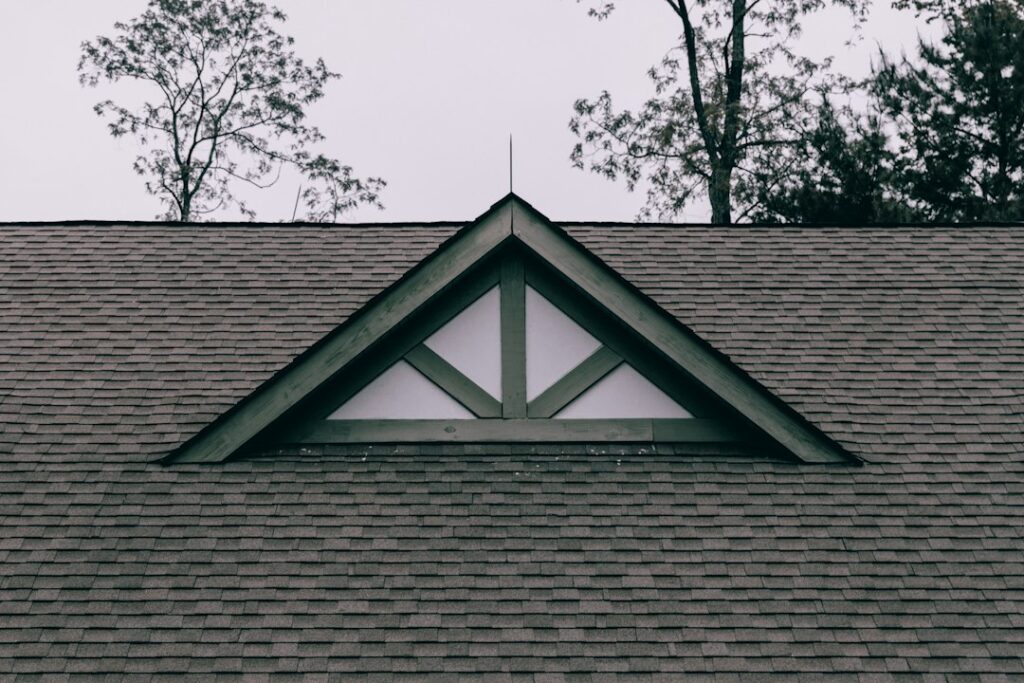
Gable vents are openings in the end walls, usually near the peak. On their own, they ventilate by cross-flow: wind blows in one gable and out the other. Mix the two systems and the air can behave differently. Because a gable vent sits high in the attic, close to the ridge, the ridge vent may pull air in through the gables instead of the soffits. Air enters at one end, travels a short distance across the top of the attic and exits at the ridge.
What short-circuiting means
This shortcut is called short-circuiting. The ridge vent is doing its job of exhausting air, but the replacement air comes from the nearest, easiest high opening rather than from the eaves. The lower third of the roof deck, along the eaves, gets little airflow. In winter that is where frost and condensation tend to collect, and in summer it is where heat builds up against the shingles.
Wind direction makes it worse. When wind blows straight at a gable, it can push air in that gable and out the ridge or the opposite gable, again bypassing the soffits. In some storms, wind-driven rain or snow can also enter through gable louvers.
When to Close the Gables
Close or block the gable vents when all of these are true:
- You have continuous or well-distributed soffit vents along the eaves.
- Insulation baffles keep the soffit openings clear so air can flow up into the attic.
- The ridge vent runs most of the ridge length and is not blocked by sheathing that was never cut back.
- Intake area is equal to or greater than exhaust area.
In that setup, the soffits and ridge form a complete system, and the gables are simply competing exhaust or intake points. Blocking them forces all replacement air to come from the eaves, which is what you want.
Many roofing manufacturers recommend against mixing exhaust types, such as ridge vents plus gable vents or box vents, on the same attic space for exactly this reason. Check the ventilation instructions for your shingles too, since some warranties reference proper ventilation.
When to Leave the Gables Open
Leave the gables open if the attic has little or no soffit intake. Some older homes have no soffit overhang at all, or the soffits are solid wood with no vents. Others have vented soffits that are buried under blown insulation. In those cases, the gables may be the only meaningful source of air, and closing them would leave the ridge vent starving for intake. A starved ridge vent can actually pull conditioned air up from the house through ceiling gaps, light fixtures and attic hatches, wasting energy and carrying moisture into the attic.
Also leave them open while you are in the middle of a project. If you plan to add soffit vents later, wait until that work is done before blocking the gables. Homes with unusual roof shapes, such as hip sections, dormers or split attics, may need a ventilation plan tailored to each space.
Balancing Intake and Exhaust
A common rule of thumb calls for about 1 square foot of net free vent area for every 150 square feet of attic floor, or 1 per 300 when a vapor retarder is installed or the vents are balanced between high and low. Split the total roughly in half between intake and exhaust, with intake equal to or slightly greater than exhaust. Vent products list their net free area per foot or per unit, so you can add them up. Check your local code, since requirements vary.
Example: a 1,500 square foot attic using the 1-in-300 ratio needs about 5 square feet of total net free area, roughly 2.5 square feet at the soffits and 2.5 square feet at the ridge. If the soffits provide less than that, more soffit vents come first. Adding exhaust without intake does not help.
Tools and Materials to Block Gable Vents
- Rigid foam board or exterior plywood cut to the vent opening
- Housewrap or a weather-resistant barrier for an exterior seal
- Construction adhesive, screws or cap nails
- Canned spray foam (low-expansion) for small gaps
- Flashlight, dust mask or respirator, gloves and safety glasses
- Ladder rated for your weight plus tools, or attic walk boards
Step-by-Step: Closing Gable Vents From the Attic
- Inspect first. Go into the attic during the day and confirm daylight at the soffits and along the ridge vent. Look for baffles at the eaves and check for frost stains, mold or wet insulation.
- Fix intake issues. Pull insulation back from the eaves and install baffles where they are missing so air can enter freely.
- Measure the gable openings. Measure the inside of the vent frame between studs.
- Cut panels. Cut rigid foam or plywood to fit snugly inside the opening, slightly behind the louver.
- Install and seal. Fasten the panel to the framing and seal the edges with spray foam or tape. Leave the exterior louver in place for appearance.
- Monitor. Check the attic during the next cold snap and the next hot spell for frost, condensation or excessive heat.
Blocking from the inside is reversible, which is helpful if you later decide the attic needs the gables after all. Some homeowners replace the louvers with solid panels on the outside instead, which also keeps wind-driven rain out.
Attic and ladder safety
Step only on joists or walk boards; one misstep through drywall can cause a fall and a costly ceiling repair. Attics get dangerously hot in summer, so work early in the morning and stay hydrated. Wear a respirator around insulation, and watch for exposed nails through the roof deck. Gable vents are often high on the end wall, so use a stable ladder on solid ground with three points of contact and never overreach. On two-story homes, leave exterior gable work to a pro with proper equipment. Some older attics contain vermiculite insulation, which may contain asbestos; do not disturb it until it has been tested. If a gable vent has an attic fan wired to it, turn off the breaker and confirm power is off with a non-contact voltage tester before working near it.
Troubleshooting Attic Ventilation
- Frost on nails or the roof deck in winter: moist house air is leaking into the attic. Seal ceiling penetrations and check that bath fans vent outdoors, not into the attic.
- Hot second floor in summer: check intake first, then insulation depth. More exhaust alone rarely fixes it.
- Water stains near the gable vent: wind-driven rain is entering. Blocking or upgrading the louver solves it.
- Ridge vent not drawing: confirm the sheathing slot under the ridge vent was cut wide enough and is not blocked.
- Powered attic fan plus ridge vent: a fan can pull air in through the ridge vent and from the house. Many roofers remove or disable fans when a ridge vent is installed.
Cost Ranges
Blocking gable vents yourself costs very little, usually just a sheet of foam board, some adhesive and sealant. Adding soffit vents or baffles is also inexpensive as a DIY project. Professional ventilation work varies widely; a full intake upgrade with new vented soffit can run from several hundred dollars to a few thousand, depending on eave length, height and access.
When to Call a Pro
Call a roofer or energy auditor if you see mold on the roof deck, widespread frost, rotted sheathing or ice dams. A pro can measure attic temperatures, run a blower door test to find air leaks and design a balanced plan for a ridge vent with gable vents or a fully converted system. Mold covering more than about 10 square feet calls for professional remediation after the moisture source is fixed.
For most homes with clear soffit intake, closing the gables is a simple upgrade that lets the ridge vent work the way it was designed. Check intake, block the shortcut and confirm with a seasonal look in the attic.
Frequently Asked Questions
Can you have a ridge vent with gable vents?
Yes, but the gables can short-circuit airflow. With good soffit intake, closing the gables usually improves ventilation across the whole roof deck.
Will closing gable vents make my attic hotter?
Not if soffit intake is adequate. Air then flows from the eaves to the ridge and cools the whole roof deck. Without soffit vents, keep the gables open.
Do gable vents let rain in?
They can during strong wind-driven storms, especially on the side facing the wind.
Should I remove the gable louvers?
Usually not. Blocking from the inside keeps the look of the house and is easy to reverse.
How do I know if my soffit vents are working?
Look for daylight at the eaves from inside the attic and check that baffles keep insulation away from the vents.