
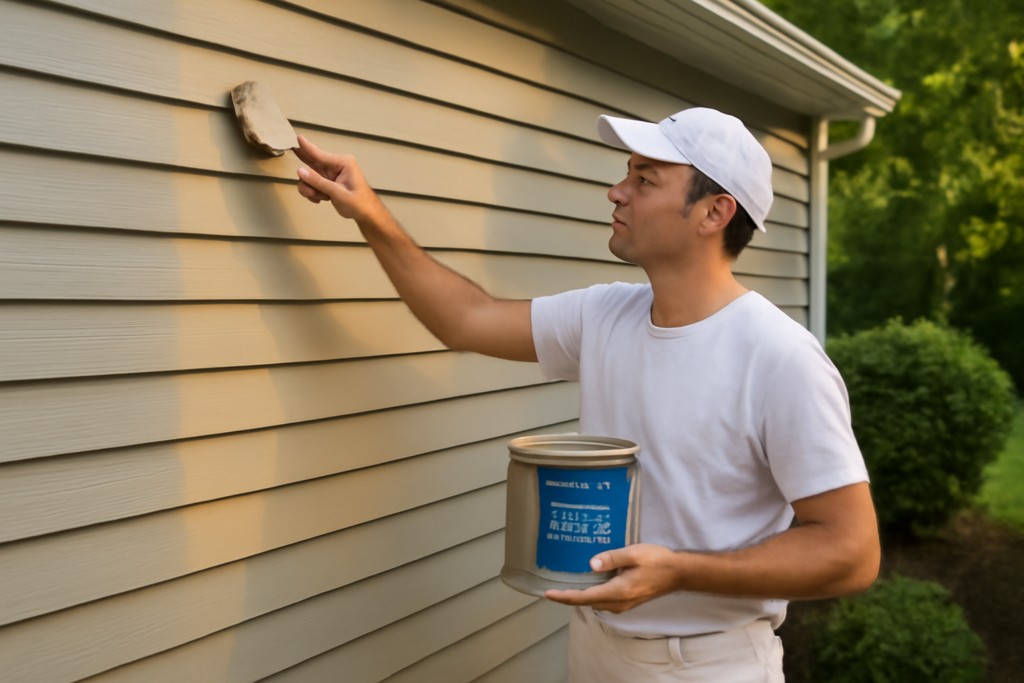
Sherwin-Williams vinyl siding paint makes it possible to give faded or dated siding a fresh look for a fraction of the cost of full replacement. The catch that surprises most homeowners is that you cannot simply slap any exterior paint on vinyl and expect it to last. Vinyl expands and contracts dramatically with temperature, and picking the wrong product or color can cause warping, peeling, or buckling. Done correctly with the right coating, though, painting vinyl siding is a legitimate, long-lasting home upgrade.
Part of our Paint & Walls guide — explore the full guide →
- Can You Actually Paint Vinyl Siding?
- The Color Rule That Prevents Warping
- Choosing the Right Sherwin-Williams Products
- Prep Work That Determines Success
- Application Best Practices
- How Long Will It Last?
- When to Call a Pro
- Why Special Siding Paint Matters
- Prep and Application for a Lasting Finish
- How to Choose Sherwin Williams Vinyl Safe Colors
Can You Actually Paint Vinyl Siding?
Yes, and paint manufacturers including Sherwin-Williams formulate products specifically for it. The key is using an acrylic and urethane-based exterior coating engineered to flex with the siding. Sherwin-Williams offers exterior lines suitable for vinyl, and their VinylSafe color technology is the feature that makes the whole project viable. Standard exterior latex on vinyl tends to crack because it cannot move with the substrate.
Painting is most worthwhile when your siding is structurally sound but faded, chalky, or simply the wrong color. If panels are cracked, warped, or brittle, paint will not fix them, and you are better off replacing those sections first.
The Color Rule That Prevents Warping
This is the most important concept in the entire project. Vinyl siding absorbs heat, and dark colors absorb far more. Paint a light-colored panel a dark shade and it can heat up beyond what the vinyl can handle, causing it to warp, buckle, and pull away from the wall. That is a permanent, expensive mistake.
Sherwin-Williams developed VinylSafe paint colors precisely to solve this. The VinylSafe palette includes over 100 colors, some darker than traditionally allowed, that are formulated with special pigments and reflective technology to keep the siding within a safe heat range. The rule of thumb: never paint vinyl a color darker than its original shade unless you are using a VinylSafe-approved color rated for it.
- Safe: repainting in the same or lighter tone
- Safe with VinylSafe: approved darker colors from the certified palette
- Risky: any dark color outside the VinylSafe system
Choosing the Right Sherwin-Williams Products
For a durable finish, use a quality exterior acrylic latex from Sherwin-Williams that lists vinyl as a suitable substrate, paired with a compatible bonding primer where needed. Their Emerald and Duration exterior lines are premium, long-lasting options many pros trust for siding work. Always confirm the specific product’s data sheet lists vinyl and offers VinylSafe colors before you buy.
Expect to pay roughly $50 to $90 per gallon for premium Sherwin-Williams exterior paint. A typical two-story home needs 8 to 15 gallons for two coats, so budget $400 to $1,200 in materials, plus primer if the surface requires it.
Prep Work That Determines Success
No coating bonds to dirty, chalky vinyl. Preparation is at least half the job, and skipping it guarantees peeling.
- Wash the entire surface thoroughly. Vinyl develops a chalky film and collects mildew, both of which prevent adhesion. Use a vinyl-safe cleaner or a mild TSP substitute and rinse completely.
- Treat any mildew with an appropriate cleaner and let the siding dry fully.
- Scrape or sand any loose material, and repair or replace damaged panels.
- Mask windows, trim, and landscaping, and let the siding dry for at least 24 hours after washing.
Do not pressure-wash so aggressively that you drive water behind the panels. A garden hose and a soft brush, or a low-pressure setting, is safer.
Application Best Practices
Timing and technique matter as much as product. Paint when temperatures are between 50°F and 90°F, avoid direct blazing sun on the surface, and never paint if rain is expected within 24 hours. You can spray, roll, or brush, but spraying with back-rolling gives the most uniform finish on textured vinyl.
Apply two thin coats rather than one heavy coat. Thin coats cure better, flex with the siding, and resist sagging. Let the first coat dry per the label, usually a few hours, before applying the second. Rushing the recoat window traps solvents and weakens the finish.
How Long Will It Last?
Done right, painted vinyl siding with a premium Sherwin-Williams exterior coating holds up for 10 years or more before it needs attention. Southern and western exposures that take the most sun may fade sooner. The two things that shorten the lifespan are poor prep and using the wrong dark color outside the VinylSafe system.
Compared to residing a home, which can run $8,000 to $20,000 or more, a quality paint job at a few thousand dollars all-in is a compelling value. Just respect the material’s limits. Choosing Sherwin-Williams vinyl siding paint with a VinylSafe color, prepping the surface meticulously, and applying two thin coats in mild weather is the formula that keeps siding looking sharp for a decade.
When to Call a Pro
If your home is two stories or more, or if the siding shows widespread damage, hiring a professional painter is money well spent. They have the equipment to reach high areas safely and the experience to spot issues before they become failures. For a modest single-story home in good condition, though, a careful DIYer can absolutely tackle this project over a long weekend and save considerably on labor.
Why Special Siding Paint Matters
Painting vinyl siding used to be risky because standard exterior paint could cause the vinyl to warp. Vinyl expands and contracts significantly with temperature, and a dark ordinary paint absorbs extra heat, making the panels buckle. Sherwin-Williams addresses this with its VinylSafe technology, a line of colors formulated to be applied to vinyl siding, including some darker shades, without driving the surface temperature past what the material can handle.
Staying within a manufacturer-approved VinylSafe color palette is the single most important rule, because painting vinyl a non-approved dark color can void the siding warranty and warp the panels.
Prep and Application for a Lasting Finish
A durable result on vinyl siding is mostly about preparation and conditions. Wash the siding thoroughly to remove chalky oxidation, dirt, and mildew, then let it dry completely, since paint will not bond to a chalky or grimy surface. Apply a bonding primer if the siding is heavily faded or chalking. Paint on a mild, dry day out of direct hot sun, avoiding extreme heat or cold that interferes with curing. Use a quality acrylic exterior paint like Sherwin-Williams Emerald or Duration in an approved color, applied in thin, even coats with a sprayer, brush, or roller. Two thin coats outlast one heavy coat. Done correctly, a good vinyl-siding paint job refreshes a home’s whole exterior for a fraction of the cost of replacement siding and holds up for many years.
How to Choose Sherwin Williams Vinyl Safe Colors
Sherwin-Williams lists its VinylSafe palette at about 100 colors, each shown with an SWVS number, and it includes a limited set of darker shades formulated to resist warping on sound, stable vinyl. You pick a color from that palette, then have it mixed into one of the exterior lines the company names as compatible. Colors outside the palette carry the old rule: match the siding or go lighter.
Which paints the colors can be mixed in
The current VinylSafe page lists Emerald Rain Refresh, Emerald, Duration, Resilience, Latitude and SuperPaint exterior latex paints, plus SnapDry Door and Trim Paint for doors. Product lists change, so confirm the line and the color together at the store before the order is tinted. A VinylSafe color mixed into a product that is not on the list loses the protection that makes darker shades possible.
Narrowing the palette for your house
| Starting siding | Goal | Practical approach |
|---|---|---|
| White or pale cream | Fresh but similar look | Any light palette color; the lowest heat risk |
| Faded beige or tan | Modern update | Mid-tone grays and greiges from the palette |
| Any light shade | Dramatic change | Only the darker colors in the VinylSafe range, never an outside dark color |
| Already dark vinyl | Refresh the same look | Match closely within the palette |
Testing and practical checks
- Sample on the sunniest wall. Paint a large board or a panel section on the south or west side and judge it in morning and late-afternoon light, since exterior colors read lighter outdoors than on a chip.
- Coordinate fixed elements. Roof shingles, stone, brick and window frames do not change, so hold the sample next to them.
- Check the siding warranty. Some siding makers limit or void coverage after painting, so read your warranty before you commit.
- Confirm the substrate. Loose, cracked or warped panels must be fixed first, because the darker-color claims assume a stable surface.
- Plan trim and door colors from the same palette. Vinyl shutters, trim and doors face the same heat issue as the siding.
Store staff can pull the VinylSafe swatches and print the SWVS number on your order, which makes repeat purchases for touch-ups easy. Keep that number with your house records so the exact color can be remixed years later.


