The sliding-door closet is a design compromise: you get a wide opening that fits flush against the wall, but you can only ever see and reach half of it at once. Smart sliding door closet organization works around that fundamental limitation instead of fighting it, placing your daily items where the panels let you reach them and your rarely-used items behind the always-blocked overlap. Good sliding door closet organization can make a shallow, awkward closet hold as much as a walk-in twice its size.
Part of our Windows & Doors guide — explore the full guide →
- The Core Problem With Sliding Door Closets
- Measuring and Mapping Your Reach Zones
- Building the Right System Inside
- Storage Accessories That Fit the Format
- Lighting a Closet You Can Only Half-See
- Upgrading the Doors Themselves
- Keeping It Organized Over Time
- Using Vertical and Floor Space You Are Ignoring
The Core Problem With Sliding Door Closets
Understand the constraint before you plan the fix. Two or three panels ride on a track and overlap, so one section of the closet, typically the center where the panels bunch, is always hidden behind a stationary panel. You can reach the left third or the right third, but never the whole opening simultaneously, and the far corners behind the frame are the hardest to access.
This changes how you should zone the space. In a hinged-door or walk-in closet you spread everything evenly. In a sliding-door closet you deliberately put high-frequency items, work clothes, everyday shoes, at the two accessible ends, and reserve the perpetually-blocked center for long-term storage: off-season bins, luggage, or seldom-worn formalwear. Plan around the reach zones and the closet suddenly works with you.
Measuring and Mapping Your Reach Zones
Start with a tape measure and a quick sketch. Note the total opening width, the closet depth, and the ceiling height, then mark where each panel sits when slid fully to one side. Those marks define your accessible zones. Standard sliding-door closets are 24 inches deep, which is just enough to hang clothes on a front-to-back rod without crushing them.
Sketch the zones on paper: left-access, right-access, and the center overlap. Assign each zone a purpose based on how often you reach it. Common planning dimensions help here:
- Double-hang rods: upper at 81 inches, lower at 40 inches for shirts and folded pants.
- Single long-hang rod: 68 to 70 inches for dresses and coats.
- Shelf depth: 12 to 16 inches; deeper shelves bury items in a shallow closet.
- Rod projection from wall: 12 inches to center so hangers clear the back.
Building the Right System Inside
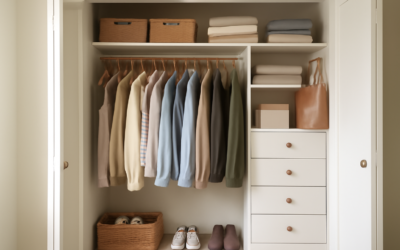
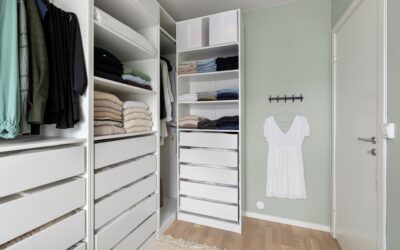
A single rod and a shelf waste most of a sliding-door closet’s cubic space. Replace it with a system that stacks storage vertically. Put double-hang rods in the accessible end zones for the bulk of your everyday clothes, and add a shelf-and-drawer tower or cubbies in one zone to hold folded items, freeing you from a bulky dresser.
Because the center is hard to reach, use it for a tall stack of shelves holding labeled bins rather than for hanging clothes you access daily. Wire, melamine, and modular rail systems all work; a rail-hung modular system like Elfa is especially forgiving in a rental or a closet you may reconfigure. Keep everything within the 24-inch depth, and avoid deep shelves where items disappear into the dark back corner.
Storage Accessories That Fit the Format
The right accessories multiply capacity in a shallow closet. A few that consistently pay off:
- Slim velvet hangers take up roughly half the rod space of bulky plastic ones and keep clothes from slipping, letting you fit far more per foot.
- Clear labeled bins on high and center shelves let you identify contents without pulling everything down.
- Pull-out or slanted shoe shelves keep footwear visible and off the floor, where it otherwise blocks the door track.
- Stackable drawers in a blocked zone hold folded items that do not need frequent access.
- Over-the-rod or clip-on baskets for accessories, belts, and scarves that would otherwise clutter shelves.
Skip over-the-door hooks and racks entirely, since sliding doors have no back face to hang them on, a detail people forget until the rack scrapes the track.
Lighting a Closet You Can Only Half-See
Sliding-door closets are notoriously dark because the panels block ambient room light from reaching the interior, and there is rarely a ceiling fixture inside. Poor lighting means you cannot tell navy from black, and items in the blocked center vanish. Fixing it is cheap and transformative.
Battery-powered or rechargeable LED strip lights with a motion sensor mount under the top shelf and switch on when you open the door, no electrician needed, for $20 to $40. Puck lights work in tight spots. If you want a permanent solution and there is an accessible junction, a hardwired LED strip or a small fixture on a door-activated switch gives the cleanest result. Aim the light down across the hanging clothes and shelves so you can read colors and labels at a glance.
Upgrading the Doors Themselves
Sometimes the best organization improvement is the door. Old mirrored or hollow sliders that jump the track, stick, or scrape are a daily aggravation. New bypass door hardware with smooth ball-bearing rollers glides quietly and stays on track, and a soft-close feature stops the slam. A track and roller upgrade is an inexpensive, high-impact fix if the panels themselves are fine.
Consider the panel style too. Mirrored sliders double as a full-length mirror and bounce light into a dark bedroom. Frosted-glass or louvered panels let a little light through. If access is the real frustration, converting to bi-fold doors opens a wider clear span at once, though bi-folds project into the room and need floor clearance to swing. Match the door choice to whether your priority is light, access, or a clean flush wall.
Keeping It Organized Over Time
A system only stays useful if your habits support it. Because the center zone is out of sight, it quietly becomes a dumping ground unless you assign it a clear job and stick to it. Do a seasonal rotation twice a year, pulling summer or winter items from the accessible ends into the center bins and bringing the current season forward.
Adopt a one-in, one-out rule so the reclaimed space does not silently fill again, and keep a small donate bin on a shelf to catch things as you retire them. Group clothes by type and color in the accessible zones so gaps show when items are in the wash. Sliding-door closets reward discipline more than most, because the hidden center will hide clutter just as happily as it hides your luggage.
Using Vertical and Floor Space You Are Ignoring
Most sliding-door closets waste two obvious zones: the space above the top shelf and the floor beneath the hanging clothes. In a closet with a 96-inch ceiling and a top shelf at 66 inches, that is nearly three feet of unused height where seldom-used bins belong. Add a second shelf above the standard one and store labeled bins of off-season gear, extra bedding, or luggage there. A folding step stool tucked into a corner makes that high shelf usable without a fuss.
The floor is the other opportunity. Under a single long-hang rod there is often 30 inches or more of empty floor. Slide in a low stack of drawers, a shoe rack, or rolling bins that pull out into the room for access. Because the door track sits slightly proud of the floor, choose bins and drawers that clear it, and keep anything on wheels shallow enough not to foul the panels. In a shared or kids’ closet, dedicating the reachable lower zone to a child’s clothes and shoes on a low rod, while adults use the upper double-hang, doubles the functional capacity of the same opening. Capture the vertical top and the low floor, and even a modest reach-in stops feeling cramped.
One last consideration is the door track itself, which is easy to overlook and quietly limits everything. If the panels stick, jump the track, or scrape, you will avoid using the closet no matter how well it is organized inside. New bypass roller hardware with ball-bearing wheels glides quietly and costs $20 to $60, a cheap upgrade that transforms daily use. Vacuum the bottom track regularly, since grit and lint build up and bind the rollers. If access is your biggest frustration, weigh converting the sliders to bi-fold doors, which open a wider clear span at once, though bi-folds swing into the room and need floor clearance. For a truly full-access opening, some homeowners remove the doors entirely and hang a curtain on a track, trading the flush look for the ability to see and reach the whole closet at once. Match the door solution to whether your priority is a clean wall, maximum light, or unobstructed access, and the organization inside finally gets used the way you planned.