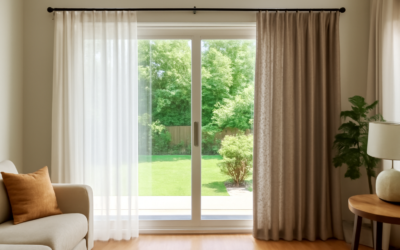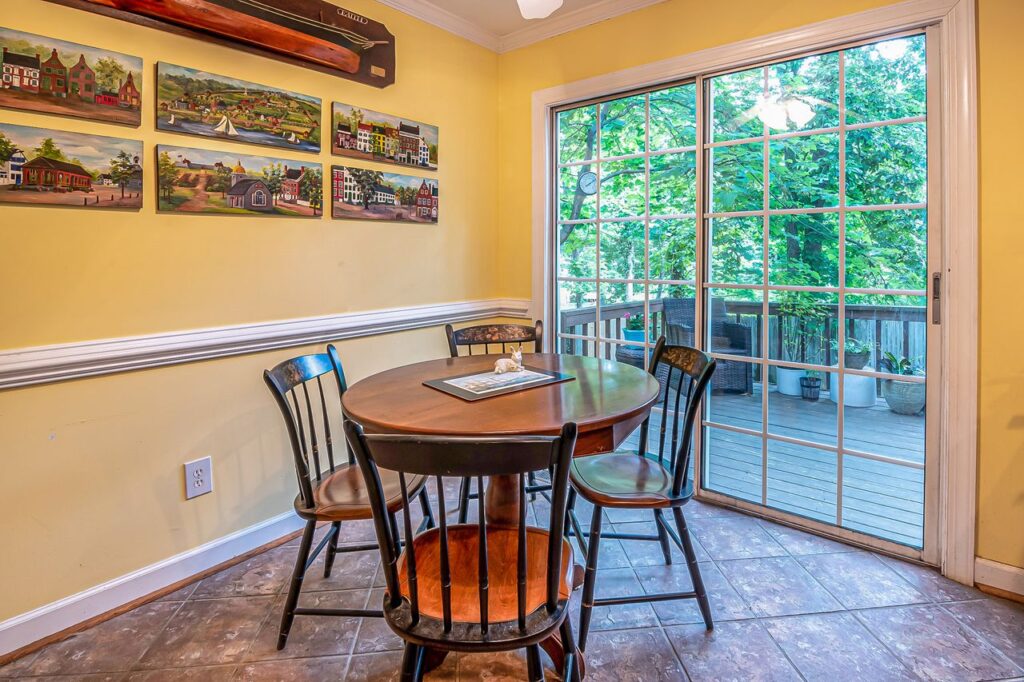
A sliding glass door is a big expanse of glass that needs to be covered without blocking the door you actually use every day. The best sliding door drapes ideas solve three problems at once: they cover the wide opening, they stack neatly out of the way so you can walk through, and they control light and privacy. Once you understand length, track placement, and how drapes stack, dressing a sliding door becomes simple and the result looks intentional.
Part of our Windows & Doors guide — explore the full guide →
What Makes Sliding Doors Tricky to Dress
Sliding doors are wider than standard windows and double as a doorway, so drapes have to slide fully open to one or both sides. They also reach floor to ceiling, which means length and hanging height matter more than on a typical window. And because the glass is large, light and privacy control are bigger concerns.
Keep those constraints in mind and most decisions get easier. The treatment needs to move freely, clear the door track at the bottom, and pull back far enough to leave the walkway open.
Getting the Length Right
For sliding doors, floor-length drapes are almost always the right call; short curtains look out of proportion on a tall opening. Aim for panels that either just kiss the floor (a clean, tailored look) or break slightly with a half-inch puddle. Avoid dragging puddles at a door you walk through constantly, since they get stepped on and dirty.
Mount the rod high and wide to make the wall feel taller and the door grander. Hanging the rod 4 to 6 inches above the door frame and extending it well past each side lets the panels stack off the glass.
Track and Hardware Options
Hardware choice affects both function and look:
- Traverse rods: a cord or wand pulls panels smoothly across, ideal for wide doors and a classic draped look.
- Decorative rods with rings: panels glide on rings for an easy, casual feel and visible stylish hardware.
- Ceiling-mounted tracks: create a clean, modern floor-to-ceiling effect and maximize apparent height.
- Wand-operated tracks: avoid dangling cords, a good choice for homes with kids or pets.
Extend whatever hardware you choose well beyond the door opening so the open panels do not cover the glass when pulled back.
Plan for Stacking
“Stacking” is how far the panels bunch up when fully open. On a sliding door, you want the panels to stack onto the wall beside the door, not over the glass, so the view and the walkway stay clear. This is why extending the rod past the door frame matters; it gives the fabric somewhere to go.
For a door that slides open on one side, a single panel that pulls to the opposite side works well. For a centered look, use two panels that part to either side. Lighter fabrics stack more compactly than heavy ones, which is worth remembering on a narrow wall.
Controlling Light and Privacy
Big glass means big light swings, so choose fabric for the job. Sheer panels soften light and give daytime privacy while keeping the room bright. Room-darkening or blackout drapes are ideal for bedrooms and media rooms where you want to block light and nighttime visibility.
A popular, flexible solution is layering: hang sheers behind heavier drapes on a double rod, so you can filter light by day and fully cover by night. This combination handles a sliding door’s range of needs better than a single panel type.
Fabric and Style Ideas
Beyond function, fabric sets the mood. Linen and linen-blend panels give a relaxed, airy look that suits casual and coastal rooms. Heavier cotton or velvet drapes feel formal and insulate better against drafts at the glass. Solid neutrals make the wide expanse calm, while a subtle pattern adds interest without overwhelming the room.
For a modern space, consider ripple-fold or wave-style headings that hang in clean, uniform folds on a track. For traditional rooms, pinch-pleat or grommet panels read more classic. Match the drape style to the rest of your decor so the door blends in rather than shouting.
Alternatives and Combinations
Drapes are not the only option, and they pair well with others. Vertical blinds remain a practical, budget choice that slides with the door, and panel-track shades give a sleek, modern slide-across look. Some homeowners combine a simple shade for light control with decorative drapery panels purely for softness and style.
Whatever route you pick, measure the full width and height, account for stacking room, and confirm the panels clear the bottom track. With the right length, hardware, and fabric, these sliding door drapes ideas will make a large glass door feel like a designed feature rather than an awkward gap to cover.
How Much Fabric You Actually Need
Skimpy panels are the most common mistake on a wide door, because the fabric ends up stretched flat and looks like a bedsheet rather than drapery. For a full, gathered look, plan for total panel width of roughly two to two and a half times the width of the door opening. That fullness is what gives drapes their soft folds when closed.
Measure the door opening, add the extension on each side for stacking, then calculate panel width from there. Buying enough fabric is what separates drapes that look custom from drapes that look like an afterthought, and it costs surprisingly little extra to get the fullness right.
Tips for a Polished Look
A few finishing touches elevate the result. Steam or iron panels before hanging so they drape cleanly instead of holding fold creases. Use a heavier hem or sewn-in weights so the bottoms hang straight and do not flutter in the draft from the door. Train new pleats by gently folding the fabric and tying it loosely for a few days so it learns to fall evenly.
For function, add a wand or cord that lets you open the panels without grabbing and soiling the fabric, especially on a door used daily. Keep the operating side clear of furniture so the panels can stack fully. Done with attention to fullness, length, and these small details, sliding door drapes turn a plain glass slider into one of the nicest features in the room.