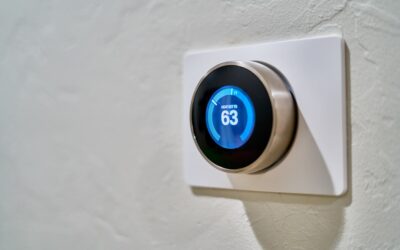
A smart thermostat is one of the cheapest upgrades that can meaningfully lower your energy bills, but the sticker price on the device is only part of the story. The full smart thermostat installation cost depends on whether you install it yourself, whether your wiring needs a C-wire, and whether your HVAC system plays nicely with the model you want. Understanding these variables upfront helps you budget accurately and avoid surprise charges, so you know exactly what you are getting into before you buy.
The Quick Answer
For most homeowners, the total cost of adding a smart thermostat falls between $150 and $500, all in. The thermostat itself runs $100 to $300 depending on features, and professional installation, if you choose it, typically adds $75 to $200. A straightforward DIY install with compatible wiring can cost nothing beyond the device. The wide range comes down to a few key factors we will break down below.
The Device Cost by Tier
Smart thermostats span a broad price range based on features like learning algorithms, remote sensors, and voice integration. Knowing the tiers helps you match spending to your needs.
- Budget smart thermostats ($70 to $130): App and voice control, scheduling, and basic energy features. A solid entry point.
- Mid-range ($130 to $200): Learning behavior, geofencing, and better displays; the sweet spot for most homes.
- Premium ($200 to $300+): Included remote room sensors, advanced learning, sleek design, and full smart-home integration.
Higher tiers often pay back through smarter energy savings, but even a budget model captures most of the benefit of scheduling and remote control. Choose based on whether features like room sensors or automatic learning genuinely fit your household.
DIY vs Professional Installation
The biggest single factor in your total cost is who does the work. Many smart thermostats are designed for DIY installation and, if your wiring cooperates, you can swap one in about 30 minutes with just a screwdriver, saving the entire labor charge.
If you are uncomfortable with wiring, have an incompatible system, or lack a C-wire, professional installation is worth considering. Expect a pro or an electrician to charge $75 to $200 for a standard install, sometimes more if wiring work is involved. Some retailers and utilities offer installation deals or rebates that lower this. HVAC technicians and electricians both do this work; a general handyman can handle simple swaps for less.
The C-Wire Factor
The most common hidden cost is the C-wire, or common wire. Many smart thermostats need continuous power to run their displays and Wi-Fi, which they draw from a C-wire. Older homes often lack one, and this single issue is what turns a free DIY job into a paid service call.
You have several options if you lack a C-wire, at different costs:
- Use an included C-wire adapter or power module, which some thermostats bundle at no extra cost.
- Choose a thermostat that runs without a C-wire, avoiding the issue entirely.
- Add a plug-in or terminal adapter, a $20 to $30 accessory.
- Have a pro run a new C-wire, the most reliable fix, typically adding $100 to $200 in labor.
Before buying, check your existing thermostat’s wiring: pull it off the wall and look for a wire in the “C” terminal. Knowing whether you have one tells you which path, and which cost, applies to you.
HVAC Compatibility Considerations
Not every smart thermostat works with every heating and cooling system, and compatibility can affect both your model choice and cost. Standard forced-air systems with 24-volt controls are the easiest and cheapest. Complications arise with high-voltage line systems like electric baseboard heat, multi-stage or heat-pump systems, and systems with dual fuel, which may require a specific compatible thermostat or additional wiring.
Most manufacturers offer an online compatibility checker where you enter your existing wiring, and it is worth using before purchase. If your system is unusual, budgeting for professional assessment and installation is wise, since a mismatched thermostat can damage equipment or simply fail to control it properly.
Total Cost Scenarios
Putting the pieces together, here is what real-world budgets tend to look like:
- Best case, DIY with C-wire present: Just the device, roughly $100 to $250 total.
- DIY without a C-wire, using an adapter: Device plus a $25 adapter, about $125 to $275.
- Professional install, compatible wiring: Device plus $75 to $150 labor, around $200 to $400.
- Professional install with new C-wire or complex system: Device plus $150 to $300 in labor, roughly $300 to $600.
Most homeowners with a modern forced-air system and existing C-wire land at the low end, while older homes and complicated systems push toward the upper figures.
Will It Pay for Itself?
The reason to spend on a smart thermostat is the return. By automatically adjusting temperatures when you are away or asleep, a well-used smart thermostat can trim heating and cooling costs, often cited around 8 to 15 percent of HVAC energy use. For a typical home, that can mean $50 to $150 or more saved per year, meaning the device frequently pays for itself within one to three years.
Many utilities sweeten the deal with rebates of $50 to $100 for installing a qualifying smart thermostat, and some offer additional credits for enrolling in demand-response programs. Check your utility’s website before buying, since these incentives can substantially offset both the device and installation cost.
What’s Included in a Professional Install
If you decide to hire out, it helps to know what that labor charge actually covers so you can judge whether a quote is fair. A standard professional installation includes removing your old thermostat, verifying compatibility with your HVAC system, wiring the new unit correctly, mounting it, and configuring the initial settings and Wi-Fi connection. A good installer will also test heating and cooling to confirm the system responds properly.
Where quotes rise is when extra work is needed: running a new C-wire, adding a power adapter, patching or repainting the wall behind an oddly shaped old thermostat, or troubleshooting an incompatible or high-voltage system. Always ask whether the quoted price is all-inclusive or whether C-wire work and adapters are billed separately. Clarifying this upfront prevents a modest install from ballooning into a larger bill you did not expect.
Hidden Costs to Watch For
Beyond the device and basic labor, a few less obvious costs can catch homeowners off guard. Knowing them helps you budget realistically and avoid mid-project surprises.
- C-wire installation: The most common add-on, potentially $100 to $200 if a pro must run new wiring.
- Wall repair or repainting: An old thermostat may leave holes or an unpainted patch to cover.
- System compatibility upgrades: Rare, but complex or high-voltage systems may need adapters or a specific model.
- Additional sensors: Extra remote room sensors, if not bundled, run $30 to $80 each.
- Smart-home hubs: Some ecosystems may want a hub, though most modern thermostats connect over Wi-Fi directly.
How to Keep Costs Down
To spend the least, confirm you have a C-wire and a compatible standard HVAC system, then install a DIY-friendly model yourself in under an hour. Buy during sales events when smart thermostats are frequently discounted, and claim any utility rebate you qualify for. If you must hire out, get a quick quote first and ask whether the price includes any needed C-wire work so there are no surprises.
The Bottom Line
Budget $100 to $300 for the device and, if you need it, $75 to $200 for professional installation, with a possible C-wire fix adding up to a couple hundred more in older homes. Check your wiring and system compatibility before you buy, take advantage of DIY installation and utility rebates where you can, and the smart thermostat installation cost stays modest, especially against the energy savings that typically recover the entire investment within a few years.