Two homes with identical electric bills can need very different solar arrays. Roof orientation, local sunshine, and the panel you choose all change the math. Choosing solar panels for home use starts with understanding three things: the panel technology, the wattage and efficiency rating, and the number of panels needed to cover your annual electricity use.
For most homeowners today, the practical answer is monocrystalline panels rated around 400 watts or more, with efficiency near 20 to 23 percent. A typical American home using roughly 10,000 to 11,000 kilowatt-hours per year needs somewhere around 18 to 25 such panels, depending on how much sun the location receives. The worked calculation later in this guide shows how to get your own number from a utility bill.
- Types of Solar Panels for Home Use
- Understanding Wattage, Efficiency and Degradation
- How Many Panels Do You Need? A Worked Calculation
- Adding a Solar Panel Battery for Home Backup
- Other Components to Know
- How to Compare Panel Spec Sheets
- Troubleshooting Low Production
- General Cost Ranges
- When to Call a Licensed Professional
- Frequently Asked Questions
This guide focuses on selecting panels and sizing an array. Installation of any grid-connected system is electrical work that requires permits and licensed professionals, and that is covered at the end.
Types of Solar Panels for Home Use
Three technologies dominate residential and small off-grid markets. Each has a place, but one clearly leads for rooftop systems.
| Type | Typical efficiency | Best for |
|---|---|---|
| Monocrystalline | About 19-23% | Rooftops with limited space |
| Polycrystalline | About 15-18% | Large open ground mounts on a budget |
| Thin-film | About 10-13% | Portable, flexible, or curved surfaces |
Monocrystalline
Monocrystalline panels are cut from single-crystal silicon and usually appear uniformly black. They deliver the most power per square foot, handle heat somewhat better, and dominate new rooftop solar panels for home installations. A quality monocrystalline solar panel is the first choice for nearly any roof where space is the constraint, since more watts per panel means fewer panels and fewer roof penetrations.
Polycrystalline
Polycrystalline panels use silicon made from multiple crystals and have a speckled blue look. They cost less per panel but need more roof area for the same output. They have become less common as monocrystalline prices fell, but they can still make sense on a large ground mount where space is cheap.
Thin-Film
Thin-film panels are lightweight and flexible, useful for RVs, boats, sheds, and curved surfaces. Their low efficiency means a whole-house system would need far more area, so they are rarely used on home rooftops.
Understanding Wattage, Efficiency and Degradation
Wattage is the panel’s rated output under standard test conditions. Residential panels now commonly run 400 to 450 watts, with physical dimensions around 5.5 by 3.5 feet. Higher wattage per panel does not automatically mean better; a larger panel may simply have more cells. Compare efficiency to see how well each square foot performs.
Efficiency tells you what share of sunlight becomes electricity. On a small or oddly shaped roof, a 22 percent panel can fit meaningfully more capacity than an 18 percent panel.
Temperature coefficient describes how much output drops as panels heat up. A figure around -0.3 percent per °C or better is good, which matters in hot climates where rooftop panels can easily exceed 140°F.
Degradation is the gradual loss of output over time. Quality panels typically lose roughly 0.25 to 0.5 percent per year, and many performance warranties guarantee around 85 to 90 percent of original output after 25 years. Check both the product warranty, which covers defects, and the performance warranty, which covers output.
How Many Panels Do You Need? A Worked Calculation
- Find annual usage. Add up 12 months of kilowatt-hours (kWh) from your electric bills. Example: 10,800 kWh per year.
- Find your peak sun hours. This is the daily average of full-strength sunlight for your area. Much of the country falls between about 4 and 5.5 hours; the Southwest runs higher, the Pacific Northwest lower. Example: 4.5 hours.
- Calculate daily production needed. 10,800 divided by 365 equals about 29.6 kWh per day.
- Size the system. Divide daily need by sun hours: 29.6 divided by 4.5 equals about 6.6 kW.
- Account for losses. Wiring, inverter conversion, heat, dust, and shading typically cost 15 to 20 percent. Divide by 0.8: 6.6 divided by 0.8 equals about 8.2 kW.
- Convert to panels. 8,200 watts divided by 410-watt panels equals 20 panels.
- Check roof space. Twenty panels at about 19 square feet each need roughly 380 square feet of usable, unshaded roof, plus setbacks required by fire code in many areas.
If your roof faces east or west rather than south, expect somewhat lower production and consider adding a panel or two. Plan for future loads too, such as an electric vehicle or heat pump, which can add several thousand kWh per year.
Adding a Solar Panel Battery for Home Backup
A solar panel battery for home use stores excess daytime production for evening use or outages. Lithium iron phosphate chemistry is now common for home storage because of its long cycle life and stable chemistry. Capacity is measured in kWh; a battery around 10 to 15 kWh can typically run essential circuits such as the refrigerator, lights, internet, and a few outlets overnight, but not central air or an electric range for long.
Batteries make the most sense where utilities do not credit excess solar at full retail value, where time-of-use rates are high in the evening, or where outages are frequent. Home batteries must be installed per the manufacturer’s instructions and local code, with proper clearances and ventilation, by a qualified installer.
Other Components to Know
- String inverter: one central unit converts DC to AC for the whole array; cost-effective for unshaded roofs.
- Microinverters: a small inverter on each panel; better for partial shade and panel-level monitoring.
- Power optimizers: panel-level devices paired with a string inverter, a middle ground.
- Racking: roof mounts must be anchored into rafters and flashed to prevent leaks, and sized for local wind and snow loads.
- Rapid shutdown equipment: required in many jurisdictions so firefighters can de-energize rooftop wiring.
How to Compare Panel Spec Sheets
Every panel comes with a data sheet, and a few lines on it matter far more than the marketing. Look for the power tolerance, which should be positive only, meaning a panel rated at 410 watts delivers at least that amount out of the factory. Check the certifications for safety and fire rating, and confirm the panel is rated for the snow and wind loads common in your area. Heavier snow regions need panels and racking rated for higher static loads.
Pay attention to the warranty terms as well. A 25-year product warranty paired with a 25- or 30-year performance warranty signals confidence in long-term durability. Ask installers about the company standing behind the warranty and whether labor for replacement is included. When comparing solar panels for home use across several quotes, line up efficiency, temperature coefficient, degradation rate, and warranty side by side rather than focusing on wattage alone.
Troubleshooting Low Production
- Output lower than expected: check monitoring for shading from trees that grew since installation.
- Sudden drop on one section: an inverter or connection fault may be the cause; call your installer.
- Gradual decline: dust, pollen, or bird droppings can cut output. Rinse from the ground with a hose if safe and allowed by the warranty; never climb onto the roof to clean.
- Winter drop: shorter days and snow cover are normal; production recovers in spring.
General Cost Ranges
Installed residential solar in the US is usually quoted per watt, with totals for a typical system commonly landing in the low-to-mid five figures before incentives. Federal and state incentives and utility programs can substantially reduce the net cost, so check current eligibility before signing. Adding battery storage typically raises the total significantly. Get at least three quotes and compare cost per watt, panel and inverter warranties, and projected annual production.
When to Call a Licensed Professional
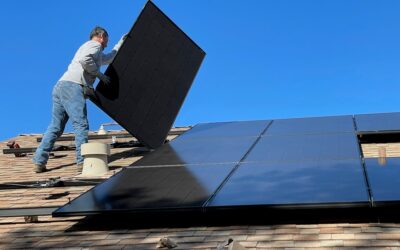
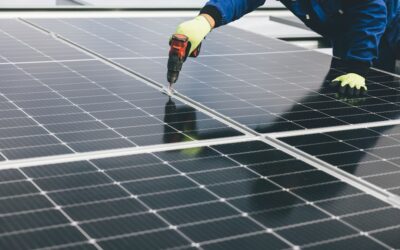
Grid-tied solar requires permits, a utility interconnection agreement, and inspection. The electrical work, including connections at the main panel, inverter wiring, and battery integration, should be done by a licensed electrician or a licensed solar contractor. Solar panels produce DC voltage whenever light hits them, so they cannot simply be switched off like a household circuit; that is a key reason to leave wiring to trained installers. Roof work should also be left to professionals with fall protection, especially on two-story homes or steep pitches. A structural review may be needed on older roofs, and many installers recommend replacing a roof that is near the end of its life before mounting panels.
Frequently Asked Questions
What are the best solar panels for home use?
For most rooftops, monocrystalline panels rated 400 watts or more with efficiency near 20 to 23 percent and a strong 25-year performance warranty offer the best balance of output and space use.
How many solar panels does it take to power a house?
A typical home using about 10,000 to 11,000 kWh per year needs around 18 to 25 panels of 400 watts or more, depending on local sun hours, roof orientation, and shading.
How long do rooftop solar panels for home systems last?
Quality panels commonly last 25 to 30 years or more, gradually losing a small percentage of output each year. Inverters usually need replacement sooner.
Do I need a battery with solar panels?
Not always. Grid-tied systems work without one. A battery adds backup power during outages and helps where evening electricity rates are high or export credits are low.
Can I install solar panels myself?
Small off-grid kits for sheds or RVs can be DIY projects, but grid-connected home systems need permits, inspections, and licensed electrical work for safety and utility approval.