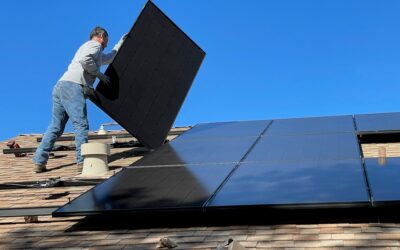
The single most expensive mistake homeowners make is bolting a solar array onto a roof that has eight years of life left. When those shingles fail, you pay to remove the panels, reroof, and reinstall the array — often $3,000 to $6,000 in labor that a little planning would have avoided. Getting roofing and solar to work together is less about the panels themselves and more about sequencing, penetration detail, and matching the lifespan of both systems. Do it in the right order and one roof will outlast two sets of panels. Do it backward and you will be on a ladder before the loan is paid off.
Part of our Roofing guide — explore the full guide →
On asphalt, standing-seam metal, and clay tile alike, the roofs that leak are almost never the panels’ fault. They fail at the flashing, at a lag bolt that missed the rafter, or at a sealant bead that dried out in year four. This guide walks through how to pair the two systems so you are not paying twice.
- Replace the Roof First, Then Add Solar
- How Panel Mounts Attach Without Leaking
- The Cost of Doing Both Together
- Matching Roof Warranty to Panel Warranty
- Ventilation, Shade, and Panel Layout
- Permits, Inspections, and Interconnection
- Roof Orientation and Solar Production
- Maintenance and Roof Access After Installation
- When Solar Makes Sense on an Older Roof
Replace the Roof First, Then Add Solar
If your roof is more than 12 to 15 years old on a standard 3-tab or architectural asphalt shingle, replace it before the array goes up. A quality architectural shingle carries a 30-year rating but realistically lasts 22 to 25 years in most climates. Solar panels are warrantied for 25 years and degrade only about 0.5% per year, so you want the roof underneath to make it the full distance.
Pull your last roofing invoice or check the permit records. If you cannot find the date, look for granule loss in the gutters, curling tabs at the eaves, and exposed nail heads. A roof with fewer than 10 good years is not worth mounting on. The reroof adds $8,000 to $18,000 depending on square footage and material, but doing it in the same project window as the solar install saves mobilization and lets the crews coordinate penetration locations.
How Panel Mounts Attach Without Leaking
On asphalt shingles, the standard attachment is a lag bolt driven into the rafter through a flashed mount. The best systems — IronRidge FlashFoot2, Quick Mount PV, and SnapNrack — use an aluminum flashing plate that slides up under the course above and a compression seal around the bolt. The lag needs at least 2.5 inches of embedment into a 2x rafter, and every hole gets a bead of polyurethane or butyl sealant before the bolt goes home.
Spacing matters. Rails typically land 48 inches apart, with mounts every 4 feet along the rail, so a 20-panel array might have 40 to 60 roof penetrations. Each one is a potential leak if the installer rushes. On standing-seam metal you skip penetrations entirely with S-5! clamps that grip the seam — this is the cleanest attachment available and one reason metal pairs so well with solar.
- Asphalt shingle: flashed lag mounts, 40-60 penetrations, sealant at every hole
- Standing-seam metal: non-penetrating seam clamps, zero holes
- Concrete or clay tile: tile hooks or replacement tile flashings, most labor-intensive
- Low-slope membrane: ballasted racking or bonded stanchions
The Cost of Doing Both Together
A typical residential solar array runs 6 to 10 kilowatts. At national pricing of roughly $2.75 to $3.50 per watt installed before incentives, that is $16,500 to $35,000 gross. The 30% federal residential clean energy credit knocks a 8kW system’s net cost down to around $16,000 to $19,000. Layer the reroof on top and a combined project lands between $28,000 and $50,000.
Here is the money-saving angle most people miss: the labor to remove and reinstall an existing array during a future reroof costs $2,000 to $6,000, and some installers void the panel warranty if a third party touches the mounts. By reroofing first, you fold that risk into a single permit and a single crew. Ask your solar contractor whether they offer a roofing package or partner with a roofer — bundled bids frequently come in 5 to 10% under two separate contracts.
Matching Roof Warranty to Panel Warranty
Read both warranties side by side before signing. Panel manufacturers like Q Cells, REC, and Silfab warranty the product for 12 to 25 years and the power output for 25. Racking hardware from IronRidge carries a 25-year finish warranty. Your shingle warranty, though, may be voided if penetrations are made improperly, so confirm the roofer’s manufacturer certification covers rooftop attachments.
The overlap you want is simple: a 25-year roof under a 25-year array, both installed the same year. When the numbers line up, you replace the roof and the panels in the same decade rather than staggering two disruptive projects and paying detach-reset fees in between.
Ventilation, Shade, and Panel Layout
Panels need to be set 4 to 6 inches off the roof deck so air can move underneath — that gap keeps the modules cooler and protects the shingles from baking. A hot, sealed roof plane loses shingle life fast. Good installers also keep the array 18 inches back from ridges and rakes to leave a firefighter access path required by many local codes.
Before design, get a shade analysis. A single vent stack or chimney shadow across a string of panels can cut output 20% or more unless the system uses microinverters or DC optimizers from Enphase or SolarEdge. Relocating a plumbing vent or trimming a limb during the reroof is cheap; discovering the shading after commissioning is not.
Permits, Inspections, and Interconnection
Both the reroof and the solar install need permits in nearly every jurisdiction, and the array requires an electrical permit plus a utility interconnection agreement. The structural review confirms your rafters can carry the added 3 to 4 pounds per square foot of dead load — most framing handles it, but 2×4 rafters at wide spacing sometimes need sistering.
Expect two inspection rounds: one for the roof and mounting, one for the electrical and the AC disconnect. The utility then installs a bidirectional meter before you flip the system on. Rushing to energize before permission to operate is granted can trigger fines and, in some areas, a forced disconnection, so let the paperwork finish.
Roof Orientation and Solar Production
Before you spend a dollar, know whether your roof can actually produce. In the northern hemisphere, south-facing roof planes generate the most energy, followed by west and east; a north-facing slope produces so little it is rarely worth populating. Pitch matters too — a roof angle roughly equal to your latitude, commonly 30 to 40 degrees, is close to ideal, though panels perform well across a wide range of slopes.
This is why the reroof-first conversation should include a production analysis. If your best solar exposure is on an aging slope, replacing that plane and mounting there makes sense; if the ideal exposure is on a newer section, you may be able to concentrate the array without a full tear-off. A good solar designer models your specific roof’s orientation, pitch, and shading to size the system, rather than just filling every available square foot. Populating a poor-facing plane to hit a wattage target wastes money on panels that never pay for themselves.
Maintenance and Roof Access After Installation
Once panels are up, servicing the roof beneath them gets harder, which is another argument for a fresh roof at install time. Panels themselves need little care — an occasional rinse in dusty or pollen-heavy regions keeps production up, and in most climates rain handles it. But if a shingle fails or a pipe boot cracks under the array, a roofer has to remove panels to reach it, and that detach-reset labor is exactly the cost you avoided by reroofing first.
Keep the array accessible where you can. Good designers leave setback pathways for firefighters and service techs, and those same paths let a roofer reach vents and flashings without pulling the whole system. Keep gutters clear and trim encroaching branches so debris does not pack under the panels, where it traps moisture against the roof. A little planning at install time keeps both the roof and the array serviceable for their shared 25-year life.
When Solar Makes Sense on an Older Roof
Sometimes replacing the roof is not realistic and the roof still has 12 to 15 solid years. In that case, insist on a full inspection, document the shingle condition, and choose a mounting system rated for easy panel removal. Enphase and Tesla both offer solar roof options that integrate the panels into the roofing plane itself, eliminating the reroof-versus-array conflict entirely, though at a premium of $4 to $6 per watt.
Pairing roofing and solar correctly is a timing decision as much as a technical one. Match the lifespans, flash every penetration, leave the ventilation gap, and you build a system that pays for itself and stays dry for a quarter century. Skip the sequencing and you inherit a leak, a warranty dispute, and a detach-reset bill you never budgeted for.