Your downstairs neighbor probably does not hear your voice nearly as much as your heels, your dropped dumbbells and the steady thump of a treadmill belt. That kind of impact noise travels straight through the floor structure, and the cheapest way to tame it without tearing anything up is a mat that sits on top. Soundproof floor mats need no glue, nails or new flooring, so they work for renters and for anyone who wants a quick fix they can take with them. No mat will make a room silent, but the right one can cut footstep thuds and gym impacts enough to end the broom-on-the-ceiling complaints. The trick is matching the material to the type of noise you make.
Part of our Roofing guide — explore the full guide →
Dense rubber handles impact. Mass-loaded vinyl adds weight that blocks airborne sound. Foam adds comfort and a little absorption but stops less than people expect. The best results with soundproof floor mats come from combining two of them in layers.
How Soundproof Floor Mats Reduce Noise
Floors carry two kinds of sound. Impact noise comes from something striking the surface: footsteps, weights, jump rope, a chair scraping. Airborne noise is music, voices and the drone of a speaker or an amplifier. A floor mat works mainly on impact noise by absorbing and spreading the energy before it reaches the subfloor. Heavier, denser layers also add mass, which helps a bit with airborne sound.
Three properties matter most:
- Density and mass: heavier material resists vibration. A good rubber mat feels surprisingly heavy for its size.
- Thickness: more material gives more cushioning. Thin yoga-style foam does little; 3/8 inch rubber and up starts to make a real difference.
- Decoupling: a soft layer between two hard ones breaks the direct path for vibration. That is why a sandwich of rubber, foam and a rigid board can outperform any single thick mat.
Some manufacturers list an impact insulation class (IIC) improvement or a delta IIC figure. Use those numbers as rough comparisons, since results depend heavily on the floor structure and the ceiling of the unit underneath.
Types of Mats and the Noise Each One Stops
Dense Rubber Mats
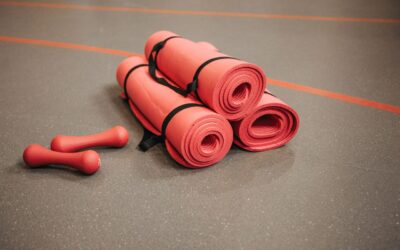
Recycled or virgin rubber tiles and rolls are the workhorse option. A dense rubber mat, typically 3/8 to 3/4 inch thick, absorbs footstep thuds, handles weights and resists dents. It is the best single-layer pick for home gyms and high-traffic rooms. Interlocking tiles are easy to carry and fit around obstacles; large rolled mats have fewer seams. Recycled rubber can have a strong odor at first, so air it out for a few days in a garage or on a balcony.
Mass-Loaded Vinyl
Mass-loaded vinyl (MLV) is a thin, very heavy, limp sheet, often around 1/8 inch and 1 to 2 pounds per square foot. On its own it is not a comfortable walking surface, but it adds mass under a rug or a rubber mat, which improves blocking of airborne sound from speakers, televisions and instruments. Think of it as a hidden middle layer, not a finished floor.
Foam Mats
EVA puzzle mats and closed-cell foam are lightweight, inexpensive and soft underfoot. They reduce the sharp click of hard heels and protect floors from scratches, but foam compresses under heavy loads and passes much of the low-frequency thump through. Use foam for kids’ play areas, yoga and light workouts, or as the soft middle layer of a sandwich.
Cork and Felt Combinations
Cork mats and dense felt pads add warmth and a little absorption. They work well under a rug in a bedroom or office, though they are less effective than rubber against heavy impacts.
Matching the Mat to the Problem
| Noise source | Best setup |
|---|---|
| Everyday footsteps | Area rug over 1/4 inch rubber or felt |
| Bodyweight workouts, jump rope | 3/8 to 1/2 inch rubber tiles |
| Free weights and dropped dumbbells | 3/4 inch rubber, or a layered platform |
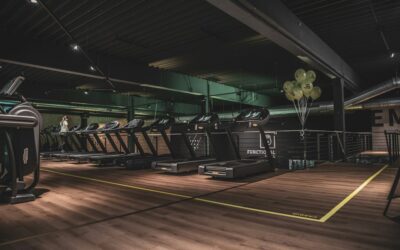
| Treadmill or bike | Rubber equipment mat plus isolation pads |
| Drum kit or amplifier | Layered riser with rubber, foam and a rigid top |
Footsteps in Apartments
For general living areas, the most livable answer is a thick rug over a dense pad, with a thin rubber sound absorbing mat under high-traffic paths. Cover as much of the walking area as you can; gaps let sound through. A separate guide on soundproof rug pads covers the pad options in more detail, while soundproof underlayment is the route if you are installing new flooring.
Home Gyms
Weights are the toughest test. A single soundproof floor mat of 3/4 inch rubber handles controlled lifting. For deadlifts and dropped weights, build a platform: two layers of rubber, a sheet of plywood or OSB on top, and another rubber layer as the lifting surface. The rigid board spreads the impact across a larger area.
Treadmills and Bikes
Running creates a constant rhythmic impact that carries far. Place the machine on a dense rubber equipment mat, then add rubber or viscoelastic polymer isolation pads under each foot. Keep the machine at least a few inches from walls so vibration does not travel into the framing. Plug treadmills directly into a wall outlet rather than an extension cord.
Drum Kits
Acoustic drums produce both impact from the kick pedal and loud airborne sound. A floating riser helps: rubber or foam pucks or a foam layer, then a sheet of plywood, then carpet or a drum rug on top. Mats will not fully contain an acoustic kit in an apartment, so consider an electronic kit on the same riser for late-night practice.
Materials for a Typical Setup
- Rubber soundproof floor mat or interlocking rubber tiles
- Mass-loaded vinyl sheet for an extra mass layer (optional)
- Closed-cell foam or felt for a decoupling layer
- 3/4 inch plywood or OSB for gym or drum platforms
- Isolation pads for machines
- Utility knife with fresh blades and a straightedge
- Non-staining rug gripper tape
How to Set Up Layered Mats
- Measure the area and the footprint of any equipment, adding a foot or more around machines.
- Clean the floor. Grit under a heavy mat can scratch hardwood or vinyl.
- Check floor compatibility. Some rubber can discolor vinyl and certain finishes. Put a breathable felt or a protective layer between rubber and resilient flooring, and test a corner first.
- Lay the bottom layer, such as MLV or felt, edge to edge without overlaps.
- Add the rubber, staggering seams so they do not line up with the first layer.
- Add a platform board for weights or drums, then a top layer of rubber or carpet.
- Trim edges flat and bevel or tape them so they do not curl.
Placement Tips That Make Mats Work Harder
Where you put a mat matters almost as much as what it is made of. Sound travels most easily through the middle of a floor span, where joists flex the most, so a treadmill or lifting area placed near a load-bearing wall or a corner usually transmits less thump than one in the center of the room. Cover the full area where impacts happen, not just the spot under your feet; a 4 by 6 foot rubber zone for jump rope is far better than a small yoga-sized square.
Hallways deserve attention too. A long runner with a dense pad under it quiets the path people walk most at night. Furniture helps as well: bookcases, upholstered chairs and soft rugs absorb some of the airborne echo that bounces off hard floors, which makes the remaining footstep noise feel less harsh to everyone in the building.
Troubleshooting
Neighbors still hear thumps: add mass and a decoupling layer, or enlarge the covered area. Low-frequency impacts need more than one material.
Strong rubber smell: air new mats outside for several days and clean with mild soap and water.
Mats sliding or curling: use heavier tiles, interlocking edges or rug gripper tape that is safe for the floor beneath.
Indentations in the floor: spread heavy loads with a rigid board, and move equipment slightly now and then.
Trip hazards: keep transitions low and beveled, especially in hallways.
Cost Ranges
Foam puzzle mats are the cheapest, often under $1 to $2 per square foot. Dense rubber tiles and rolls generally run about $2 to $6 per square foot depending on thickness. Mass-loaded vinyl usually costs about $2 to $5 per square foot. A layered lifting or drum platform for a 6 by 8 foot area might total roughly $150 to $500 in materials.
When Mats Are Not Enough
If you own the home and noise is a constant problem, consider a sound-rated underlayment under new flooring, resilient channels in the ceiling underneath, or a consultation with an acoustic contractor. Renters should check the lease and talk with the landlord or neighbors; sometimes simple timing changes plus well-chosen soundproof floor mats solve most of the issue.
Frequently Asked Questions
Do floor mats really reduce noise for downstairs neighbors?
Yes, especially for impact noise like footsteps and gym work. Dense rubber, layered with a soft decoupling material, gives the biggest improvement.
What thickness of rubber mat do I need for a home gym?
Use 3/8 to 1/2 inch for bodyweight training and 3/4 inch for weights. For dropped weights, build a layered platform with a plywood core.
Is foam or rubber better for soundproofing?
Rubber is better for impact because it is much denser. Foam is softer and lighter but compresses and lets low thumps through.
Can rubber mats damage hardwood or vinyl floors?
Some rubber can stain vinyl or trap moisture. Test a corner and use a breathable protective layer underneath.
Will mats stop sound from a drum kit?
A floating riser helps with kick-drum impact, but airborne noise from acoustic drums still escapes. Electronic kits on a riser are much quieter.
Prefer to explore on your own?
See how new flooring looks in your actual room in seconds — free, no signup.
Try the free Floor Studio →