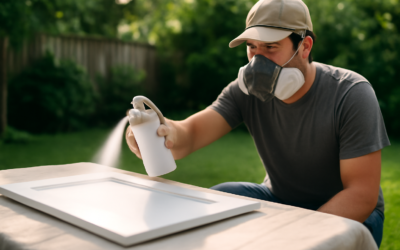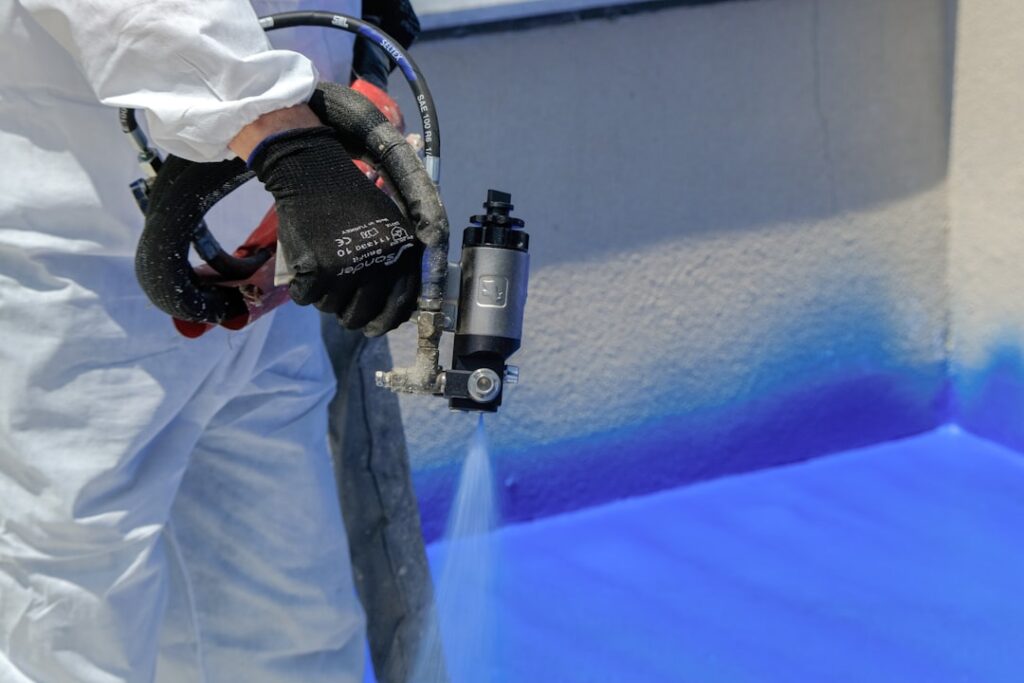
Spray epoxy is an epoxy coating applied with a sprayer rather than a brush or roller, producing a smooth, even, professional-looking finish quickly. Whether in aerosol cans for small jobs or sprayed through equipment for larger surfaces, this method gives you the durability and chemical resistance of epoxy with a finish that is hard to match by hand.
Part of our Epoxy, Concrete & Garage Floors guide — explore the full guide →
This guide explains how spray epoxy works, the situations it suits, the equipment involved, and the safety steps that are essential when atomizing a two-part resin. Because spraying creates fine airborne particles, the safety section here is not optional reading.
What Spray Epoxy Is
Epoxy is a two-part system of resin and hardener that cures into a hard, durable, chemical-resistant coating. Spraying simply changes how it is applied. Instead of spreading the mixed epoxy with a roller, you atomize it through a spray gun or use a pre-formulated aerosol, laying down a thin, uniform film that self-levels into a glassy surface.
The spray method excels at coverage and smoothness. It reaches into textures, edges, and complex shapes that a roller would miss, and it avoids the brush marks and roller stipple that hand application can leave. The trade-off is that spraying demands more equipment, more prep, and far more rigorous safety control.
Where Spray Epoxy Works
Spray application suits projects where a flawless finish, intricate shape, or large area makes hand application impractical.
- Appliances and metal: refinishing items where a smooth factory-like finish is wanted.
- Cabinets and furniture: achieving a sprayed, even coat without brush marks.
- Tubs and tile (specialty refinishing): typically a professional job with specific products.
- Equipment, fixtures, and complex shapes: where coverage into crevices matters.
- Industrial and protective coatings: uniform films over large metal surfaces.
For large floors, many installers still prefer rolling self-leveling epoxy, but spray techniques are used for certain coatings and topcoats. Always match the product to the intended use listed on its data sheet.
Aerosol vs Sprayed Systems
There are two main routes, and they differ greatly in scale and complexity.
- Aerosol epoxy cans: convenient for small projects and touch-ups. No mixing or equipment, just shake and spray, though coverage and film build are limited.
- Spray gun systems: for larger or higher-quality work, mixed epoxy is sprayed through HVLP or specialized equipment. This gives more control and a better finish but requires the gun, a compressor or turbine, and thorough cleanup.
Some two-part epoxies are too thick to spray straight and need thinning or a product specifically formulated for spraying. Never assume a roll-on epoxy will atomize properly; check the manufacturer’s guidance.
Surface Preparation
As with all epoxy, the finish is only as good as the prep beneath it. A sprayed coat over a dirty or unprofiled surface will fail no matter how nice it looks going on.
- Clean and degrease the surface completely so the epoxy can bond.
- Sand or profile to give the coating something to grip, and remove any loose or failing existing finish.
- Mask thoroughly. Overspray travels, so protect everything nearby with plastic and tape.
- Ensure the surface is dry and within the temperature range on the data sheet.
Take masking seriously. The same fine atomization that gives a smooth finish also drifts onto floors, windows, and anything else unprotected.
Application Tips
Good spray technique is about thin, even, overlapping passes rather than one heavy coat. Several disciplined passes beat one thick, runny layer.
- Mix the epoxy precisely by the manufacturer’s ratio and respect the pot life; sprayable epoxy can have a short working window.
- Hold the gun a consistent distance from the surface and keep it moving to avoid sags and runs.
- Overlap each pass by roughly half to keep the film uniform.
- Apply multiple thin coats, observing the recoat window between them.
- Work in a controlled environment free of dust and drafts so the finish stays clean.
Let the coating reach full cure before use, which can take several days depending on the product and temperature. A surface that is dry to the touch is not yet fully cured.
Safety: The Most Important Section
Spraying epoxy is significantly more hazardous than brushing it, because atomizing the resin and hardener puts fine, inhalable particles and vapors into the air. Some hardeners contain sensitizers that can cause serious respiratory issues. Do not cut corners here.
- Ventilation: spray only in a well-ventilated area or a proper spray booth with airflow. Never spray in a closed room.
- Respirator: wear a respirator rated for organic vapors and particulates, fitted correctly. A simple dust mask is not adequate.
- Skin and eye protection: wear gloves, eye protection or goggles, and cover exposed skin to avoid contact and sensitization.
- Read the safety data sheet for the specific product and follow every precaution it lists.
- Fire safety: many products are flammable as a spray; keep away from ignition sources.
- Cleanup: handle solvents carefully and dispose of materials per local regulations.
For tub refinishing and large interior jobs especially, professional applicators use containment, forced ventilation, and supplied-air respirators for good reason. If you are not equipped to control the spray environment and protect your lungs, hire a professional or choose a roll-on method instead.
Care and Maintenance
Once cured, a sprayed epoxy surface is hard, smooth, and easy to clean. Wipe it with mild soap and a soft cloth, avoid abrasive pads and harsh solvents that can dull it, and use protection like trivets or pads where heat or sharp objects are a concern. Minor damage can often be sanded and re-sprayed, though matching a finish takes care.
Is Spray Epoxy Right for You
Spray epoxy is the best route when you want a smooth, even, durable finish on metal, furniture, fixtures, or complex shapes, and you are prepared to handle the equipment, masking, and serious safety requirements. For small touch-ups, an aerosol can is approachable. For large or high-stakes refinishing, weigh the cost and risk of doing it yourself against hiring a pro. Respect the prep, follow the data sheet, protect your lungs and skin, and spray epoxy delivers a finish that looks and performs like a factory coat.