Rolling and brushing an entire house is slow, exhausting, and leaves visible texture, which is why so many homeowners reach for a sprayer instead. A good spray painter for house projects can cover walls, ceilings, fences, and siding up to four times faster than a roller, with a glass-smooth finish that brushwork cannot match. The trick is matching the right type of sprayer to your project, because an airless rig that blasts through exterior siding is overkill, and a mess, for trim and cabinets.
Part of our Paint & Walls guide — explore the full guide →
This guide breaks down the three main sprayer types, what they cost, and how to get professional results.
The Three Main Types of Sprayers
Understanding the categories is the first step to choosing well:
- Airless sprayers: Pump paint at high pressure (up to 3,000 PSI) through a tip. Fastest coverage, handles thick unthinned paint, ideal for whole-house interiors and exteriors.
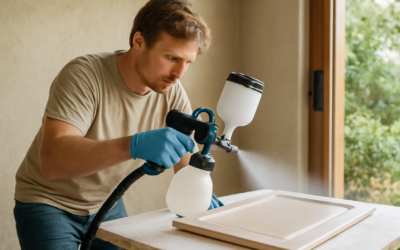
- HVLP (High Volume Low Pressure): Uses a high volume of air at low pressure for a fine, controlled finish. Best for cabinets, trim, doors, and detail work with minimal overspray.
- Handheld and compressed-air sprayers: Compact, affordable, good for small jobs, furniture, and touch-ups but slow for large surfaces.
Airless Sprayers for Big Jobs
For painting full rooms, ceilings, exterior siding, or fences, an airless sprayer is the workhorse. It moves a huge amount of paint quickly and handles unthinned latex and even thicker coatings. Popular consumer models like the Graco Magnum X5 ($300 to $350) and Magnum X7 ($400 to $450) are built for whole-house use and can pull paint straight from a 5-gallon bucket.
The downside is overspray. Airless sprayers atomize so aggressively that you must mask and cover everything nearby with plastic and tape. Outdoors, avoid spraying on windy days, or your neighbor’s car gets a free coat.
HVLP for Cabinets and Fine Finishes
When the finish quality matters more than speed, such as kitchen cabinets, interior doors, and trim, an HVLP sprayer is the better spray painter for house detail work. Because it uses low pressure, far less paint becomes airborne, giving you a smooth, factory-like finish with much less overspray to clean up.
HVLP units like the Wagner FLEXiO 3500 ($150 to $200) or a turbine-based HomeRight Super Finish Max ($90 to $130) are affordable entry points. They often require thinning thicker paints slightly, so check the viscosity recommendations for your specific coating.
What It Costs
Sprayer pricing spans a wide range based on capability:
- Handheld and basic HVLP: $80 to $200
- Mid-range airless (whole-house): $300 to $500
- Professional airless rigs: $700 to $1,500-plus
- Rental airless sprayer: $50 to $90 per day from home centers
For a single one-time project, renting an airless sprayer can make more sense than buying. If you plan multiple painting projects over the years, owning a $300 to $400 airless pays for itself quickly versus hiring painters at $2 to $6 per square foot.
Prep Is Everything
Spraying multiplies whatever you fail to mask. Cover floors, furniture, windows, fixtures, and anything you do not want painted with plastic sheeting and painter’s tape. Remove outlet covers and switch plates, and protect adjacent surfaces generously, because overspray drifts.
Surface prep is the same as any paint job: clean, patch, sand glossy surfaces, and prime bare spots. A sprayer applies paint beautifully but will not hide a poorly prepped wall.
Technique for a Smooth Finish
Good spraying is all about consistency. Hold the gun 10 to 12 inches from the surface, keep it perpendicular, and move at a steady walking pace. Overlap each pass by about 50 percent, and start moving before you pull the trigger and release after, to avoid heavy buildup at the ends of each stroke.
Apply two thin coats rather than one heavy coat to prevent runs and drips. Practice on a piece of cardboard first to dial in your speed and distance before committing to the wall.
Cleanup and Maintenance
Cleanup is the chore people underestimate. Latex paint cleans up with water, but you must flush the entire system, hoses, gun, and tip, thoroughly, or dried paint will clog it permanently. Budget 20 to 30 minutes for cleaning after each session.
Run clean water (or the appropriate solvent for oil-based products) through the pump until it runs clear, then store the tip and seals properly. With the right spray painter for house projects, solid prep, and disciplined cleanup, you will paint faster and finish smoother than you ever could with a brush and roller.
Choosing the Right Spray Tip
The tip is the most overlooked variable in spray painting, and it dramatically affects your results. Tips are sized by a three-digit number: the first digit relates to spray width (fan size) and the last two indicate the orifice size in thousandths of an inch. For thin coatings like stains and lacquers, use a small tip such as a 311 or 313; for thick latex wall and exterior paint, step up to a 515 or 517.
Using too small a tip for thick paint causes clogs and tip wear, while too large a tip wastes paint and increases overspray. Tips also wear out over time, a worn tip widens its spray pattern and burns through more paint, so replace yours after roughly 40 to 60 gallons of use for a clean, efficient finish.
The two environments demand different approaches. Indoors, overspray and fumes are the main concerns: mask everything thoroughly, run plastic floor to ceiling around the work area, ventilate well, and wear a proper respirator rated for paint particulates, not just a dust mask. Spraying interior walls works best before furniture and trim go in.
Outdoors, weather rules the schedule. Avoid spraying in direct midday sun, which flashes the paint too fast, and never spray when wind exceeds about 10 mph or overspray will drift onto cars, plants, and neighboring property. Aim for a calm, overcast day between 50°F and 85°F with low humidity for the best adhesion and finish on siding, fences, and decks.
Sprayers atomize paint into a fine mist that is easy to inhale, so safety gear is non-negotiable. Wear a NIOSH-approved respirator, safety glasses, gloves, and clothing that covers your skin. Airless sprayers in particular operate at pressures high enough to inject paint under the skin, a serious medical emergency, so never point the gun at yourself or others and always engage the trigger lock when not spraying.
Relieve system pressure before changing tips or clearing clogs, and keep children and pets away from the work zone. Respecting these precautions makes spray painting both safe and genuinely enjoyable.