
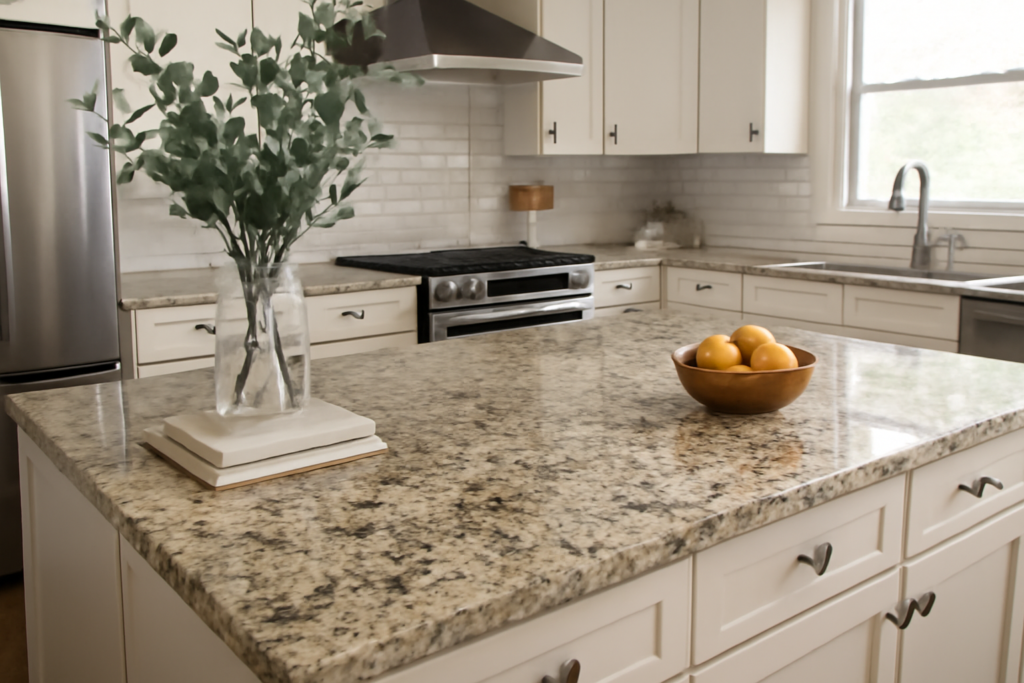
Few granites have stayed popular as long as this one, and there is a good reason. St Cecilia granite, quarried in Brazil and sometimes spelled Santa Cecilia, is the go-to warm-toned stone for kitchens that want to feel timeless rather than trendy. It blends a golden-beige background with flecks of burgundy, brown, and translucent gold, giving it enough movement to hide crumbs and water spots while still looking cohesive. I have installed it in builder-grade homes and high-end custom kitchens alike, and it flatters warm woods better than almost anything else on the market.
Part of our Countertops guide — explore the full guide →
What St Cecilia Granite Looks Like
The signature look is a honey-to-beige base scattered with small burgundy garnets, gray and black mineral specks, and glints of gold. Movement is moderate; it is busier than a solid-color stone but calmer than a dramatic exotic. What surprises many buyers is how much it varies by grade and lot. Lighter, creamier slabs are usually sold as premium or “Santa Cecilia Classic,” while darker, more heavily speckled material may be labeled as a standard grade or “Santa Cecilia Gold.” Neither is better; they simply suit different kitchens.
Because the burgundy flecks and gold veining differ from slab to slab, hand-select your material at the yard. A tiny sample chip cannot show you whether a full slab leans light and uniform or dark and busy, and that distinction changes the entire mood of the room.
What It Costs
St Cecilia is one of the better values in natural stone. Installed pricing generally runs $40 to $65 per square foot, including the slab, fabrication, a standard edge profile, and installation. A standard 40-square-foot kitchen lands somewhere between $1,600 and $2,600 installed. Premium light-grade slabs sit at the higher end of that range. Add-ons such as a mitered thick edge, an undermount sink cutout, a waterfall island, or a matching stone backsplash raise the total. Collect at least three quotes, and confirm whether old-counter removal and disposal are included.
How It Compares to Similar Stones
Buyers looking at St Cecilia often weigh it against other warm granites:
- New Venetian Gold — creamier and more uniform, with finer burgundy flecks.
- Giallo Ornamental — lighter beige with gray movement; slightly cooler.
- Desert Beach granite — softer, sandier, and less contrasty.
- Colonial Gold — warmer honey tones with bolder waves.
St Cecilia sits in the middle of this pack: warmer and busier than Giallo, but more speckled and less flowing than New Venetian Gold. Its garnet flecks are the telltale detail that sets it apart.
Best Cabinet and Backsplash Pairings
This stone was practically made for wood. Cherry, maple, hickory, and honey-oak cabinets all glow beside it. If you prefer painted cabinetry, cream and warm white keep the palette bright, while a rich espresso brown creates a handsome, traditional contrast. I generally avoid pairing it with cool gray-blue cabinets, which can make the beige read muddy.
For backsplashes, a travertine tile blends beautifully, and a creamy 3×6 subway keeps things clean and classic. A tumbled-stone or warm glass mosaic in beige, gold, and bronze picks up the mineral tones without competing. Oil-rubbed bronze, antique brass, and satin gold hardware round out the warm look.
Sealing and Everyday Care
St Cecilia is porous like all granite and should be sealed on installation day. Its medium tone forgives minor staining better than a light stone, but sealing still matters. Test it every few months by pouring a tablespoon of water on the surface and waiting 15 minutes. If it beads, the sealer is intact. If it soaks in and darkens the stone, reseal with an impregnating product such as Miracle Sealants 511 or Tenax Hydrex.
Plan on resealing roughly every 12 to 18 months. Clean daily with warm water and a drop of dish soap or a pH-neutral stone cleaner. Avoid vinegar, citrus cleaners, bleach, and abrasive powders, all of which break down sealer and dull the polish. Wipe up wine, coffee, and cooking oil promptly so they do not leave a shadow overnight.
Durability You Can Count On
Granite rates about 6 to 7 on the Mohs scale, harder than a steel knife, so it resists scratches and everyday wear. You can set a 400°F pan directly on the surface without thermal cracking, though a trivet protects the sealer over time. As with any stone, the vulnerable spots are unsupported edges and the sink cutout rim, where a dropped heavy pot can chip the material. Handle those areas with reasonable care and the countertop will easily last 20 years or more.
Understanding the Grades and Lots
One quirk of St Cecilia that trips up buyers is how much it varies by grade. Suppliers often sort it into tiers based on background color and the density of the burgundy garnets. Lighter, creamier slabs with finer, more evenly distributed flecks command a premium and are typically labeled Classic or Light. Darker slabs with heavier speckling and more contrast are usually sold as a standard grade or as St Cecilia Gold. The price gap between grades can be meaningful, so make sure the quote you receive matches the specific slabs you are seeing.
Lots matter as much as grade. A single kitchen almost always needs more than one slab, and slabs cut from different blocks can differ noticeably in color and pattern. Always confirm that all the slabs for your job come from the same lot, and if you are adding a matching backsplash later, buy the extra material up front from the same batch. Trying to color-match a new slab to an existing counter months later is a losing battle.
This is exactly why I push clients to physically tag their slabs at the yard rather than approving material off a phone photo. Lighting in a warehouse skews color, and a 4-inch sample chip cannot show you whether a full slab reads light and calm or dark and busy. Walk the aisle, look at the actual bundles, and mark the specific pieces you want with your name.
Fabrication and Edge Choices
A skilled fabricator makes St Cecilia look custom. Because the pattern is speckled rather than strongly directional, seams are somewhat more forgiving than on a heavily veined stone, but placement still matters; a good shop tucks them behind a cooktop or in a corner. For edges, an eased or square profile keeps things clean, while a half-bullnose or ogee leans traditional and pairs well with raised-panel wood cabinetry. Confirm whether your price is based on 2cm or 3cm stone, since thinner material needs a built-up edge to look substantial.
Is St Cecilia Granite Right for You?
Pick St Cecilia if you want a warm, classic, forgiving surface that pairs effortlessly with wood cabinets and a traditional or transitional design. It is one of the best-value natural stones you can buy, it hides daily mess well, and it has stayed in style for decades. If your kitchen is aggressively modern with cool grays and stark whites, a different stone will serve you better. But for warm, welcoming kitchens on a sensible budget, st cecilia granite remains a benchmark choice. Hand-select your slab, invest in quality fabrication, and keep up with light annual maintenance for a countertop that ages gracefully.


