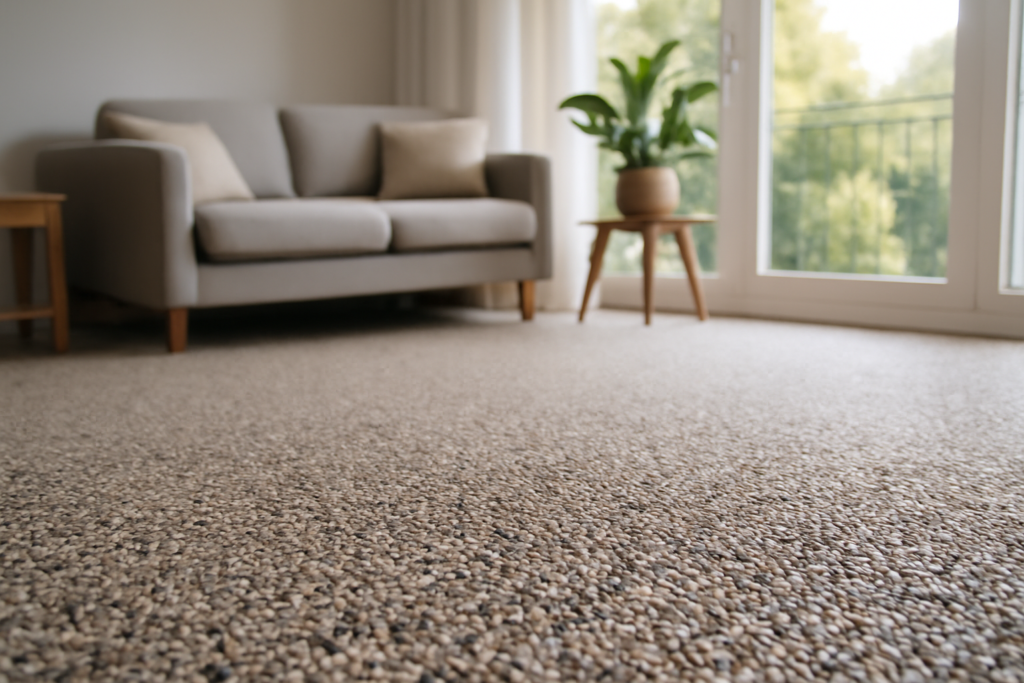
The name throws people off, because there is no fiber and nothing soft about it. A stone carpet is a seamless flooring surface made by binding small natural pebbles or crushed marble together with a clear resin, then troweling the mix over a prepared base. The result is a smooth, slightly textured surface that looks like a beach of tiny stones frozen in place. Homeowners reach for it on patios, pool decks, porches, and garage floors because it drains water, resists cracking, and adds a high-end finish that bare concrete can never match.
How Stone Carpet Works
The system has two parts: the aggregate and the binder. Rounded river pebbles or angular marble chips, usually 2 to 8 millimeters in size, get mixed with a UV-stable polyurethane or epoxy resin in a forced-action mixer. Installers pour the wet blend onto the slab and trowel it flat to a consistent depth, typically a quarter to a half inch. As the resin cures, it locks every stone in place while leaving microscopic voids between them.
Those voids are the whole point. Water passes straight through the surface and drains away beneath, which is why stone carpet stays dry underfoot and never builds the slick film that plain concrete or sealed pavers can. The look is continuous and joint-free, wrapping around steps and curves without the grout lines that collect dirt.
Where It Performs Best
Outdoor spaces are where stone carpet earns its keep. The permeable surface and natural grip make it a strong choice for areas that get wet and see bare feet.
- Pool decks: drains splash-out fast and stays cooler than dark pavers underfoot.
- Patios and porches: a seamless decorative upgrade over tired or stained concrete.
- Walkways and steps: the texture provides traction on slopes and transitions.
- Garage floors: a tougher, better-looking option than a thin paint coating.
Interior use is possible in mudrooms and sunrooms, but the porous version is rarely ideal for living spaces because debris can work into the surface. For indoors, installers often use a sealed, non-permeable version that keeps the look while closing the voids.
The Installation Process
A solid base is everything. Stone carpet bonds to a sound concrete slab, so the existing surface must be clean, dry, and free of loose material. Installers grind or shot-blast the concrete to open the pores, patch any cracks, and apply a primer coat so the resin grabs hard. Skipping prep is the most common reason a stone carpet fails early.
Once primed, crews mix and trowel the aggregate in workable sections, blending edges so there is no visible cold joint. The surface needs to cure away from foot traffic for about 24 hours and away from heavy loads or furniture for a few days. Most jobs are best left to certified installers, because mixing ratios and trowel timing are unforgiving, and a botched batch can cure cloudy or uneven.
Durability and Maintenance
Properly installed, a stone carpet lasts 15 to 25 years outdoors. The resin flexes slightly, so it tolerates the freeze-thaw movement that cracks rigid surfaces in cold climates. UV-stable polyurethane resists the yellowing that cheaper epoxy binders develop after a few seasons in direct sun, so confirm which resin your installer uses.
Cleaning is straightforward. Sweep or blow off leaves, and rinse with a garden hose to flush dirt down through the voids. A pressure washer on a low fan setting clears stubborn grime once or twice a year. Avoid harsh solvents, which can soften the binder. Every five to seven years, a fresh top coat of resin restores the sheen and refreshes the bond on high-traffic zones.
Choosing Your Aggregate and Resin
The look of a finished stone carpet depends almost entirely on the aggregate you pick. Rounded river pebbles in tans, browns, and grays give a soft, organic feel that suits patios and garden paths, while crushed marble chips deliver a brighter, more refined surface popular around pools. Mixing two or three stone colors creates depth, and many installers offer custom blends so you can match the surface to your home’s exterior or hardscape. Larger stones read more rustic and chunky underfoot, while finer aggregate feels smoother and more uniform.
Resin choice matters just as much as the stone. UV-stable polyurethane resists yellowing in direct sun and stays flexible through temperature swings, which is why it is the standard for outdoor installs. Cheaper epoxy binders cost less but tend to amber and grow brittle after a couple of seasons of sun exposure, so they belong indoors or in shaded areas. Always confirm the resin grade in writing, because the difference shows up clearly three summers in.
Pros and Cons at a Glance
Before committing, weigh the trade-offs honestly. The strengths are real, but so are the limitations.
- Pros: seamless and joint-free, permeable drainage, slip resistance, freeze-thaw flexibility, and a high-end custom look.
- Cons: higher cost than plain concrete, demands skilled installation, the permeable version can trap fine debris, and it needs a sound slab to bond to.
For most outdoor applications the pros win decisively, but if your existing slab is cracked or heaving, budget for proper repair first. A stone carpet is only as stable as the surface beneath it.
Cost and Value
Professionally installed stone carpet generally runs $15 to $30 per square foot, depending on the aggregate, the resin grade, and the condition of the existing slab. Premium marble blends and intricate borders push the high end higher. That is more than basic concrete resurfacing but competitive with quality pavers once you factor in the seamless finish and the absence of grout maintenance.
For homeowners who want a refined, draining, slip-resistant outdoor floor that handles weather and bare feet, stone carpet hits a sweet spot. Just budget for proper surface prep and a quality UV-stable resin, because those two factors decide whether the surface looks great for two decades or starts shedding stones in two years. When you collect quotes, ask installers to show finished jobs that are at least a few years old, since a fresh install always looks good and the real test is how the surface holds up after several seasons of sun and freeze-thaw cycles.