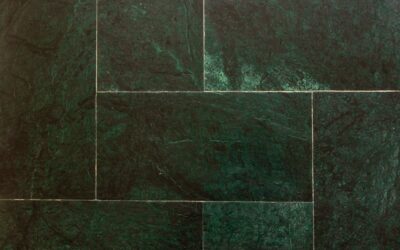
Of all the natural stones you can put on a floor, slate might be the most quietly practical. Slate stone tile combines rich, earthy color with a naturally textured, slip-resistant surface that shrugs off the abuse of entryways, kitchens, and mudrooms. It’s a metamorphic rock that splits into flat layers, giving it that distinctive cleft face, and it comes in a color range far wider than most people expect, from charcoal black to rusty gold, deep green, and multicolored blends. Slate isn’t maintenance-free, but it’s more forgiving than softer stones like marble or travertine, which makes it a smart pick for homeowners who want real stone without babying it.
Part of our Tile & Grout guide — explore the full guide →
What Makes Slate Different
Slate forms under heat and pressure, which packs its mineral layers tightly and makes it dense and durable. That density gives it two big advantages over other natural stones: it’s harder to scratch and less porous than travertine or limestone, so it stains less easily. Its naturally cleft, uneven surface also provides excellent traction, one of the reasons slate is a go-to for wet areas and outdoor use. The trade-off is that the same texture can be harder to keep dust-free and slightly uncomfortable underfoot barefoot, which is why some floors use a honed or gauged slate instead.
Natural Cleft vs. Gauged Slate
You’ll choose between two surface types, and it affects both look and installation:
- Natural cleft: the raw split face with ridges and texture. Beautiful and grippy, but the tiles vary in thickness, which complicates setting.
- Gauged (calibrated): the back is ground to a uniform thickness for easier, more consistent installation, while the face keeps its cleft character.
- Honed: the surface is ground smooth and matte, giving a more refined, uniform look with less traction.
For most floors, gauged slate is the practical sweet spot, you keep the natural face but avoid the constant back-buttering that ungauged, wildly variable tiles demand.
Color Range and Fading
Slate’s palette is one of its selling points. Common options include jet-black slate, gray-green, rustic multicolor blends with copper and gold streaks, and warm autumn tones. Be aware that some slates, particularly certain multicolor and green varieties, can fade or shift color with UV exposure and over time; this is called “spalling” or oxidation in the trade. If color permanence matters, ask the supplier about the specific quarry’s reputation, and consider that a color-enhancing sealer can both deepen and stabilize the tones. Always buy from a single lot and blend tiles from multiple boxes during layout to distribute the natural variation evenly.
Sealing and Maintenance
Slate is less porous than many stones, but it still needs sealing to resist stains and to make cleaning easier. Use a penetrating impregnating sealer, and choose between a natural-look sealer that keeps the matte finish or a color-enhancing or topical sealer that deepens the colors and adds a subtle sheen. Reseal every one to three years, testing with the water-drop method, if water darkens the stone quickly, it’s time. For daily care, sweep or vacuum grit, then damp-mop with a pH-neutral stone cleaner. Skip vinegar, lemon, and acidic cleaners, and avoid harsh scrubbing that can loosen flakes from a natural cleft surface.
Where Slate Performs Best
Slate earns its keep in high-traffic and wet areas. Entryways and mudrooms love it because the texture hides dirt and grit and grips wet shoes. Kitchens benefit from its stain resistance and durability under dropped pans. Bathrooms and shower floors use its natural traction as a safety feature. Outdoors, slate handles patios and pool surrounds well, though in freeze-prone climates you must confirm the specific stone is rated frost-resistant, since some softer slates spall in repeated freeze-thaw cycles. It’s a genuinely versatile stone, indoors and out.
Cost and Installation
Slate is one of the more affordable natural stones. Material typically runs $4 to $10 per square foot for standard tiles, with premium or large-format pieces higher. Installation adds roughly $7 to $15 per square foot, more if the tiles are ungauged and require extensive back-buttering to level. Installing slate calls for a solid, flat substrate, an uncoupling or crack-isolation membrane over any wood subfloor, and a polymer-modified thinset. Because natural cleft tiles vary in thickness, use a leveling system and expect to back-butter to keep lippage under control. Seal the tiles before grouting so grout haze wipes cleanly off the textured surface.
Slate vs. Porcelain That Looks Like Slate
Porcelain manufacturers now print convincing slate-look tiles, and it’s worth knowing where each wins. Real slate gives you genuine depth, a cleft you can feel, and color variation no printer fully replicates, plus it can be refreshed with a color-enhancing sealer decades later. Slate-look porcelain, by contrast, is dead-flat in thickness, needs no sealing, resists staining completely, and often costs less installed because it sets fast and grouts clean. In a freeze-prone patio or a busy commercial entry, a frost-rated porcelain sidesteps slate’s spalling risk entirely. The tell is repetition: cheaper porcelain repeats the same handful of printed faces, so buy a line with a high number of pattern variations if you go that route. For homeowners who want the real thing and don’t mind maintenance, natural slate still has a texture and authenticity porcelain only imitates.
Common Layout and Grout Choices
Slate reads best in patterns that celebrate its variation rather than fight it. A random or “Versailles” ashlar layout mixing several tile sizes, common in 12-inch, 16-inch, and 24-inch pieces, looks quarried and organic and is the traditional way to set cleft slate. Running-bond and straight-grid layouts suit gauged or honed slate in modern spaces. Keep grout joints on the wider side, 3/16 to 1/4 inch, because the tile edges are rarely perfectly straight and tight joints exaggerate that irregularity. For grout color, a charcoal or deep gray blends into most slates and hides dirt, while a contrasting lighter grout frames each tile but demands more cleaning. Use a non-sanded or fine-sanded grout appropriate to the joint width, and always seal the tile face first so grout doesn’t lodge in the cleft texture.
Pros and Cons at a Glance
On the plus side, slate is durable, naturally slip-resistant, stain-resistant when sealed, affordable among natural stones, and full of character no two floors share. On the downside, the textured surface collects dust and can be uneven underfoot, some varieties fade or flake over time, and it requires periodic sealing and gentle, acid-free cleaning. For homeowners who want a rugged, real-stone floor that looks better with a little wear rather than worse, those trade-offs are easy to accept.
Slate stone tile hits a rare balance: it’s genuine natural stone that’s tough enough for the busiest rooms in the house, priced within reach, and forgiving of everyday life. Choose gauged tiles for an easier install, seal it well, clean it gently, and confirm frost ratings if it’s going outside. Do that, and slate will give you a grounded, timeless floor that quietly outlasts nearly everything else you could put down.
Prefer to explore on your own?
See how new flooring looks in your actual room in seconds — free, no signup.
Try the free Floor Studio →