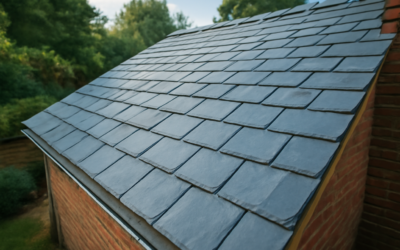
Slate is the natural stone I trust most underfoot in a wet room — and the one where buying the wrong grade causes the most heartbreak. Slate bathroom floor tile offers something rare: a natural stone with genuinely excellent wet traction, deep charcoal-to-copper color range, and a price that undercuts marble and most limestone. But “slate” at a big-box store can mean anything from dense, stable Vermont or Brazilian stone to soft multicolor Indian slate that sheds layers like pastry. After two decades of installing both kinds — and tearing out a few of the second kind — here’s the full picture.
Part of our Bathroom Remodeling & Flooring guide — explore the full guide →
Why Slate Works So Well in Bathrooms
Slate is metamorphic — ancient clay compressed and heat-hardened into layered stone. The natural cleft surface (the slightly rippled face where the stone was split) gives it traction that manufactured tile has to fake with texture. On my slip meter, good cleft slate wet routinely beats the 0.42 DCOF threshold with room to spare, which is why you see slate around pools and in spa build-outs. Other genuine advantages:
- Low absorption for a natural stone. Dense slates absorb well under 0.4 percent water — better than most limestone and travertine, approaching porcelain territory.
- Hides everything. Dark, mottled, cleft-textured stone conceals water spots, hair, dust, and small chips better than any light floor. Great for real-life bathrooms.
- Takes radiant heat well. Slate over electric floor heat is one of my favorite combinations — the stone holds and radiates warmth evenly, and dark stone feels luxurious heated.
- Honest pricing. Gauged slate runs $4 to $10 per square foot; premium dense black slates $8 to $15. Cheaper than nearly every other natural stone.
The Cons — and the One That Really Matters
The honest downsides list:
- Spalling and flaking (the big one). Soft, cheap slates — usually multicolor Indian varieties sold at rock-bottom prices — delaminate. Layers flake off the surface, especially in wet areas and around heat. Once a slate starts shedding, no sealer stops it. This single issue causes almost every slate horror story you’ve read.
- Uneven surface. Natural cleft means natural variation — faces can vary an eighth inch or more across a tile. Charming underfoot to some, annoying to others, and toe-stubbing if the installer doesn’t manage lippage. Honed slate solves this at the cost of some traction.
- Cold and hard without radiant heat. Dark stone in a north-facing bathroom in January is bracing. Budget for floor heat ($10 to $20 per square foot installed) if you’re in a cold climate.
- Ungauged chaos. Ungauged slate varies in thickness tile to tile — some by a quarter inch or more. It’s cheap for a reason: installation takes twice as long, with mud-bed buildup under thin tiles. For bathrooms, buy calibrated/gauged slate only.
- Grout contrast. Cleft texture plus dark stone makes grout cleanup slow, and light grout against dark slate stains visibly. Go charcoal grout, always.
How to Buy Slate That Won’t Flake
This is the section that saves you $5,000. Quality signals I check before a slate ever comes home:
- Origin. Brazilian (montauk/black), Vermont, and Welsh slates are dense and stable. Chinese and Indian slates range from decent to disastrous — the wildly multicolored, rainbow-rusted varieties are usually the softest.
- The scratch test. Score the back with a key. Dense slate resists and powders slightly; soft slate carves easily and sheds flakes.
- The rub test. Rub the cleft face hard with your palm. If your hand comes away glittery and dusty, that surface will keep shedding in your bathroom.
- Absorption spec. Ask for the data sheet. Under 0.4 percent absorption is what I want for a bathroom floor. If the seller can’t produce a spec sheet, that’s the answer.
- Price sanity. Genuinely dense slate rarely sells for $2 per square foot. A too-good price is the material telling you what it is.
Installed Cost for a Real Bathroom
| Item | Typical Range (5×8 bath, ~40 sq ft) |
|---|---|
| Gauged slate tile, quality grade | $240–$500 |
| Setting materials, membrane, grout, sealer | $200–$400 |
| Labor (higher than ceramic — variation management) | $500–$900 |
| Optional radiant heat | $400–$800 |
| Total installed | $950–$2,600 |
Labor runs above ceramic rates because every slate tile gets evaluated, oriented, and sometimes back-ground to control lippage, and grouting cleft stone is slow. Order 15 percent overage — slate’s layered structure means more breakage in transit and cutting than porcelain.
Sealing and Finish Choices
Slate isn’t as thirsty as limestone, but sealing still pays. Two philosophies:
- Penetrating (impregnating) sealer — invisible, keeps the natural matte cleft look, repels water and oils into the stone. Reapply every 1 to 3 years in a bathroom. This is my default: $40 to $70 per bathroom application, DIY-easy.
- Enhancing sealer or topical “wet look” — darkens the stone and makes colors pop the way slate looks rinsed. Beautiful on multicolor slates, but topical versions build up, show wear paths, can get slick, and eventually need stripping. If a client wants the wet look, I use an enhancing penetrating sealer, not a topical gloss.
Seal after installation and grout cure, then on the water-drop schedule: if a drop soaks and darkens within minutes, it’s time again.
Living With a Slate Floor: Care Routine
- Vacuum or dust-mop grit weekly — grit is what slowly burnishes traffic paths.
- Damp mop with pH-neutral cleaner. Slate tolerates chemistry better than limestone or marble, but acidic cleaners still dull it and murder the grout over time.
- If a flake ever lifts, don’t panic-pick at it. Vacuum it, hit the spot with penetrating sealer, and watch it. One flake on a dense slate is a quirk; recurring flaking in the shower splash zone is the material grade showing itself.
- Hard-water spotting shows on dark honed slate. Cleft texture hides it. Choose your finish to match your water and your patience.
- Re-grout hairline gaps promptly in wet zones; slate’s uneven edges make grout lines slightly more failure-prone than rectified porcelain’s.
Design Notes That Elevate Slate
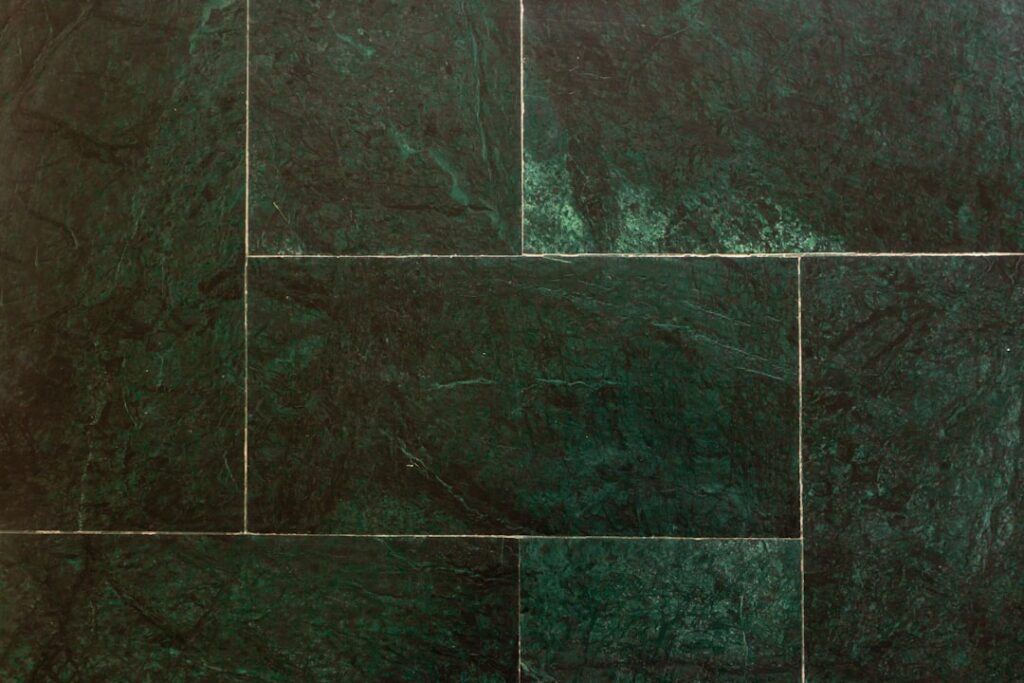
Slate’s palette runs charcoal, graphite, rust, copper, and mossy green. The current-feeling installs I’m doing pair large-format black Brazilian slate (12×24, run in a third-offset brick) with white walls, wood vanities, and matte black or brass fixtures — spa-minimalist. The classic look is 16×16 multicolor slate with charcoal grout, which reads rustic and hides absolutely everything; just know it commits the room’s palette to earth tones. Slate also makes a phenomenal curbless-shower field when your fabricator can hone slabs for the wet zone slope — traction where you need it, one continuous material story.
Cleft vs. Honed: Choosing Your Surface
The finish decision deserves more thought than most buyers give it, because it changes the floor’s daily personality. Natural cleft — the split-face texture — is the traction champion and the classic slate look, but its ridges catch mop fibers, hold soap film in the low spots, and feel noticeably textured under bare feet. Most people love that grounded, stony feel; some find it harsh, especially anyone who walks the bathroom in thin socks. Honed slate is machine-ground flat to a smooth matte, feels refined and contemporary, mops effortlessly, and shows the stone’s color more evenly — but you surrender some wet traction (honed dark slate still typically tests acceptably, but verify DCOF on the specific stone) and every dust particle and water spot shows on the smooth dark surface. My usual prescription: cleft in the main floor field for grip and forgiveness, honed only where you want a sleek look and have a bath mat strategy. A third option worth knowing is brushed slate, lightly textured between the two — increasingly available in Brazilian black and a nice compromise for clients torn between the camps. Whatever the finish, walk on a wet sample barefoot before ordering forty square feet of it. Ten seconds of wet-foot testing tells you more than any spec sheet.
Bottom line from the guy who kneels on these floors for a living: slate bathroom floor tile is the rare natural stone I recommend to normal, busy households — provided you buy dense, gauged, spec-sheet-verified stone and skip the bargain rainbow slate that funds my tear-out business. Get the grade right, grout it dark, seal it on a lazy 2-year cycle, and put heat under it if you live anywhere with winter. Do that and you’ll own the best-gripping, most forgiving stone floor in the house, and it will still look intentional in thirty years.
Prefer to explore on your own?
See how new flooring looks in your actual room in seconds — free, no signup.
Try the free Floor Studio →