
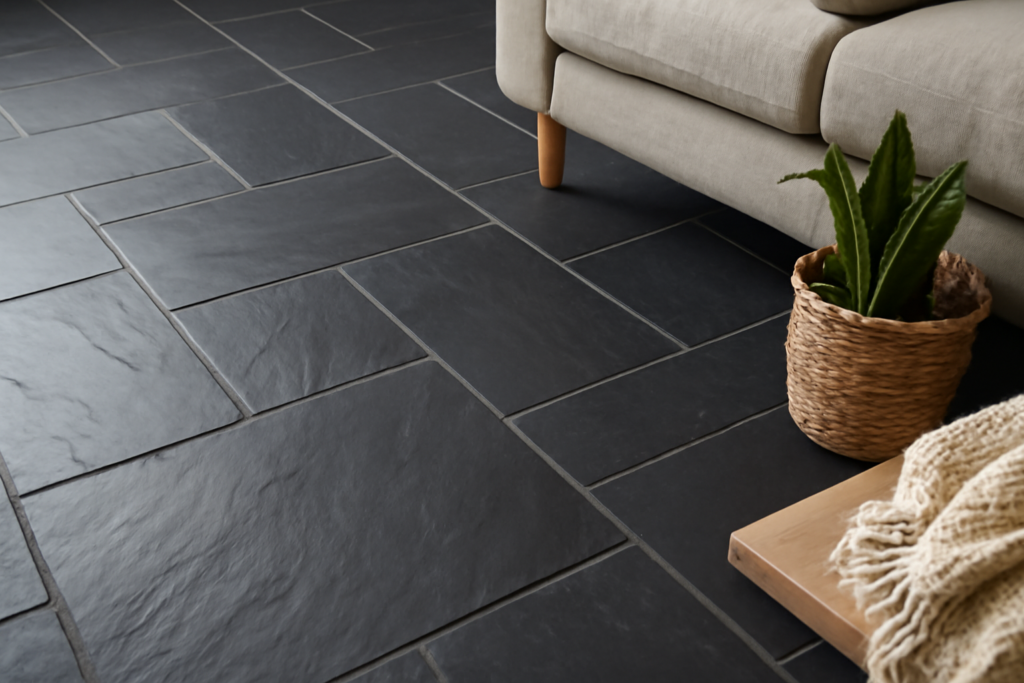
Nothing else looks quite like black slate tile. As a natural stone split from the earth, it carries a depth of color, subtle texture, and faint mineral shimmer that no printed porcelain can truly imitate. It anchors a room with drama and works equally well underfoot, on a fireplace surround, or across a shower wall. But slate is a porous natural material with real maintenance demands, so understanding how to seal and care for it is essential before you commit. This guide covers what black slate tile is, where it works, its strengths and drawbacks, realistic costs, and how to keep that rich dark color looking its best.
What Black Slate Tile Is
Slate is a fine-grained metamorphic stone that splits naturally into thin, flat layers, which is why slate tile often has a slightly uneven, textured surface called a cleft finish. Black and charcoal varieties get their color from carbon and iron content. Because it is natural, every tile differs slightly in tone, and many black slates reveal hints of gray, rust, gold, or green when the light hits them. That variation is part of the appeal, not a defect.
Where Black Slate Tile Works Best
Slate is genuinely versatile, and its natural slip resistance makes it especially useful in wet areas.
- Floors: Entryways, kitchens, and bathrooms benefit from slate’s grip and durability.
- Showers and wet rooms: The textured surface resists slipping when wet, though sealing is critical.
- Fireplace surrounds: Slate handles heat well and the dark color frames a fire beautifully.
- Backsplashes and accent walls: A honed black slate adds a moody, high-end backdrop.
- Patios and outdoor steps: In milder climates, slate’s grip is a safety bonus.
Pros and Cons
Slate earns its reputation for durability, but it is not maintenance free.
On the plus side, slate is hard, long lasting, naturally slip resistant, heat tolerant, and utterly unique tile to tile. The deep black color hides dirt well between cleanings and brings a sophisticated, grounded feel to any space.
On the downside, slate is porous and must be sealed to resist stains and water absorption. The cleft surface can be uneven, which some people love and others find hard to keep dust-free. It is heavier than ceramic, can chip at the edges if struck, and the color can lighten or look chalky if it is not sealed properly. It also tends to cost more than standard ceramic or porcelain.
Sealing Is Essential
This is the most important part of owning black slate. Because slate is porous, an unsealed tile will drink in water, oil, and dirt, leaving stains and a dull, washed-out appearance. Seal black slate tile right after installation and before grouting if your installer recommends it, then reseal on a regular schedule.
- Use a penetrating, breathable stone sealer made for slate.
- Reapply roughly every one to two years, more often in showers and high-traffic floors.
- Test whether resealing is due by dropping a little water on the tile; if it soaks in rather than beading, it is time to reseal.
An enhancing sealer is popular with black slate because it deepens and enriches the dark color, bringing out the wet, glossy look many homeowners want, while still protecting the stone.
Cleaning and Care
Daily care is easy once the tile is sealed. Sweep or vacuum to remove grit, then damp mop with a pH-neutral stone cleaner. Never use acidic cleaners like vinegar or lemon, and avoid harsh abrasives, since both can damage the stone and strip the sealer. Blot spills promptly. For the cleft texture, a soft brush helps lift dust out of the low spots.
Cost Ranges
As a general guide in the US market, black slate tile material runs roughly $5 to $20 per square foot depending on quality, thickness, and finish, with premium gauged or honed slate at the higher end. Professional installation typically adds about $8 to $18 per square foot, and slate’s weight and the care needed to set uneven cleft tiles can push labor toward the upper range. Factor in sealer and ongoing maintenance products as part of the lifetime cost.
Honed vs Cleft Finish
Black slate comes in two main finishes. Natural cleft keeps the riven, textured surface from splitting and offers the best slip resistance, ideal for floors and showers. Honed slate is ground smooth to a flat, often matte surface that is easier to clean and gives a more refined, contemporary look on walls and backsplashes. Choose cleft where grip matters and honed where you want a sleek, even surface.
Is Black Slate Tile Right for You
Installation Considerations
Setting black slate is more demanding than installing uniform porcelain, and a few factors are worth knowing before the job starts. Because cleft slate varies in thickness from tile to tile, the installer often needs to back-butter tiles and adjust the mortar bed to keep the surface level, which takes more skill and time than a flat tile. Slate is also heavy, so the subfloor must be sturdy enough to carry the load without flexing, since movement cracks both tile and grout. Many installers dry-lay the tiles first to blend the natural color variation across the floor, mixing tiles from several boxes so no cluster of unusually dark or light pieces stands out. Sealing before grouting is common with slate, because the porous, textured surface can otherwise grab grout and stain.
Design Ideas With Black Slate
Black slate pairs beautifully with a wide range of styles. In a modern bathroom, honed black slate on the floor with white walls and warm wood accents creates a spa-like contrast that feels grounded and calm. In a rustic or farmhouse kitchen, cleft slate underfoot complements natural wood cabinetry and wrought-iron fixtures. For a fireplace, a full black slate surround frames the flames and reads as both contemporary and timeless. The dark color also makes a striking backdrop for plants, brass fixtures, and warm lighting, all of which pop against the deep stone. Because slate is so visually heavy, balance it with lighter walls and plenty of natural light to keep a room from feeling closed in.
Black slate tile rewards homeowners who want a striking, natural, durable surface and who accept the trade-off of regular sealing. If you want a dramatic floor or shower with built-in slip resistance and genuine character, it is hard to beat. If you want a truly zero-maintenance dark tile, a black-toned porcelain that mimics slate may suit you better. Sealed and cared for properly, real black slate delivers a depth and richness that lasts for decades.
Prefer to explore on your own?
See how new flooring looks in your actual room in seconds — free, no signup.
Try the free Floor Studio →

