An outdoor box that leaks, warps, or blows over in a storm is worse than no box at all, because it gives you false confidence that your cushions and tools are protected. Choosing the right storage outdoor boxes means weighing material, weatherproofing, size, and where the box will live, all before you look at price. A well-chosen deck box keeps patio cushions dry, garden tools organized, and pool gear out of sight for many years. This guide walks through every decision so you buy once and buy right.
Part of our Windows & Doors guide — explore the full guide →
Start With What You Are Storing
The contents dictate the size and the type of box you need. Patio cushions and outdoor pillows take up more volume than their weight suggests, so they call for a large box, often 100 to 150 gallons. Garden tools, hoses, and pool chemicals fit in medium boxes, while a small box handles toys, grilling tools, or a single set of cushions. Make a quick list of what you plan to store, then choose a capacity with room to spare; people almost always accumulate more than they expect.
Material Determines Durability
Material is the most important decision because it controls how the box handles sun, rain, and temperature swings.
- Resin and plastic (HDPE): The most popular choice. Lightweight, rust-proof, and inexpensive, good resin boxes resist fading and cracking when treated for UV. Quality varies widely, so look for thick, UV-stabilized walls.
- Wood: Attractive and sturdy, especially cedar or teak that resist rot naturally. Wood needs periodic sealing or staining and can warp if neglected, but it looks the best on a finished patio.
- Metal: Strong and secure, often steel or aluminum. Steel must be coated to resist rust; aluminum resists corrosion but dents more easily. Good for tools and lockable storage.
- Wicker (resin over a frame): Decorative all-weather wicker over a metal or plastic frame. Choose a synthetic resin weave, not natural rattan, for outdoor use.
Weatherproofing Features to Look For
A box can be made of the right material and still let water in through a poor design. Check for these features before buying:
- UV resistance: Stabilized plastics and sealed wood resist fading and brittleness from sun exposure.
- A sloped or overlapping lid: Sheds rain instead of pooling it, and overlapping edges keep water out of the seam.
- Drainage: Small drain holes or channels let any water that gets in escape rather than collecting and growing mildew.
- Ventilation: A little airflow prevents the musty, mildew smell that sealed boxes develop, which matters most for fabric cushions.
- Gas-strut or slow-close lid: Keeps the lid from slamming and helps it seal evenly.
If you live in a wet climate, prioritize true weather resistance and drainage. In a dry, sunny climate, UV protection matters more than waterproofing.
Size, Capacity, and Dual Use
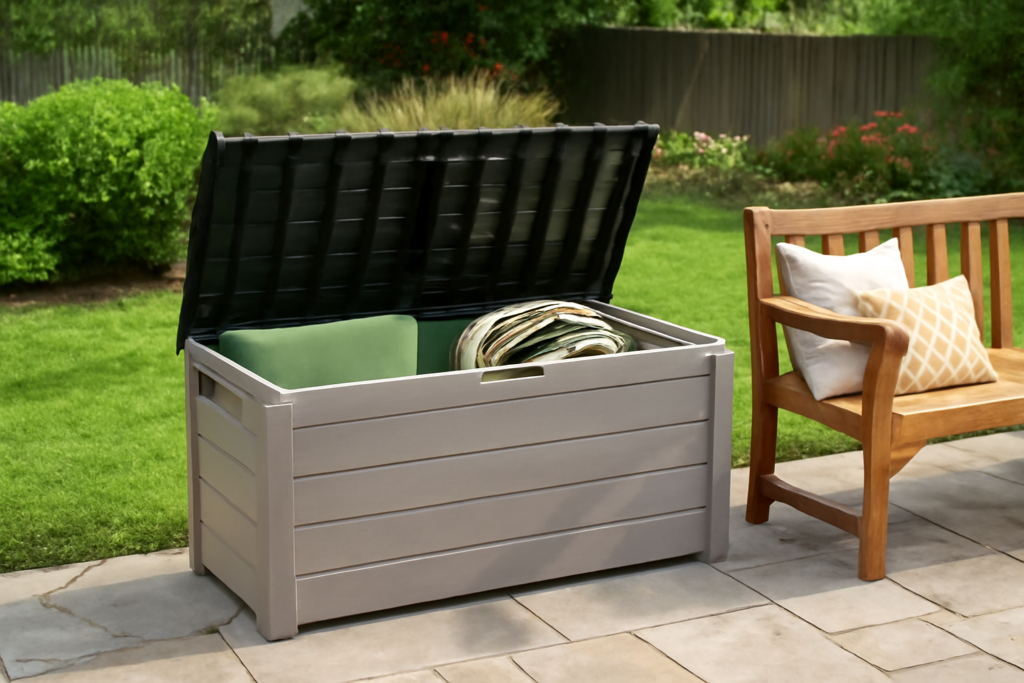
Capacity is usually listed in gallons. As a rough guide, a 50-gallon box holds a couple of cushions or a set of tools, a 100-gallon box handles a full patio set’s cushions, and 150-plus gallons stores bulky items like a folded canopy or pool floats. Many boxes double as seating or a side table; look for one rated to support weight if you want a deck box that pulls double duty as a bench. Confirm the load rating before sitting on it.
Security and Stability
If you will store anything valuable, choose a box with a lockable hasp or latch and consider anchoring it. Lightweight resin boxes can blow over or even tip in strong wind when empty. Some models include built-in anchor points or a hollow base you can fill with sand or weight. Placing the box against a wall and keeping it loaded both help it stay put. For tools or chemicals you want to keep away from children, a locking metal box is the safest choice.
Placement and Care
Where you put the box affects how long it lasts. Set it on a flat, well-drained surface, a deck, patio, or pavers, rather than directly on soil that stays damp. Leaving a few inches of clearance from a wall improves airflow and reduces mildew. In extreme climates, position the box where it gets some shade to limit UV damage, or move it under cover during the harshest months.
Maintenance is minimal but worthwhile. Wipe resin and metal boxes with mild soap and water a couple of times a season. Reseal or restain wood boxes once a year. Check drainage holes for clogs, and store moisture-sensitive items, such as cushions, only when they are fully dry to prevent mold from forming inside.
Common Storage Box Mistakes to Avoid
A few predictable mistakes shorten the life of an outdoor box and the gear inside it. The most common is storing damp cushions or wet tools, which traps moisture and breeds mold inside even a well-built box; always let items dry first. Another is buying too small to save money, then cramming the lid shut, which stresses the hinges and seal. Placing a lightweight box in an exposed, windy spot without anchoring invites it to tip over. Finally, neglecting wood boxes, skipping the annual reseal, lets water penetrate and warp the panels. Avoiding these habits costs nothing and adds years of service.
Matching the Box to Your Climate
Your local weather should steer your priorities. In rainy, humid regions, the most important features are a sloped, overlapping lid, real drainage, and a material that will not rot or hold mildew, which favors UV-stabilized resin or sealed metal. In hot, sunny climates, UV resistance matters most; choose a stabilized resin or a lighter color, and keep the box partly shaded so the plastic does not become brittle. In snowy areas, pick a box that sheds snow and resists cracking in the cold, and avoid sitting it where ice and meltwater pool around the base.
Getting the Most From Your Box
A little organization turns a simple box into a genuinely useful storage solution. Use waterproof bins or zippered bags inside the box to separate small items and add a second layer of moisture protection. Store the things you reach for most near the top, and keep a quick inventory in mind so you do not overfill. For cushions, stack them flat and leave a little airflow space. With smart packing and the habits above, a quality deck box keeps an entire patio’s worth of gear protected, organized, and out of sight.
The Bottom Line
The best storage outdoor box is the one matched to your contents, climate, and patio. For most homeowners, a UV-stabilized resin box of 100 to 150 gallons with a sloped lid and drainage hits the sweet spot of durability, capacity, and value. If looks matter most, choose sealed cedar; if security matters most, choose a lockable metal box. Decide what you are storing, prioritize real weatherproofing, place it on a dry surface, store only dry items, and a quality deck box will protect your gear season after season.