A failing storm door latch is one of those small annoyances that turns into a daily frustration, the door that will not stay shut, rattles in the wind, or refuses to lock. The good news is that latch problems are among the easiest home repairs you can do, usually with a screwdriver and a $25 part. I have swapped dozens of these, and most of the time the fix takes under thirty minutes. This guide covers how storm door latches work, why they fail, and how to get yours latching crisply again.
Part of our Windows & Doors guide — explore the full guide →
Before you replace anything, understand that a storm door latch problem is often just a misaligned strike plate, which you can fix in five minutes without buying a single part.
- How a Storm Door Latch Works
- Common Storm Door Handle Types
- Fixing a Misaligned Latch
- Adjusting the Closer and Latch Tension
- Replacing the Latch Assembly
- Tools You Will Need
- Fixing a Latch That Will Not Lock
- Choosing a Replacement Handle Set
- Dealing With a Warped or Sagging Door
- Keeping Your Latch Working
How a Storm Door Latch Works
A storm door latch is a two-part system. The handle assembly mounts on the door and contains the latch bolt, a spring-loaded metal tongue that extends outward. The strike plate mounts on the door frame with a hole or slot that the latch bolt slides into. When they line up, the door latches; when they do not, it does not.
Most residential storm doors use one of a few handle styles, and knowing yours helps when buying a replacement. The mechanism is simpler than an entry-door lock, which is why repairs are so approachable.
Common Storm Door Handle Types
When you shop for a replacement, you will encounter these main styles:
- Mortise latch: The handle and lock are one integrated unit that mounts through the door edge, common on Andersen and Larson doors
- Surface-mounted latch: The handle bolts onto the face of the door, easier to retrofit
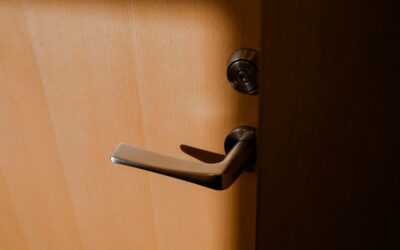
- Lever handle: A modern push-down lever, often with a thumb latch and a keyed deadbolt
- Traditional pull handle with thumb press: The classic style with a thumb piece on top that retracts the latch
Larson and Andersen dominate the storm door market, and both sell exact-match replacement handle sets, so identify your brand from the sticker on the door edge before ordering.
Fixing a Misaligned Latch
The most frequent complaint, a door that will not stay closed, is usually alignment, not a broken latch. Over time the door settles, the frame shifts, or the strike plate loosens, and the latch bolt no longer meets its hole. To fix it:
- Close the door slowly and watch where the latch bolt hits the strike plate
- If it strikes above or below the hole, loosen the strike plate screws and shift it to line up
- If the door has dropped, tighten the top hinge screws or add longer screws to draw it up
- Test the latch and fine-tune until it catches cleanly
A little filing to enlarge the strike opening can also help if the bolt is just barely missing. This adjustment resolves a large share of latch complaints with no new parts.
Adjusting the Closer and Latch Tension
Sometimes the door closes too slowly to latch or bounces back open. The pneumatic closer at the top is the culprit here, not the latch itself. Most closers have an adjustment screw at the end of the cylinder; turning it clockwise slows the closing speed, counterclockwise speeds it up.
You want the door to close firmly enough to drive the latch home but gently enough not to slam. If your door has two closers, adjust both evenly. A door that fails to latch on windy days often just needs a slightly faster closer setting so it catches before the wind pushes it back.
Replacing the Latch Assembly
When the handle is cracked, the latch spring is worn, or the thumb press no longer retracts the bolt, replacement is straightforward. Buy a matching handle set, then:
- Open the door and locate the two screws connecting the interior and exterior handle halves on the door edge
- Remove those screws and pull both handle halves free
- Note the position of the latch mechanism and spindle before fully removing it
- Insert the new latch assembly, align the exterior and interior halves, and reconnect the screws
- Adjust the strike plate to meet the new latch bolt and test the action
Most Larson and Andersen replacement handle sets run $20 to $45 and include the strike plate and screws. Match the screw hole spacing, called the bore or center-to-center dimension, to your door so the new handle covers the old holes.
Tools You Will Need
Storm door latch work requires almost nothing beyond a basic homeowner toolkit, which is part of what makes it such an approachable repair. Before you start, gather:
- A Phillips and a flathead screwdriver for the handle and strike screws
- A tape measure to check the bore spacing when buying a replacement
- A small flat file to enlarge a strike opening if the latch bolt is barely missing
- Dry graphite or Teflon lubricant for the latch bolt and lock cylinder
- A pencil to mark new strike-plate positions
That is genuinely the whole list for most jobs. There is no need for power tools or specialized hardware, which is why a latch repair or replacement is one of the most satisfying quick wins in home maintenance. Even a full handle swap rarely takes more than half an hour with these few items on hand.
Fixing a Latch That Will Not Lock
If the door latches but the key or thumb-turn lock will not engage, the deadbolt or locking pin has likely fallen out of alignment with its receiver in the frame. Check that the strike plate’s deadbolt hole lines up, and confirm the lock cylinder itself turns freely.
A drop of graphite or dry Teflon lubricant in the cylinder frees up a sticky lock. Avoid oil-based lubricants, which attract grit and gum up over time. If the internal locking mechanism is broken, replacing the whole handle set is the reliable fix.
Choosing a Replacement Handle Set
When it is time to replace the whole handle, matching the new set to your door saves a frustrating return trip. The critical measurement is the bore spacing, the distance between the two mounting screw holes on the door edge, which is commonly 3-3/8 inches or 4-1/2 inches on residential storm doors. Measure yours and match it so the new handle covers the existing holes cleanly.
Consider these factors when shopping:
- Brand match: Andersen and Larson sell exact-fit replacements; check the sticker on the door edge for the brand
- Handle style: Decide between a lever, a pull with thumb latch, or a full mortise set
- Finish: Match your entry door hardware, with white, black, brass, and nickel the common choices
- Keyed or not: A keyed cylinder adds security if the storm door is a primary barrier
Universal handle sets exist for odd or discontinued doors, and they include shims and spacers to fit a range of bore spacings. They cost a few dollars more but rescue you when the original brand no longer sells your exact part.
Dealing With a Warped or Sagging Door
Sometimes the latch is fine but the door itself has warped or dropped, throwing off the alignment no amount of strike-plate shifting can fix. Aluminum storm doors can bow slightly in the heat, and the corners can rack over years of use, especially if the closer slams the door repeatedly.
Check the door for square by measuring the diagonals; if they differ, the frame has racked. Tightening the corner brackets or the hinge-side screws can pull it back into shape. If a closer has been slamming the door, adjust it to close more gently, which prevents further racking. For a door that has bowed badly, a full replacement may be more practical than chasing the latch, but most alignment issues respond to tightening hardware and adjusting the closer before it comes to that.
Keeping Your Latch Working
A little upkeep prevents most latch failures. Twice a year, tighten the handle screws, which loosen from daily use, and check the strike-plate alignment. Wipe the latch bolt and give it a shot of dry lubricant so it retracts smoothly. Inspect the closer for oil leaks, since a leaking closer eventually stops controlling the door and lets it slam or drift.
Storm door hardware lives in the weather and takes constant use, so it is normal to replace the latch every several years. But because the parts are cheap and the job is genuinely simple, keeping your storm door latching securely is one of the most satisfying quick wins in home maintenance. Identify your brand, match the part, and you will have it working like new in half an hour.