Sliding barn doors solve a real space problem, but they create a new one the moment you hang one on a bathroom or bedroom: they don’t lock like a normal door. Because a barn door glides flat across the wall instead of latching into a jamb, it needs specialized hardware to keep it shut and give you privacy. A barn door latch lock is the piece that turns a decorative slider into a functional, private door. Choosing the right one depends on where the door hangs, whether you need to lock it from both sides, and how much you care about the look versus raw security.
Part of our Windows & Doors guide — explore the full guide →
Why Barn Doors Need Special Locks
A conventional hinged door has a latch bolt that springs into a strike plate in the door frame, and a lock that throws a deadbolt into that same frame. A barn door has neither. It hangs from a top track and slides parallel to the wall, so there is no frame edge for a traditional latch to grab. Any lock has to work with that sliding motion, either catching the door against the wall or the trim, or pinning the roller so it cannot move.
This is why you cannot just install a standard doorknob and lockset on a barn door. The hardware has to be purpose-built for a sliding application, and the type you choose determines whether you get true privacy, a simple latch, or genuine security.
Hook-and-Eye and Slide Latches
The simplest and most affordable options are surface-mounted latches you have probably seen on gates and cabinets:
- Hook-and-eye latch: a hook mounted on the door catches an eye screwed into the wall or trim. Cheap, easy, and fine for a closet or pantry, but it only works from one side.
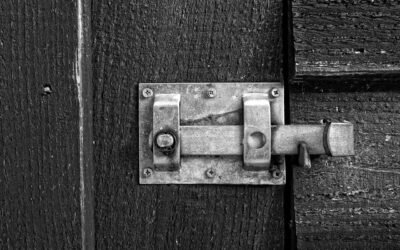
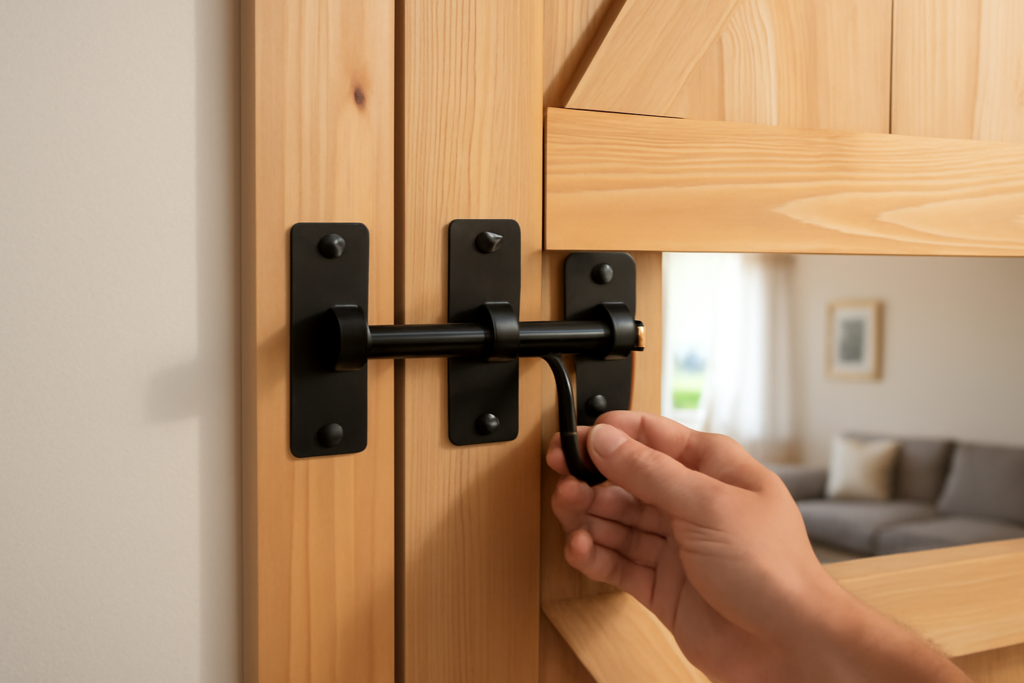
- Barrel or slide bolt: a sliding bar that shoots into a bracket on the wall. Sturdier than a hook and available in finishes that match your hardware.
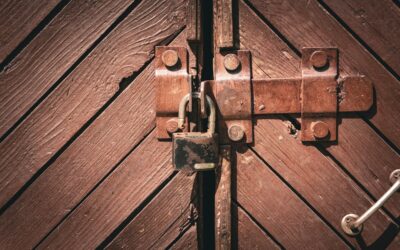
- Hasp or gate latch: a flip-over latch that can accept a padlock for extra security on a utility or storage room.
These excel where you just need to keep a door from drifting open and don’t require locking from both sides. They install in minutes with a few screws.
Teardrop and Flush Privacy Latches
For a cleaner look, a teardrop latch is a popular choice. It is a small metal piece shaped like a teardrop that pivots to catch a strike, giving a tidy, farmhouse-appropriate appearance. Many teardrop latches operate from only one side, so they suit a room where privacy from the inside is enough.
Flush-mount latches sit recessed into the door edge for a sleeker profile, similar to a pocket-door pull. These look the most integrated but require cutting a mortise into the door, which is more involved. For a modern space where you don’t want bulky surface hardware, a flush latch is worth the extra installation effort.
Two-Sided Privacy Locks for Bathrooms and Bedrooms
The most important category for a bathroom or bedroom barn door is a true privacy lock that operates from both sides. These systems, often sold as “barn door privacy lock kits,” let you lock from inside for privacy while still allowing someone to unlock from the outside in an emergency, exactly how a standard bathroom lock works.
They typically combine a pull handle with an integrated lock, or a latch that engages a strike on the wall and can be released from either side. If the door leads to a full bathroom or a primary bedroom, this is the type to buy. Look for a kit specifically rated for privacy, and confirm it includes an outside emergency release so no one gets trapped.
Matching the Lock to the Room
Choosing well comes down to the room’s function:
- Pantry, closet, or laundry: a simple hook-and-eye or teardrop latch is plenty.
- Home office or guest room: a one-sided privacy latch keeps the door closed and signals “occupied.”
- Bathroom or bedroom: a two-sided privacy lock with an emergency release is the right call.
- Exterior or high-security use: a barn door is rarely ideal here, but a lockable hasp with a padlock adds real deterrence for a shed or garage slider.
Buying more lock than you need adds cost and clutter, while buying too little leaves a bathroom door that anyone can slide open. Match the hardware to the actual privacy the room demands.
Installation Tips
Most barn door latches are surface-mounted, which keeps installation approachable. Before drilling, close the door and mark where the latch on the door aligns with the strike point on the wall or trim. Because barn doors stand off the wall by a half-inch or more, you may need a spacer or a strike mounted on the door casing rather than flat on the wall so the two halves meet.
Use anchors if you are screwing into drywall rather than a stud, since a lock takes repeated force. For flush and mortise latches, measure twice and cut the recess carefully; a crooked mortise is hard to hide. Test the latch through the door’s full range of travel to make sure it engages cleanly and does not require you to lift or force the door.
Adding a Pull Handle to the Mix
A latch keeps the door shut, but you still need a comfortable way to slide it, and the two often work together. Barn doors typically use a flush recessed pull on the leading edge so the door can slide fully against the wall, plus a larger surface handle or ladder pull on the face for everyday operation. When you buy a privacy lock kit, check whether it includes a pull or whether you need to add one separately.
The most integrated setups combine the handle and lock into a single unit, so one piece of hardware handles both sliding and privacy. If you buy them separately, match the finishes and position the pull at a comfortable height, generally around 36 inches from the floor, so it falls naturally to hand. Thinking about the pull and the lock together produces a cleaner, more functional door than bolting on whatever latch you find later.
Security Realities of a Sliding Door
It is worth being honest about what a barn door lock can and cannot do. A privacy latch is excellent at signaling “occupied” and keeping a door from being casually slid open, which is all a bathroom or bedroom truly needs. But because a barn door hangs on an exposed track and does not seat into a frame, it is not a security door. A determined person could lift the slab off its rollers or force the light hardware.
For that reason, a barn door is a poor choice as an exterior entry or as the only barrier protecting valuables. Where security genuinely matters, pair the slider with a lockable hasp and padlock for deterrence, or reconsider whether a barn door is the right choice for that opening at all. Inside the home, though, a good privacy lock covers the real need, keeping doors reliably closed and rooms private.
Balancing Looks and Function
Barn door hardware is as much a design statement as a function, so pick a finish that matches your track and handles, matte black, oil-rubbed bronze, and brushed nickel being the common choices. A mismatched shiny latch on a matte black track stands out for the wrong reasons.
Remember that even the best barn door latch lock will not fully soundproof or seal a room, since the door still gaps at the edges. If quiet matters, pair the lock with edge weatherstripping and a solid-core door. But for the core job, keeping the door reliably shut and giving you privacy, the right latch transforms a stylish slider into a door you can actually count on. Match it to the room, mind the wall standoff during install, and choose a two-sided emergency-release lock anywhere real privacy matters.