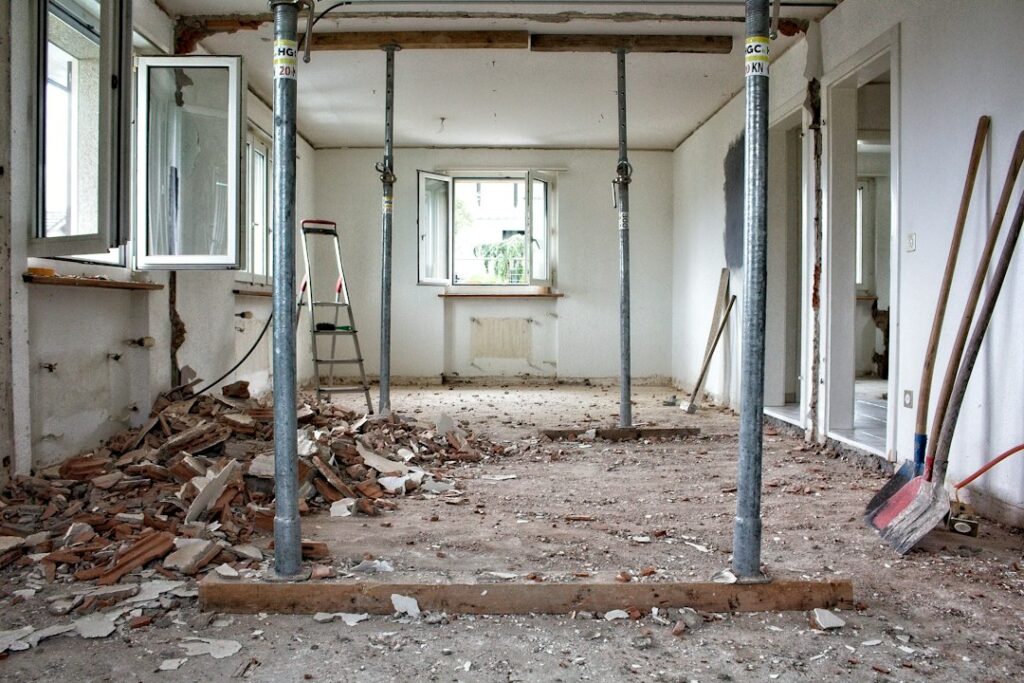
Nobody plans to replace a subfloor. It usually happens after you pull up old flooring and find soft, blackened plywood under a toilet or dishwasher. The subfloor replacement cost for most homeowners lands between $2.50 and $12 per square foot installed, but that range hides big swings driven by access, rot depth, and whether joists are damaged too. Knowing where your job falls on that scale helps you judge quotes and avoid paying for work you do not need.
- Average Subfloor Replacement Cost in 2026
- Cost Breakdown: Materials vs Labor
- What Drives the Price Up or Down
- Signs You Actually Need Subfloor Replacement
- Repair vs Full Replacement
- Hidden Costs to Include in Your Budget
- DIY Subfloor Replacement: Is It Worth It?
- How to Save Money on Subfloor Work
- Choosing a Contractor for Subfloor Replacement
- Cost to Install Plywood Subfloor: How to Estimate Your Own Project
- Subfloor Replacement Cost FAQ
Average Subfloor Replacement Cost in 2026
National averages put a typical subfloor job between $600 and $3,500, with most homeowners paying around $1,700. That figure covers removing the damaged panels, installing new sheathing, and fastening it to the joists. It does not include the finish floor you put on top, which is a separate line item.
| Project Size | Typical Range | Common Scenario |
|---|---|---|
| Small patch (10–30 sq ft) | $300–$900 | Around a toilet flange or under a sink |
| Bathroom (40–60 sq ft) | $700–$2,000 | Leak damage across most of the room |
| Kitchen (150–200 sq ft) | $1,500–$4,500 | Dishwasher or refrigerator line leak |
| Whole floor (1,000+ sq ft) | $4,000–$12,000+ | Flood, termite, or major renovation |
Small repairs cost more per square foot because contractors still need a minimum trip charge, often $250 to $400, to show up with a saw and a sheet of plywood.
Cost Breakdown: Materials vs Labor
Labor is the larger share of most subfloor jobs, usually 60 to 75 percent of the bill. Carpenters and flooring installers typically charge $50 to $100 per hour, or $1.75 to $6 per square foot for removal and replacement combined.
Materials are more predictable. Here is what you will pay for a standard 4×8 sheet in 2026:
- OSB 23/32 inch tongue-and-groove: $22–$35 per sheet ($0.70–$1.10 per sq ft)
- CDX plywood 3/4 inch: $35–$55 per sheet ($1.10–$1.70 per sq ft)
- Premium engineered panels (moisture-resistant OSB): $40–$65 per sheet ($1.25–$2.05 per sq ft)
- Subfloor adhesive: $6–$10 per 28 oz tube, about one tube per 2 sheets
- Ring-shank nails or 2-inch subfloor screws: $25–$45 per job
A 60-square-foot bathroom needs two sheets plus waste, so material costs rarely exceed $150. Most of what you pay for is careful demolition and fitting.
What Drives the Price Up or Down
Two jobs of the same square footage can differ by thousands of dollars. These are the factors that matter most.
Extent of water or rot damage
Surface staining that stops at the top ply may only require a patch. Rot that has spread into joists, rim boards, or sill plates turns a flooring job into structural carpentry. Sistering a single joist adds roughly $300 to $1,000; replacing several can add $2,000 or more.
Access and obstacles
Kitchens and bathrooms are expensive per square foot because cabinets, vanities, toilets, and tubs sit on top of the subfloor. Removing and reinstalling a toilet costs $150 to $300. Pulling a vanity or base cabinet run can add $300 to $1,200. A contractor who can cut the subfloor flush with the cabinet toe-kick and add blocking may save you that cost, but only when the damage stops short of the cabinets.
Floor above or below
Second-floor work is often cheaper than you would expect because joists are exposed once panels are removed. Ground floors over a crawlspace can be more costly if the crawlspace needs mold remediation or moisture control first, which may add $1,500 to $5,000.
Mold and hazardous materials
Old sheet vinyl and some mastics installed before 1980 may contain asbestos. Testing costs $50 to $100 per sample, and professional abatement can run $5 to $15 per square foot. Mold remediation on framing typically adds $500 to $3,000 depending on area.
Signs You Actually Need Subfloor Replacement
Not every squeak or bounce calls for new sheathing. Replacement is justified when you see:
- Soft or spongy spots that flex under body weight, especially near plumbing fixtures
- Dark staining, delamination, or crumbling plywood layers
- Tile that repeatedly cracks along the same line or grout that keeps popping out
- A toilet that rocks even after the flange bolts are tightened
- Musty odors coming up through the floor covering
Squeaks alone usually point to loose fasteners, not failed sheathing. A handful of screws driven into the joists costs almost nothing and often solves the problem. Uneven floors may be a joist issue rather than a subfloor one; a 6-foot level laid across several joists will show whether the dip is in the framing or just the panel.
Repair vs Full Replacement
A partial repair makes sense when damage is limited to one or two panels and the surrounding sheathing is dry and solid. The contractor cuts the damaged section back to the centers of the nearest joists, adds 2×4 blocking along any unsupported edges, and installs a matching-thickness patch. Expect $300 to $900 for a typical repair.
Full replacement makes more sense when the subfloor is older particleboard, which swells permanently when wet and loses strength. Particleboard was common in homes built from the 1970s through the 1990s under carpet and sheet vinyl. If you are installing tile or rigid-core vinyl over it, most manufacturers will not honor their warranty, so replacing it outright is often the smarter long-term spend.
Another middle option is an overlay: screwing 1/4 to 1/2 inch plywood underlayment over a sound but uneven subfloor. That costs $1.50 to $3 per square foot installed and avoids demolition, but it raises floor height and can create transition problems at doorways.
Hidden Costs to Include in Your Budget
Quotes often leave out work that becomes obvious only after the old floor comes up. Plan a contingency of 15 to 20 percent for these items:
- Finish flooring removal: $1–$3 per sq ft for carpet or vinyl, $2–$5 per sq ft for tile
- Plumbing work: replacing a corroded toilet flange ($150–$350) or fixing the leak that caused the damage in the first place
- Baseboard and trim: removal and reinstall adds $1–$3 per linear foot
- Permits: some municipalities require a permit for structural repairs, typically $50–$300
- Disposal: a small dumpster or haul-away fee of $150–$500
Also factor in the new finish floor. A $1,500 subfloor repair under a $4,000 tile install is common, and scheduling both with one contractor can reduce trip charges.
DIY Subfloor Replacement: Is It Worth It?
A capable DIYer can replace a small section of subfloor for $100 to $300 in materials and tool rentals. You need a circular saw set to the exact panel depth, an oscillating tool for edges near walls, a drill-driver, a chalk line, and a good pry bar. Set the saw depth carefully; cutting into a joist or a hidden pipe or wire turns a simple patch into an emergency.
DIY is less appealing when damage extends under cabinets, involves joist repair, or sits over a bathroom with a finished ceiling below. Those jobs demand structural judgment and often plumbing skills. In those cases, the $1,000 to $2,000 you save may not be worth the risk of an uneven or bouncy floor that telegraphs through your new tile.
How to Save Money on Subfloor Work
You can lower your subfloor replacement cost without cutting corners on the structure itself:
- Fix the water source first. Replacing sheathing without repairing the leak guarantees a repeat bill.
- Do the demolition yourself. Pulling carpet, pad, and old vinyl can save $1 to $3 per square foot.
- Bundle with the flooring install. Flooring contractors often discount subfloor work when they are also installing the finish floor.
- Get at least three quotes. Ask each contractor to price per square foot and per hour so you can compare apples to apples.
- Check your homeowners insurance. Sudden leaks such as a burst supply line are often covered; slow, long-term leaks usually are not.
Choosing a Contractor for Subfloor Replacement
Look for a flooring installer or general carpenter who can show photos of past subfloor work, not just finished floors. Ask how they fasten new panels; the right answer involves adhesive plus screws or ring-shank nails every 6 inches on edges and 12 inches in the field. Ask what thickness they plan to use and whether they will match the existing panel height to avoid lips at transitions. A confident contractor will also explain how they will inspect the joists once the old panels come out. That inspection is where a fair quote protects you from surprise change orders later.
Cost to Install Plywood Subfloor: How to Estimate Your Own Project
If you are putting down new plywood rather than patching damage, such as in an addition, a gutted room, or a floor that is being fully re-sheathed, the cost to install plywood subfloor becomes easier to predict. With no rot to chase, the price mostly comes down to square footage, panel choice, and how much prep the joists need.
Step 1: Count the sheets
A standard sheet covers 32 square feet. Divide the room’s area by 32, then add roughly 10 percent for cuts and waste, more for rooms with many angles or closets. A 200-square-foot room needs about 7 sheets before waste, so plan on 8. Multiply by the local per-sheet price of the plywood you choose; using the 3/4 inch CDX plywood per-sheet range in this guide gives a material budget in the low hundreds of dollars for a room that size, before adhesive and fasteners.
Step 2: Match the panel to the job. The panel specification drives both material cost and performance:
- Thickness. Thicker panels cost more but are stiffer. Joist spacing and the finish floor set the minimum; tile and stone need a stiffer assembly than carpet or floating floors.
- Tongue-and-groove edges. They cost more than square-edge sheets but lock panel edges between joists, reducing bounce and the need for extra blocking.
- Plywood versus OSB. Plywood usually costs more per sheet than OSB. Many homeowners choose it for how it handles occasional moisture, especially in kitchens and baths.
Step 3: Price the labor factors. Labor varies more than materials. It rises when installers must remove old sheathing first, shim or plane uneven joists, add blocking, work around stairs and many cutouts, or haul material to an upper floor. Glue-and-screw fastening takes longer than nailing alone but produces a quieter floor, and it is worth paying for. On small rooms, expect a minimum charge to apply regardless of square footage.
Step 4: Add the extras. Include adhesive, screws or ring-shank nails, blade wear, disposal of any old material, and a permit if your jurisdiction requires one for structural work. If the subfloor is being installed ahead of tile, ask whether an additional underlayment layer is needed and price it at the same time. Getting a written quote that separates panels, labor, and extras makes it easy to compare contractors.
Subfloor Replacement Cost FAQ
How much does it cost to replace a subfloor in a bathroom?
Most bathrooms cost $700 to $2,000, including removing and reinstalling the toilet. Costs climb if the vanity or tub must come out or if joists are rotted.
Is subfloor replacement covered by homeowners insurance?
Sudden, accidental water damage such as a burst pipe is usually covered. Gradual leaks, rot, and termite damage are typically excluded, so document the cause with photos.
How long does subfloor replacement take?
A small repair can be done in half a day. A full kitchen or bathroom usually takes 1 to 3 days, longer if joists need repair or the area must dry out first.
What thickness subfloor should I use?
For joists 16 inches on center, 23/32 inch (nominal 3/4 inch) tongue-and-groove plywood or OSB is the standard. Tile installations may need an additional underlayment layer for stiffness.
Prefer to explore on your own?
See how new flooring looks in your actual room in seconds — free, no signup.
Try the free Floor Studio →