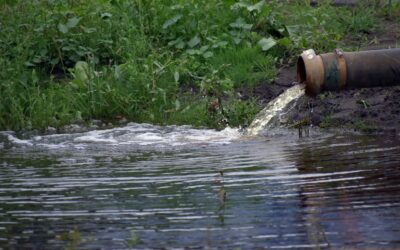
Your sump pump can be brand new and perfectly sized, but if the pipe carrying water outside is done wrong, you’ll still end up with a wet basement. The sump pump discharge line is the part of the system that decides where all that pumped water actually goes, and small mistakes here, dumping too close to the house, undersizing the pipe, or letting it freeze, undo everything the pump is working to accomplish. This guide covers proper sizing, routing distance, freeze protection, and the code rules that keep your discharge legal and effective.
- What the Discharge Line Does
- Proper Pipe Size and Material
- How Far From the House Should It Discharge?
- The Critical Role of the Check Valve
- Preventing Frozen Discharge Lines
- Where You Can and Can’t Drain It
- Using a Dry Well or Pop-Up Emitter
- Installing or Extending the Line Yourself
- Sizing for Heavy Rainfall and Multiple Pumps
- Routine Inspection and Maintenance
What the Discharge Line Does
The discharge line is the pipe that runs from the top of the sump pump, up out of the pit, through the rim joist or wall, and out to a point where the water can safely drain away. Its entire purpose is to move collected groundwater far enough from the foundation that it doesn’t simply seep back down into the pit, creating an endless, pump-killing loop.
Get the routing wrong and you’ll notice the pump cycling far more often than it should, because it’s re-pumping the same water. A well-designed discharge line breaks that loop and gives the pump a fighting chance during heavy rain.
Proper Pipe Size and Material
Discharge lines are typically 1-1/2 inch or 1-1/4 inch PVC, matching the pump’s discharge port. A common and costly mistake is reducing the pipe diameter below the pump’s outlet, which chokes flow and makes the pump work harder. If anything, keep the full diameter the whole way, and never neck it down.
Rigid PVC is the standard for the main run because it resists crushing and handles pressure well. Where the line exits outside, some installers transition to a flexible or corrugated extension, but keep those short and well-supported; long runs of thin corrugated pipe kink, sag, and clog. Solid pipe outperforms flexible tubing for anything but the final few feet.
How Far From the House Should It Discharge?
Distance from the foundation is one of the most important design factors. As a general rule, the discharge should release water at least 10 feet away from the foundation, and farther is better on flat or clay-heavy lots that drain slowly. Releasing water right beside the house lets it percolate straight back down to the sump.
The ground should also slope away from the house at the discharge point so gravity carries the water off, not back. On lots that don’t drain well, extend the line to a lower area of the yard, a storm drain (where permitted), or a dry well. The goal is simple: get the water somewhere it will move away and not return.
The Critical Role of the Check Valve
Near the pump, on the vertical section of the discharge line, sits a check valve, a one-way valve that’s essential to the line’s function. When the pump shuts off, gravity would pull the column of water in the vertical pipe back down into the pit. The check valve blocks that backflow, so the pump doesn’t immediately re-pump the same water.
A failed check valve causes rapid short-cycling, the pump kicking on and off repeatedly, which burns out motors fast. Install it in the correct orientation (arrow pointing in the direction of flow, up and out) and replace it if you hear that telltale repeated cycling.
Preventing Frozen Discharge Lines
In cold climates, a frozen discharge line is the number-one wintertime failure, and it’s dangerous because the pump keeps running against a blocked pipe, potentially burning out or overflowing the pit. Several strategies reduce the risk:
- Bury the line below the frost line where it runs underground, sloped continuously so no water sits and freezes.
- Slope the exposed exterior section downhill so water fully drains out after each pump cycle rather than pooling.
- Use a larger-diameter outlet at the end so ice can’t seal it shut as quickly.
- Install a freeze-relief fitting (IceGuard-style): a special coupling that lets the pump discharge even if the downstream line freezes solid.
That freeze-relief fitting is cheap insurance in snowy regions. If the buried line ices up, the fitting vents water out at ground level near the house rather than letting the pump run against a dead-end.
Where You Can and Can’t Drain It
Code rules vary by municipality, so check locally, but some principles are widespread. Many jurisdictions prohibit connecting a sump discharge to the sanitary sewer, because clean groundwater overwhelms treatment plants. Discharging onto a neighbor’s property or a public sidewalk is also commonly banned and just makes for bad relations and icy walkways.
Acceptable outlets usually include your own yard graded away from the house, a dedicated storm drain, or a dry well. Never tie the sump line into the home’s sewer or septic system unless your local code specifically allows it. When in doubt, a quick call to the local building department settles it.
Using a Dry Well or Pop-Up Emitter
If your yard is flat or you want a tidy solution, two accessories help. A dry well is a buried, gravel-filled or perforated basin that receives the discharge and lets it slowly percolate into the soil away from the house, ideal where surface routing isn’t practical. A pop-up emitter sits at the end of a buried line and opens under water pressure to release flow at the surface, then closes to keep out debris and rodents.
Both keep the discharge point clean and unobtrusive while still moving water well away from the foundation. Size a dry well for your pump’s output and local soil drainage, poor-draining clay needs a larger well.
Installing or Extending the Line Yourself
Extending a discharge line is a manageable DIY project for a homeowner comfortable with basic PVC work. The connections are glued with PVC primer and cement, the same technique used throughout residential plumbing, and the tools are inexpensive. Start by matching the new pipe to the existing diameter so you don’t create a bottleneck, then plan the route to maintain continuous downhill slope toward the outlet, avoiding any dips where water could sit and freeze.
Where the line runs underground, dig a trench that keeps the pipe below the frost line and bed it on a little gravel so it drains and doesn’t settle unevenly. Support any above-ground sections with straps or brackets every few feet so long runs don’t sag over time. Test the finished line by triggering the pump and confirming brisk, leak-free flow all the way to the outlet before backfilling the trench. Take your time on the slope and the joints, those two details determine whether the line performs for years or fails the first hard winter.
Sizing for Heavy Rainfall and Multiple Pumps
In areas with frequent heavy storms or a high water table, the discharge line has to keep up with a pump running near capacity, and undersizing shows up as a pump that can’t clear the pit fast enough. Match the pipe to the pump’s rated gallons-per-hour output, and resist the temptation to route through long, winding runs with lots of elbows, since every fitting and every foot of horizontal pipe adds friction that slows flow.
If you run a primary and a backup pump, plan how their discharge lines combine. Many setups keep the backup pump on its own separate discharge so a clog or freeze in the main line doesn’t disable both pumps at once. Where they share a line downstream, size that shared section generously and include check valves on each pump’s branch so one pump can’t push water back into the other. For homes that flood badly, this redundancy in the discharge design is what turns a single point of failure into a resilient system.
Routine Inspection and Maintenance
The discharge line needs occasional attention. A few times a year, and before winter, walk the line and confirm the outdoor outlet is clear of mud, leaves, snow, and nests. Pour water into the pit to trigger the pump and watch that water exits briskly at the far end. Check the check valve for leaks or rapid cycling, and make sure no section has sagged into a low spot where water can pool and freeze.
A little maintenance prevents the surprise winter failure that floods a basement. Treated as an integral part of the system rather than an afterthought, a well-sized, properly routed, freeze-protected sump pump discharge line is what actually keeps water out of your basement, carrying every gallon the pump lifts safely away from the house, storm after storm.