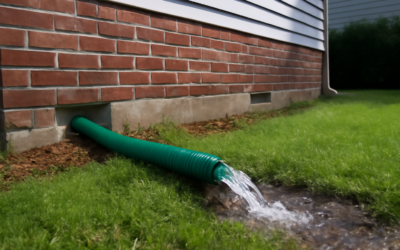
Your sump pump can work flawlessly and still flood your basement if the water it pumps out simply runs right back toward your foundation. Getting the sump pump pipe outside routed correctly, carrying discharge water far enough away and preventing it from freezing shut, is just as important as the pump itself. Homeowners often obsess over the pump and neglect the discharge line, only to discover in a February thaw that a frozen or too-short pipe has sent thousands of gallons back into the very basement they were protecting.
This guide covers how far the pipe should extend, how to stop it from freezing, and how to install a discharge line that actually keeps water away.
- Why the Discharge Line Matters So Much
- How Far the Pipe Should Extend
- Preventing the Pipe From Freezing
- Above-Ground Versus Buried Discharge
- Installing a Buried Discharge Line
- What It Costs
- Common Mistakes to Avoid
- Choosing the Right Pipe Material and Size
- Check Valves and Backflow Prevention
- Final Thoughts
Why the Discharge Line Matters So Much
A sump pump lifts water out of the pit and pushes it through a pipe to the outside. If that pipe dumps the water too close to the house, the water saturates the soil right against the foundation, seeps back down to the drain tile, and refills the pit. The pump cycles again and again, wearing itself out while never actually solving the problem.
The goal is simple: move the water far enough from the foundation that it drains away downhill and never returns. Everything about the outside pipe, its length, its slope, and its freeze protection, serves that single purpose.
How Far the Pipe Should Extend
The discharge point should sit at least 10 feet from the foundation, and 20 feet or more is better on flat lots or clay soil that drains slowly. The ground should slope away from the house so gravity keeps carrying the water off.
- Minimum: 10 feet from the foundation wall.
- Better: 15 to 20 feet, especially with poor drainage.
- Best: Direct the water to a natural low spot, a storm drain where code allows, or a dry well well away from the house.
Never discharge toward a neighbor’s property or back into your own footing drains, and check local codes, since many areas prohibit routing sump water into the sanitary sewer.
Preventing the Pipe From Freezing
In cold climates, a frozen discharge line is the number one sump pump failure during winter. When the exposed pipe freezes solid, the pump keeps running against a blocked line, either burning out the motor or backing water up into the basement. A few strategies keep the line clear.
- Slope for full drainage: Pitch the pipe so it drains completely between cycles, leaving no standing water to freeze.
- Bury below the frost line: Run the buried portion below your area’s frost depth, which can be 3 to 4 feet in northern states, so it never freezes.
- Use a larger diameter outlet: A wider discharge opening resists complete blockage from ice.
- Install a freeze-relief fitting: A special above-ground fitting, sometimes called an IceGuard, lets water escape from the side if the main line freezes downstream.
The freeze-relief fitting is cheap insurance in snowy regions, giving the pump an escape route even when the buried pipe ices over.
Above-Ground Versus Buried Discharge
You have two basic ways to carry water away from the house, each with tradeoffs.
Above-Ground Extension
A flexible or rigid pipe laid on the surface, often sloped across the yard. It is cheap and easy, you can disconnect it seasonally, but it is a tripping and mowing nuisance and freezes readily in winter. Roll-out corrugated extensions work in mild climates but clog and freeze in cold ones.
Buried Discharge Line
A solid PVC pipe buried below grade that carries water to a distant pop-up emitter or dry well. It is invisible, does not interfere with the yard, and resists freezing when buried below the frost line. It costs more and takes real digging, but it is the durable, permanent solution most professionals recommend.
Installing a Buried Discharge Line
- Plan the route from the exit point at the house downhill to the discharge location at least 10 feet away.
- Dig a trench that reaches below your local frost line and maintains a continuous downhill slope, at least 1/8 inch per foot.
- Lay solid schedule 40 PVC, gluing the joints so nothing leaks underground.
- Terminate at a pop-up emitter that opens under water pressure and closes when idle, keeping debris and rodents out.
- Add a freeze-relief fitting near the house so the pump can still discharge if the buried line freezes.
- Backfill, tamp the soil, and confirm the ground still slopes away from the foundation.
Test the whole system by pouring water into the sump pit and watching it exit cleanly at the far end.
What It Costs
A simple above-ground extension costs $10 to $40 in parts. A freeze-relief fitting runs $15 to $30. A full buried discharge line with PVC, a pop-up emitter, and the digging costs $150 to $400 in materials if you do it yourself, or $500 to $1,500 if you hire a contractor to trench and install it professionally. Given that a single basement flood can cause thousands in damage, a proper discharge line is money well spent.
Common Mistakes to Avoid
The most frequent errors are dumping water too close to the house, using corrugated pipe that clogs with sediment, and forgetting freeze protection in cold climates. Homeowners also sometimes connect the discharge to a buried line with no slope, so water sits and freezes, or terminate the pipe uphill from the house so water flows right back. Always confirm the entire run slopes away and drains fully, and never tie the sump discharge into your sewer or footing drains.
Choosing the Right Pipe Material and Size
The pipe you use has a big effect on how well the system drains and resists freezing. Most sump pumps discharge through a 1.5-inch or 1.25-inch outlet, and the buried run should match or step up to that size, commonly using schedule 40 PVC for its strength and smooth interior. Solid PVC beats corrugated flexible pipe for any buried or long run because its smooth walls resist sediment buildup and it will not sag into low spots where water pools and freezes.
Corrugated black tubing is cheap and easy for a temporary above-ground extension, but its ridged interior collects grit and clogs over time, and it kinks easily. If you do use a flexible extension, treat it as a seasonal convenience rather than a permanent solution. For a system you want to forget about, glued schedule 40 PVC buried below the frost line is the durable choice that professionals rely on year after year.
Check Valves and Backflow Prevention
A check valve installed on the discharge line just above the pump is essential and often overlooked. When the pump shuts off, the column of water sitting in the vertical pipe would otherwise fall back into the pit, forcing the pump to re-pump the same water and causing rapid, wearing short-cycling. The check valve holds that water in the line so the pump gets a rest between cycles, extending its life significantly.
Position the check valve where you can access it, since it is a wear item that occasionally needs replacement. A quiet, spring-loaded check valve costs a bit more than a basic swing-type but eliminates the loud clunk many homeowners hear each time the pump cycles. Pair it with a properly sloped discharge line and a freeze-relief fitting, and you have a system that drains cleanly, protects the motor, and keeps running through the harshest conditions.
Final Thoughts
Routing your sump pump pipe outside correctly is the difference between a pump that protects your basement and one that endlessly recirculates the same water. Carry the discharge at least 10 feet from the foundation, slope it so it drains completely, and in cold climates bury it below the frost line with a freeze-relief fitting as backup. Spend a weekend and a few hundred dollars getting the discharge right, and your pump will keep your basement dry through the worst storms and coldest winters instead of fighting a losing battle against its own output.