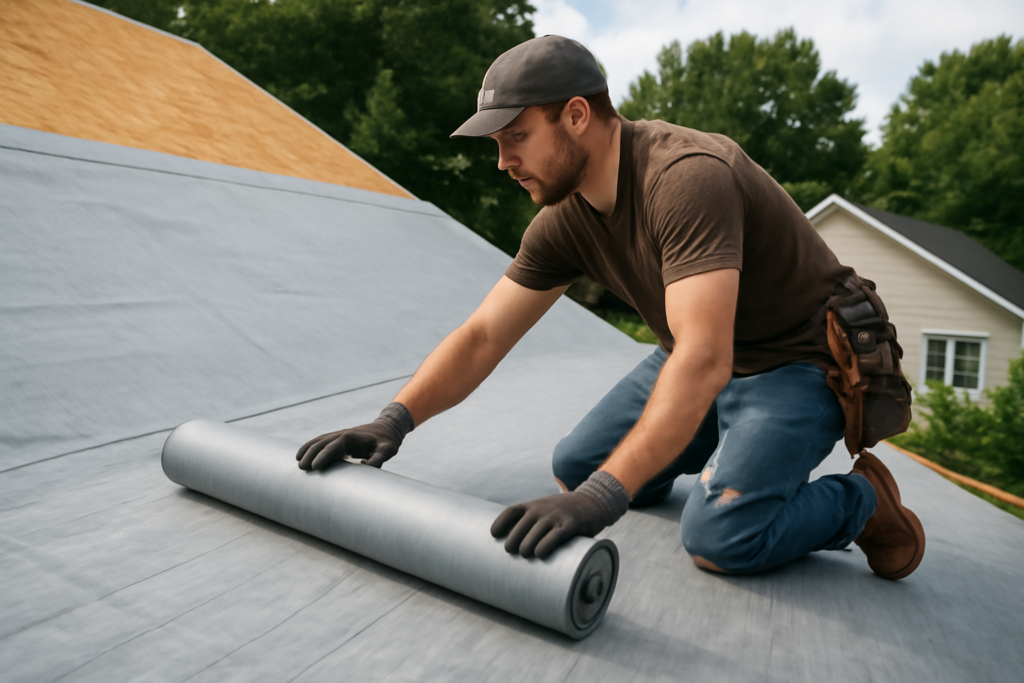
The shingles get all the attention, but the layer underneath them is what truly protects your home from leaks. Synthetic roof underlayment is the modern replacement for traditional asphalt felt, made from woven or spun polypropylene or polyester that is lighter, stronger, and far more tear-resistant. It rolls out faster, resists wrinkling, and holds up to foot traffic and weather exposure during installation. For most new roofs, synthetic underlayment has become the standard choice, though it pays to understand the types and where each one belongs.
Part of our Roofing guide — explore the full guide →
What Underlayment Does
Underlayment is the secondary water barrier installed over the roof deck and beneath the shingles. If wind-driven rain gets past the shingles, or if shingles are damaged, the underlayment is the layer that keeps water out of your sheathing and attic. It also protects the deck from moisture during the days when the roof is open mid-installation. Think of it as the backup that earns its keep precisely when the primary roofing fails.
Synthetic vs. Felt
For generations, asphalt-saturated felt, the familiar “tar paper,” was the default. Synthetic underlayment improves on it in nearly every measurable way.
- Weight: synthetic is much lighter, so rolls cover more area and are easier to carry
- Strength: synthetic resists tearing and stands up to wind and foot traffic far better
- Water resistance: synthetic repels water and will not absorb it like felt, which can wrinkle and rot
- UV exposure: many synthetics tolerate weeks or months of sun exposure, while felt degrades quickly
- Traction: better synthetics have a textured walking surface for safer footing
Felt is cheaper per roll and still used on budget jobs, but synthetic’s durability usually justifies the difference.
Types of Synthetic Underlayment
Not all synthetics are interchangeable, and matching the product to the roof matters.
- Standard mechanically fastened synthetic: the common choice, stapled or capped-nailed to the deck
- Self-adhering (peel-and-stick) membranes: seal around fasteners and excel in valleys, eaves, and low-slope areas
- High-temperature synthetic: rated for hot metal roofs and high-heat regions
- Ice-and-water shield: a specialized self-adhering membrane for ice-dam-prone eaves and valleys, often required by code in cold climates
Installation Basics
Synthetic underlayment is rolled out horizontally starting at the eaves and working up the slope, overlapping each course so water sheds downhill over the seams. It is fastened with cap nails or cap staples, which have a plastic washer that resists tear-through and seals better than bare staples. Manufacturers specify overlap distances and fastener patterns, and following them is essential for both performance and warranty coverage. Self-adhering membranes get applied to clean, dry decking in valleys and along eaves where leak risk is highest.
Safety and When to Hire a Pro
Roofing is one of the more dangerous home projects, and a steep or high roof multiplies the risk. While a low-slope shed or a small section may be within reach of an experienced DIYer with proper fall protection, most full roof jobs are best left to a licensed roofing contractor. A pro will handle steep pitches, integrate underlayment correctly with flashing and ventilation, address any structural concerns, and ensure the work meets local code and warranty terms. If you have any doubt about the slope, height, or your footing, hire a professional. The cost of a fall far outweighs the savings.
Performance and Longevity
When properly installed under quality shingles, synthetic underlayment can last as long as the roof covering itself, often decades. Its resistance to wrinkling means a flatter, cleaner shingle installation, and its tear strength gives you a wider margin if a few shingles blow off in a storm before repairs. The exposure rating matters during construction: if the job stalls, a synthetic with a long UV rating buys you time the felt never could.
What Synthetic Roof Underlayment Costs
Material pricing is moderate. Standard synthetic underlayment often runs about $0.15 to $0.50 per square foot for materials, while self-adhering and ice-and-water membranes cost more, roughly $0.50 to $1.50 per square foot. A typical roll covers a large area, so a full roof’s underlayment is a relatively small share of the total project. Treat these as general ranges, since grade, brand, and region affect pricing. Installed as part of a full roof, underlayment cost is usually folded into the roofer’s overall bid.
Underlayment and Roof Warranties
Many shingle manufacturers offer enhanced warranties when you use a complete roofing system, which often includes the brand’s own underlayment, starter strips, and ridge products installed by a certified contractor. If a strong warranty matters to you, ask the roofer which products and installation steps are required to qualify, since mixing components or skipping specified layers can void coverage. Synthetic underlayment is frequently part of these system warranties because of its reliability. Keep your documentation, including product names and the installer’s certification, in case you ever need to make a claim.
Matching Underlayment to Your Roof Type
The right underlayment depends partly on what goes over it. Asphalt shingles work with standard fastened synthetic across most of the roof, with self-adhering membrane at the eaves and valleys. Metal roofs generate more heat, so they call for a high-temperature-rated underlayment that will not break down. Low-slope sections shed water poorly and benefit from extra self-adhering membrane coverage. In cold, snowy regions, code often requires ice-and-water shield along the eaves to guard against ice dams. A good roofer selects the combination suited to your climate, slope, and roof covering, which is one more reason professional installation pays off on a full roof.
The Bottom Line
Synthetic roof underlayment is the durable, water-resistant, tear-resistant successor to felt and the smart choice for most roofs. Match the type to the roof, from standard fastened rolls to self-adhering membranes at vulnerable areas, and follow the manufacturer’s overlap and fastener specs. For steep or structural work, bring in a licensed roofer, since a properly installed underlayment is what keeps your home dry for decades. Treat it as the backbone of the roof rather than an afterthought, and choose products and an installer that protect both your home and your warranty.