Most people who buy a tabletop patio heater expect it to heat the whole deck, and most of them are disappointed on the first cold night. A small heater that sits on a bistro table is built to warm the two or three people sitting right around it, usually within a 3 to 6 foot circle. Used that way, it is one of the most efficient ways to stretch evenings outdoors into late fall. Used as a substitute for a full-size tower heater, it feels weak and burns through fuel fast.
Part of our Decks & Outdoor guide — explore the full guide →
The short answer: choose a propane tabletop unit if you want real radiant warmth on an open patio and you can store fuel safely, and choose an electric unit if you have a covered balcony, a nearby GFCI outlet, and building rules that restrict open flame. Either way, look for a tip-over shutoff, a stable weighted base, and a heat output that matches the size of your table rather than the size of your yard.
- What a Tabletop Patio Heater Actually Does
- 1 lb vs 20 lb Propane: Which Fuel Setup Fits
- Electric Tabletop Heaters: When They Make More Sense
- Features Worth Paying For
- How to Set Up and Use a Tabletop Heater Safely
- Fire, Gas, and Carbon Monoxide Safety
- Troubleshooting Common Problems
- Costs and When to Call a Pro
- Frequently Asked Questions
That framing matters because tabletop models sit in a different category from the tall mushroom and pyramid heaters you see at restaurants. Those full-size units put out roughly 40,000 BTU or more and warm a circle 15 to 20 feet across. A mini patio heater usually runs between 5,000 and 12,000 BTU, which is plenty for a small porch heater role but not for a crowd.
What a Tabletop Patio Heater Actually Does
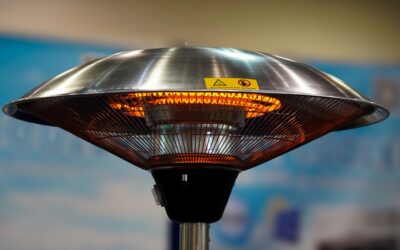
A tabletop patio heater is a compact radiant heater, typically 30 to 40 inches tall, designed to sit on a sturdy outdoor table. The propane versions use a small burner beneath a reflector hood or an enclosed glass flame tube. The reflector bounces infrared heat downward and outward, so you feel it on your hands, face, and shoulders more than you feel the air warming. That is why radiant heat works outdoors at all: wind carries warm air away almost instantly, but infrared warms the surfaces and people it hits.
Electric tabletop heaters use a quartz, carbon, or ceramic element instead of a flame. They reach full output in seconds and produce no combustion byproducts, but they depend on a power cord and usually top out around 1,500 watts, which works out to roughly 5,100 BTU. On a still night under a covered balcony, that is enough for two people. On a breezy open deck, it fades quickly beyond arm’s length.
Realistic expectations for a small outdoor heater:
- Warm radius: about 3 to 6 feet for most propane units, 2 to 4 feet for 1,500 watt electric models.
- Best use: a two to four seat bistro or café table, a small balcony, or a front porch seating nook.
- Weak spots: wind, open lawns, and large gatherings where people sit more than 6 feet from the flame.
1 lb vs 20 lb Propane: Which Fuel Setup Fits
Most table top propane heater designs are built around the disposable 1 lb cylinder that screws directly into the base. That keeps the unit compact and portable, and it is the reason these heaters look tidy on a table. The tradeoff is run time. A 1 lb cylinder holds about 21,600 BTU of fuel, so a heater running at 10,000 BTU on high burns through it in roughly two hours. On low you may get three to four hours.
Some small patio heater propane models accept an adapter hose so you can run them from a standard 20 lb tank sitting on the ground. A full 20 lb tank holds around 430,000 BTU, which is 20 times the fuel of a small cylinder and often enough for a whole season of occasional evenings. The catch is a hose crossing your table edge and a tank at foot level, both of which are trip and snag points.
Choosing between them
- Stick with 1 lb cylinders if you use the heater a few times a month, need to carry it between spaces, or want nothing on the ground.
- Use a 20 lb tank with a listed adapter hose if you heat the same table most evenings and can route the hose away from walkways and chair legs.
- Refillable 1 lb cylinders exist and cut waste, but only refill them through a proper supplier and inspect the valve and O-ring each time.
Never modify fittings, drill regulators, or rig homemade adapters. Use only the hose and regulator combination the heater maker lists for that model.
Electric Tabletop Heaters: When They Make More Sense
An electric garden table heater is often the better pick for apartment balconies, condo patios, and covered porches. Many buildings and HOAs ban open-flame devices on balconies, and many landlords prohibit storing propane cylinders inside units. Electric heaters sidestep both problems.
For electric models, plug the heater directly into an outdoor GFCI-protected receptacle. Skip extension cords and power strips, which can overheat under a continuous 1,500 watt load. If your balcony has no outlet, do not run a cord through a door or window; adding a new outdoor receptacle is a job for a licensed electrician, who will install a weather-resistant GFCI outlet with an in-use cover on an appropriate circuit.
Look for a unit rated for outdoor or damp locations, a tip-over switch, an overheat cutoff, and a cool-touch housing. Keep the cord where nobody will catch a foot on it, and unplug the heater when you go inside.
Features Worth Paying For
The best tabletop propane heater for your space is the one with the right safety hardware and a base that will not rock, not the one with the biggest BTU claim. Compare these points before you buy:
- Tip-over shutoff. A switch that cuts the gas or power if the heater leans past a set angle. Treat this as mandatory.
- Thermocouple or flame-out protection. On propane units, this stops gas flow if the flame blows out, which is common on breezy nights.
- Weighted base and wide footprint. A base of 12 inches or wider is noticeably steadier than a narrow stem.
- Adjustable output. A low setting stretches fuel and keeps the top from getting uncomfortably hot for people sitting close.
- Piezo or electronic ignition. Lets you light it without matches or a long lighter near the burner.
- Listing and certification. Choose a model listed by a recognized testing lab for outdoor use. For electric units, confirm the listing covers damp or wet locations.
- Glass flame tube vs reflector hood. Glass tubes look great and throw a soft glow; reflector hoods usually push more usable heat down to the table.
How to Set Up and Use a Tabletop Heater Safely
Small heaters get treated casually, and that is where problems start. A few habits keep every session uneventful.
- Place it on a level, solid table. Avoid glass tabletops that could crack from heat at the base and lightweight folding tables that wobble.
- Check clearances. Follow the manual, but plan for at least 3 feet from umbrellas, awnings, curtains, string lights, and overhanging plants. Many models require several feet of open space above the top.
- Close the umbrella. A patio umbrella directly above a flame heater is a common way to scorch or ignite fabric.
- Leak test propane connections. Brush soapy water on the cylinder connection with the valve open and the heater off. Growing bubbles mean a leak: shut off the fuel, reseat the cylinder, and test again. If it still bubbles, stop using the heater.
- Light it per the instructions and stay nearby for the first few minutes while it stabilizes.
- Keep kids and pets back. The top cap and reflector can get hot enough to burn skin.
- Shut it off before you walk away. Close the cylinder valve, let the unit cool completely, then remove the cylinder for storage.
Fire, Gas, and Carbon Monoxide Safety
Propane tabletop heaters are strictly outdoor appliances. Never use one inside a home, garage, tent, camper, enclosed porch, or sunroom, even with a window cracked. Burning propane produces carbon monoxide, which is odorless and can build to dangerous levels quickly in a closed space. Install carbon monoxide alarms on every level of your home and near sleeping areas, especially if your patio sits next to bedroom windows or a door that stays open.
A “covered” patio is a gray zone. A roof overhead with open sides usually allows enough airflow, but a three-walled enclosure or a porch with drop curtains can trap exhaust. When in doubt, choose electric for semi-enclosed spaces, and always follow the clearance and ventilation rules in the manual.
If you smell gas at any point, turn off the cylinder valve if you can do so safely, move people away, and do not light anything. If the smell is strong or near the house, leave the area and call your gas utility or 911 from a safe distance. Any connection to a fixed natural gas line or a built-in propane supply is a job for a licensed gas fitter, who will pull a permit and pressure test the line. Never try to convert a tabletop unit to natural gas yourself.
For electric models, fire risk comes mostly from overloaded cords and blocked airflow. Plug directly into the wall, never cover the heater, and keep it off cushions, rugs, and anything that could sag into the element.
Troubleshooting Common Problems
The flame will not stay lit
This usually points to a cold or nearly empty cylinder, a dirty thermocouple, or wind. Swap in a fresh cylinder, shield the heater from gusts, and hold the control knob in for the full time the manual specifies so the thermocouple heats up.
Weak heat on a cold night
Small cylinders lose pressure as they get cold, so output drops as the evening goes on. Keeping spare cylinders indoors at room temperature (in a garage or shed, not the living space) helps. Also check for a partly blocked burner or a spider nest in the orifice.
The electric unit keeps shutting off
A tripping GFCI means moisture, a damaged cord, or a failing heater, so stop using it and inspect it. A heater that cycles off on its own is often hitting its overheat limit because something is blocking the vents.
Yellow, sooty flame
A lazy yellow flame suggests poor air mixing or debris in the burner. Turn it off, let it cool, and clean the air intake. If it persists, have the heater serviced or replace it.
Costs and When to Call a Pro
Expect to pay roughly $60 to $150 for a basic propane tabletop patio heater, and $150 to $300 for models with glass flame tubes, stainless finishes, or heavier bases. Electric tabletop units generally fall between $50 and $200. Budget for fuel too: a two-pack of disposable cylinders costs a few dollars each, and a season of regular use can add up faster than people expect, which is why frequent users often switch to a 20 lb tank.
You rarely need a pro for a tabletop unit itself. Call one when you want to add an outdoor GFCI outlet for an electric heater (licensed electrician), run a permanent gas line to a patio (licensed gas fitter), or move up to a mounted or built-in heating system for a larger space. If your goal is to heat a whole patio for eight people, a full-size heater or a few infrared wall units will serve you better than several mini heaters scattered across tables.
Frequently Asked Questions
How much area does a tabletop patio heater warm?
Most propane tabletop models comfortably warm people within 3 to 6 feet, which suits a bistro table for two to four. Electric 1,500 watt units cover a smaller zone, usually 2 to 4 feet, and work best out of the wind.
How long does a 1 lb propane cylinder last in a tabletop heater?
Plan on about two hours on high and three to four hours on low for a typical 10,000 BTU heater. Colder temperatures shorten run time because cylinder pressure drops.
Can I use a tabletop propane heater on an apartment balcony?
Check your lease, HOA rules, and local fire rules first, since many buildings ban open flames and propane storage on balconies. An outdoor-rated electric heater plugged into a GFCI outlet is often the allowed alternative.
Is it safe to use a small propane heater inside a garage or tent?
No. Outdoor propane heaters produce carbon monoxide and must only be used in open outdoor spaces. Use a heater specifically listed for indoor use, and keep working CO alarms in the home.
Are electric tabletop heaters worth it outdoors?
They work well on covered, sheltered balconies and porches where people sit close. In open, windy spaces they feel weak, so a propane unit or a larger heater is a better fit there.