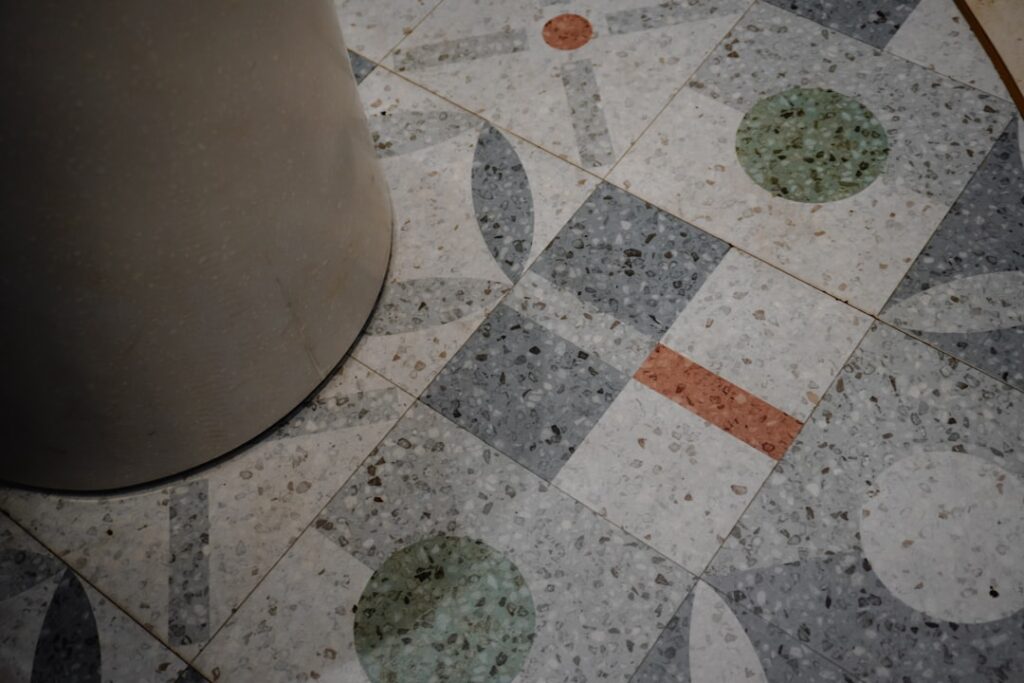
A poured-in-place terrazzo floor is the single most underrated luxury surface in residential construction, and it is also the trade where bad workmanship is hardest to fix later. Hire wrong and you get a $40,000 floor with hairline cracks, color drift between batches, and surface pitting that no amount of polishing will fix. Hire right and you get a seamless 80-year floor that ages better than almost any alternative. Picking the right terrazzo flooring contractors for the job is therefore most of the project, and this guide breaks down how to do that without learning by mistake.
- What a Real Terrazzo Contractor Actually Does
- Pros of Hiring a Specialist Over a General Contractor
- Cons and Realistic Limitations
- How to Find Qualified Contractors
- Red Flags That Save You Money Later
- What a Realistic Quote Looks Like
- Project Timeline From Contract to Move-In
- Long-Term Maintenance and Care
What a Real Terrazzo Contractor Actually Does
Terrazzo is not poured concrete with chips dropped into it. A proper installer pours a divider strip system (zinc, brass, or plastic) to manage cracking, mixes a cementitious or epoxy matrix with selected aggregates (marble, granite, glass, mother of pearl, or recycled content), trowels at a controlled thickness of 3/8 to 5/8 inches, and grinds and polishes through six to eight diamond grits to a 1500 to 3000 grit final finish. Each stage is its own craft.
The two main systems are cementitious terrazzo (the historic type, still used in renovations and large institutional jobs) and epoxy terrazzo (faster cure, brighter colors, thinner pour, used in most modern residential and commercial work). A serious contractor offers both and will tell you which one fits your slab, climate, and budget.
Pros of Hiring a Specialist Over a General Contractor
- NTMA certification: The National Terrazzo and Mosaic Association certifies installers to a written standard. NTMA members carry the right insurance, equipment, and craft training.
- Color matching: Specialists keep a sample library and can match aggregates to a kitchen backsplash, fireplace surround, or existing floor.
- Equipment ownership: Real contractors own propane-powered grinders, diamond toolheads, and HEPA vacuums; renting that gear and learning on your floor is a recipe for failure.
- Warranty backing: Reputable terrazzo flooring contractors back installs with a 5 to 10 year written warranty on cracks and bond failures.
- Repair capability: They can patch and re-polish 80-year-old terrazzo to look new, which a general flooring company cannot.
Cons and Realistic Limitations
The number of qualified residential terrazzo installers in any given metro is small, often 2 to 6 firms per million people. That scarcity drives both lead times (8 to 16 weeks is common) and pricing. Expect $30 to $90 per square foot installed for residential epoxy terrazzo, depending on aggregate selection, divider strip pattern, and total square footage. Cementitious terrazzo runs $25 to $50.
The other ceiling is design freedom. Hand-troweled terrazzo cannot match the photographic patterning of large-format porcelain. If you want a perfectly flat, glassy surface with a single color, polished concrete or microcement may be a better fit for less money.
How to Find Qualified Contractors
- Start with the NTMA directory: ntma.com lists certified contractor members by state. Filter by residential experience.
- Ask architects and high-end designers: Local AIA chapters and ASID designers usually have two or three names they use repeatedly.
- Check past work in person: Ask to walk a 5 to 10 year old floor the contractor poured. Crack patterns, color stability, and polish wear all show up by then.
- Verify insurance: Pull general liability and worker’s comp certificates directly from the carrier, not a forwarded PDF.
- Confirm a real punch list process: Reputable contractors document and re-grind any pinholes, ghosting, or trowel marks before final invoice.
Red Flags That Save You Money Later
Walk away if any of these show up. A bid more than 25 percent below the next two competitors usually means thinner pour, fewer diamond grits, or no divider strips. Refusal to specify the matrix system (epoxy resin brand and chip blend supplier) on the contract. No moisture testing of the slab on a project over 200 square feet. A promise to finish in three days, when realistic residential terrazzo cures and polishes over 7 to 14 days. And no written maintenance plan handed over at completion.
Aggressive deposit demands are another warning. Industry standard is 25 to 35 percent at contract, 35 to 50 percent at material delivery, and the balance at substantial completion. Anyone asking for 70 percent up front is funding the previous job with your money.
What a Realistic Quote Looks Like
A good written bid from a residential terrazzo contractor includes line items for: slab preparation (grinding, crack repair, primer), divider strip layout drawing, matrix material with brand specified, aggregate samples and selection sheet, pour and trowel labor, grind sequence (typically 30, 50, 100, 200, 400, 800, 1500 grit), grout coat to fill pinholes, sealer or polish, project schedule, payment milestones, and warranty language.
If your bid is two paragraphs and a lump sum, ask for the line-item version before you sign. Reputable terrazzo flooring contractors are happy to provide it; volume pretenders are not.
Project Timeline From Contract to Move-In
Plan on 14 to 30 working days from start to walk-on for a 600 to 1,200 square foot residential epoxy terrazzo install. That covers 1 to 2 days of slab prep, 1 day of divider strip layout, 1 day of pour, 3 to 5 days of cure, 5 to 8 days of grinding and polishing, and 2 to 3 days for sealer cure. Allow another 7 days before placing rugs or heavy furniture. The final result, when handled by a qualified contractor, will outlast the home.
Long-Term Maintenance and Care
Terrazzo’s reputation for outliving its owners depends on consistent, simple maintenance. Damp mop weekly with a pH-neutral cleaner like Stonetech Klenz-All; never use vinegar, bleach, or acidic cleaners that etch the matrix and dull the polish. Re-seal cementitious terrazzo every 2 to 4 years with a penetrating sealer, and re-polish epoxy terrazzo every 8 to 12 years to restore the high-grit sheen. Address spills promptly, especially red wine, coffee, and oil-based products that can stain a freshly poured floor before sealer is fully cured. Done right, a residential terrazzo floor can pass through three or four owners with only routine polishing, and it remains one of the few flooring categories where the second-generation occupant inherits a better floor than the first one bought.
Prefer to explore on your own?
See how new flooring looks in your actual room in seconds — free, no signup.
Try the free Floor Studio →