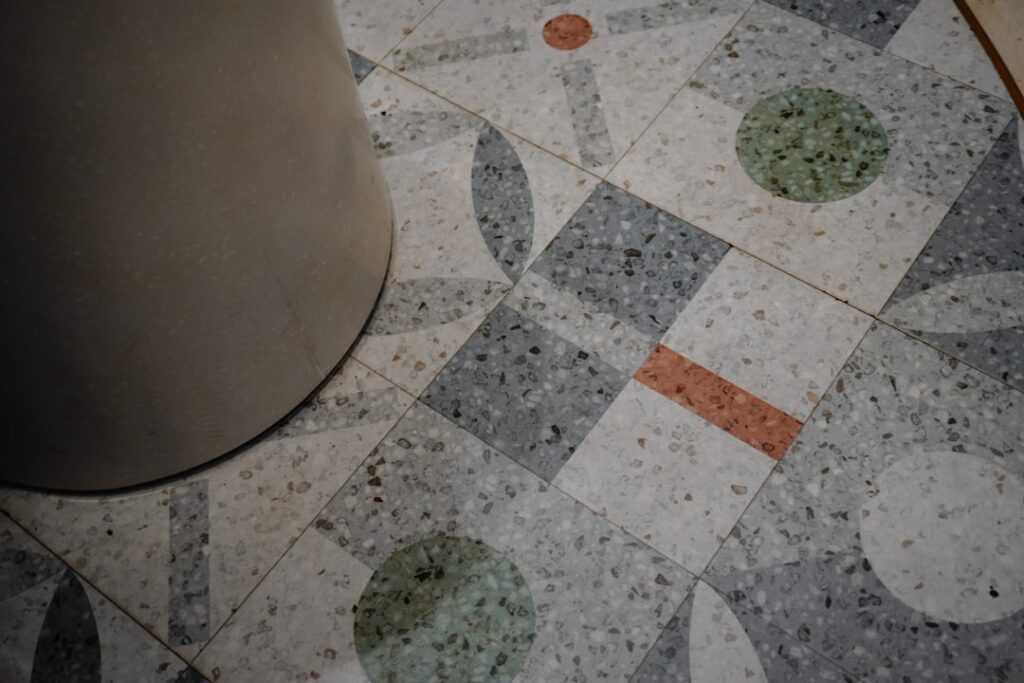
Terrazzo has been in continuous use since Venetian craftsmen invented it in the 15th century, and the modern market is bigger today than at any point in the last 50 years. The terrazzo flooring market spans epoxy-matrix systems for new commercial builds, cement-matrix systems for traditional restorations, precast tiles for fast-track jobs, and rustic terrazzo for homes wanting the look at lower cost. This guide explains the four major categories, real prices per sq ft, warranty terms, installation methods, and where terrazzo earns its 75-year service life.
- The Four Major Terrazzo Categories
- Real Pricing Across the Market
- Warranty Terms to Demand
- Installation Methods Compared
- Aggregate Selection Drives Aesthetic
- Pros and Cons of Modern Terrazzo
- Slip Resistance and Safety
- Market Trends and Sustainability
- Best Use Cases by Setting
- Maintenance for Decade-Long Life
The Four Major Terrazzo Categories
Epoxy terrazzo uses a 100 percent solids epoxy binder mixed with marble, granite, recycled glass, mother-of-pearl, or metal chips. It installs at 3/8 inch to 1/2 inch thickness over a primed substrate. Cement terrazzo uses Portland cement binder at 2 inches or thicker, often with isolation membrane over concrete substrate.
Precast terrazzo tiles in 12 to 24 inch sizes install like porcelain tile at 5/8 to 1 inch thickness. Rustic terrazzo for residential use comes as both precast tile and as a 1/4 inch overlay applied on top of existing concrete slabs.
Real Pricing Across the Market
Epoxy terrazzo lands $20 to $50 per sq ft installed depending on aggregate, color complexity, and divider strip layout. Cement terrazzo runs $30 to $60 per sq ft because of the thicker substrate, double-grind process, and longer cure times.
Precast terrazzo tile costs $15 to $40 per sq ft installed. Rustic terrazzo overlays for homes run $10 to $25 per sq ft. For comparison, polished concrete sits at $6 to $25 per sq ft, putting terrazzo at a clear premium but with a vastly longer life and richer aesthetic.
Warranty Terms to Demand
National Terrazzo and Mosaic Association (NTMA) certified installers warrant epoxy terrazzo for 5 to 10 years against bond failure and discoloration. The material itself routinely lasts 75 to 100 years with proper maintenance, but no manufacturer warrants beyond a decade.
Cement terrazzo gets shorter formal warranties (typically 2 to 5 years on bond) but the longest service life in the category. Always require NTMA certification on the installer; non-certified contractors lack the technical training for divider strip layout and grinding sequence.
Installation Methods Compared
Epoxy terrazzo starts with shot-blasting or diamond grinding the substrate to CSP 3 to 4. The installer sets brass, zinc, or aluminum divider strips on layout lines, primes with epoxy primer, then pours the matrix mixed with aggregate. Cure for 24 to 48 hours.
Grinding starts at 16 grit, progresses through 60, 120, 220, and finishes at 800 or 1500 grit for a high-polish look. Each grit pass removes about 1/64 inch of material. Total install time runs 5 to 10 days for a 500 sq ft area, plus another 2 to 3 days for sealing.
Aggregate Selection Drives Aesthetic
Marble chips remain the classic aggregate with hundreds of available colors. Granite chips add hardness and earthy tones. Recycled glass chips bring sustainability cred and vivid colors not possible in stone. Mother-of-pearl and abalone shell deliver high-end iridescence at premium prices.
Chip sizes range from #00 (1/16 inch) micro chips for delicate patterns to #4 chips (1 inch) for dramatic stone-like effects. Most commercial installations specify a #1 or #2 chip blend for the classic terrazzo look at reasonable cost.
Pros and Cons of Modern Terrazzo
Pros: lifespan exceeding 75 years, unlimited design flexibility, monolithic seamless surface in epoxy systems, exceptional resistance to wear, and a true historic aesthetic that mass-produced flooring cannot replicate. Maintenance over time is minimal when installed correctly.
Cons: high upfront cost ($15 to $60 per sq ft), long install timeline (5 to 14 days), specialized installers in short supply (NTMA-certified shops have backlogs of 3 to 6 months), and challenging repairs that require matching aggregate from the original mix.
Slip Resistance and Safety
Polished terrazzo at 800 to 1500 grit drops below R9 slip rating when wet. Address this with penetrating slip-resistant treatments such as SlipDoctors Stone Grip or by stopping the grind at 400 grit for a satin finish that holds R10 to R11.
For wet-zone terrazzo in restaurant kitchens, swimming pool surrounds, and shower areas, specify abrasive aggregate (silicon carbide chips) embedded in the topcoat for R11 to R12 ratings without compromising the visual aesthetic.
Market Trends and Sustainability
The terrazzo flooring market is shifting toward higher recycled content. Epoxy systems with 70 to 85 percent recycled glass aggregate are common in LEED-targeted commercial projects. Bio-based epoxy resins are emerging too, with brands like Master Terrazzo and Klaussner offering reduced-VOC formulations.
Demand from healthcare, education, and transportation hubs continues to drive market growth. Airports, hospitals, and university buildings choose terrazzo for the 75-year lifecycle cost despite the premium upfront price.
Best Use Cases by Setting
Commercial lobbies, museums, libraries, and government buildings remain the natural home for full epoxy or cement terrazzo. Custom logos and inlay patterns within divider strips deliver branding that no other flooring can match.
Residential terrazzo (precast tile or overlay) suits powder rooms, entryways, kitchens, and statement living spaces where the budget supports a $15 to $25 per sq ft hard-surface investment. Rustic exposed terrazzo with #3 or #4 chips is popular in modern farmhouse designs.
Maintenance for Decade-Long Life
Daily dust-mopping with a microfiber pad. Damp-mopping weekly with a neutral pH cleaner like StoneTech KlenzAll or Prosoco Consolideck LS Cleaner. Avoid acidic cleaners (vinegar, citrus, lemon-based), strong alkalis (ammonia, bleach), and any abrasive scrub pad.
Reseal penetrating sealers every 3 to 5 years for cement terrazzo. Epoxy terrazzo with epoxy or polyaspartic topcoat needs re-coating every 7 to 10 years in commercial settings. With this care routine, terrazzo flooring delivers 75-plus years of attractive, restorable service.
Prefer to explore on your own?
See how new flooring looks in your actual room in seconds — free, no signup.
Try the free Floor Studio →