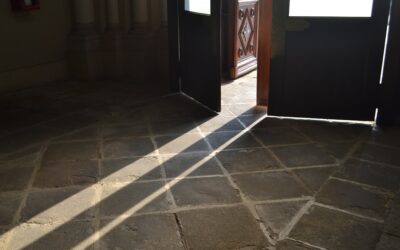
Both floors start with cement and stone, and both get ground and polished to a shine, so it is easy to assume they are close cousins. In the terrazzo vs polished concrete decision, though, the gap in cost and appearance is wide. Terrazzo is a designed surface with chips of marble, glass or granite placed deliberately in a binder, while polished concrete is your existing or new slab ground down to reveal whatever sand and stone it already contains.
Part of our Epoxy, Concrete & Garage Floors guide — explore the full guide →
For most homeowners, polished concrete wins on budget, often costing a fraction of terrazzo per sq ft, especially when a usable slab already exists. Terrazzo wins on color control, pattern options and that speckled luxury look. Durability is excellent for both, but each handles cracking and maintenance differently.
- Terrazzo vs Polished Concrete at a Glance
- How Each Floor Is Made
- Look and Design Flexibility
- Slab Requirements
- Durability and Cracking
- Maintenance Compared
- Comfort, Sound and Slip Resistance
- Decision Guide: Which Floor Fits Your Project
- Resale Value and Long-Term Cost
- Safety During Grinding and Installation
- Troubleshooting Common Issues
- When to Call a Professional
- Frequently Asked Questions
Cost per sq ft, aggregate look, slab requirements, cracking behavior, maintenance and the situations where one clearly beats the other all get a side-by-side treatment here.
Terrazzo vs Polished Concrete at a Glance
| Factor | Terrazzo | Polished Concrete |
|---|---|---|
| Typical installed cost | High, often $25 to $75+ per sq ft | Moderate, often $3 to $15 per sq ft |
| Look | Chosen chips, colors, divider patterns | Natural slab aggregate, stains or dyes |
| Slab needs | Sound substrate, added topping layer | Existing or new slab in good condition |
| Cracking | Epoxy versions resist cracking; cement versions can crack | Hairline cracks common, usually cosmetic |
| Maintenance | Neutral cleaner, periodic resealing | Dust mop, neutral cleaner, guard refresh |
Those ranges vary widely by region, project size and design complexity, but the ratio is consistent: terrazzo usually costs several times more than polished concrete on the same footprint.
How Each Floor Is Made
Terrazzo
Terrazzo combines a binder with decorative aggregate. Modern interior jobs mostly use thin-set epoxy terrazzo, roughly 1/4 to 3/8 inch thick, poured over a prepared slab. Traditional cement terrazzo, often called sand cushion or bonded terrazzo, runs much thicker, 1 1/2 inches or more, and weighs far more. Metal or plastic divider strips separate colors and create patterns, logos or borders. After curing, crews grind, grout pinholes, and polish the surface.
Polished Concrete
Polished concrete starts with a structural slab. Crews grind it with progressively finer diamond tooling, apply a chemical densifier that hardens the surface, then polish to the sheen you want, from satin to high gloss. The depth of grinding controls the look: a light “cream” finish shows little aggregate, a salt-and-pepper grind exposes fine sand, and a deeper grind reveals larger stones. Dyes or stains can add color.
Look and Design Flexibility
Terrazzo is the clear winner for design control. You pick the chip size, color and mix, from soft white marble to bold recycled glass, and you can create patterns with divider strips. That control makes terrazzo a favorite for entryways, mid-century restorations and statement kitchens.
Polished concrete offers a quieter, industrial palette. Since aggregate is whatever went into the original pour, you cannot fully predict what a deep grind will reveal on an existing slab. With a new pour, you can specify decorative stones or seed aggregate into the surface, which narrows the gap somewhat. Homeowners searching for a terrazzo concrete floor often mean this middle ground: a seeded, exposed-aggregate polished slab that gives a terrazzo-like speckle at a lower cost. Expect a more random and less vibrant look than true terrazzo.
Slab Requirements
Polished concrete needs a sound slab without major cracks, delamination or heavy coatings. Grinding off old glue, paint or tile thinset adds cost. Slabs on upper floors over wood framing are not candidates, since there is no slab to polish.
Terrazzo needs a stable substrate too. Thin-set epoxy terrazzo can go over concrete and, in some systems, over properly built wood subfloors with a suitable underlayment, though this is less common in homes. Traditional cement terrazzo is heavy enough that the structure must be evaluated by an engineer before installation on anything other than grade-level slabs. Either way, moisture testing matters: excess slab moisture can cause epoxy terrazzo to blister or debond.
Durability and Cracking
Both floors last decades. Polished concrete is the slab itself, so there is no coating to wear through, just a polished surface that can be refreshed. Terrazzo, especially epoxy, is extremely tough and highly stain resistant.
Cracking is where they diverge. Concrete slabs crack; it is nearly guaranteed over time because of shrinkage and settling. On polished concrete, hairline cracks show and are often accepted as character, or filled with a color-matched filler. Terrazzo is applied over the slab, so slab cracks can telegraph through. Installers handle this with crack isolation membranes, flexible epoxy systems and divider strips placed over control joints. Cement terrazzo is more prone to cracking than epoxy terrazzo.
Maintenance Compared
- Daily: Dust mop both floors to remove grit, which dulls polish.
- Weekly: Damp mop with a neutral pH cleaner. Avoid vinegar, citrus and other acids, which can etch marble chips in terrazzo and dull concrete polish.
- Periodic: Polished concrete may need a guard or densifier refresh and a light burnish every year or two in busy areas. Terrazzo may need resealing (especially cement versions) and occasional professional polishing.
- Spills: Wipe oil, wine and acidic foods quickly. Polished concrete is more prone to oil staining than epoxy terrazzo.
Comfort, Sound and Slip Resistance
Both are hard, cold-feeling floors that reflect sound. Area rugs, radiant floor heating and soft furnishings help in living spaces. High-gloss finishes on either floor can be slick when wet, so lower-sheen finishes or anti-slip treatments make sense in kitchens, mudrooms and near exterior doors.
Decision Guide: Which Floor Fits Your Project
Choose polished concrete if:
- You already have a structurally sound slab in good condition
- Budget matters most and you like an industrial or minimal look
- You want a floor in a basement, garage conversion, loft or open living space
Choose terrazzo if:
- You want specific colors, patterns, inlays or a bright speckled look
- The floor is a statement area like an entry, kitchen or primary bath
- Stain resistance and design permanence justify the higher cost
Many homes mix them: terrazzo in a front entry or bath, polished concrete in the open plan. That pairing of terrazzo and concrete keeps the budget reasonable while putting the premium surface where guests notice it most.
Resale Value and Long-Term Cost
Upfront price is only part of the terrazzo vs polished concrete math. Terrazzo can last the life of the building with occasional repolishing, and in design-focused markets it is often seen as a premium feature that buyers notice. Polished concrete appeals strongly to buyers who like modern, minimal interiors, but some traditional buyers see it as unfinished, especially in bedrooms.
Over 20 or 30 years, both floors tend to cost far less to maintain than carpet or many coatings, since neither needs replacement on a regular cycle. If you plan to sell within a few years, polished concrete usually returns more of its modest cost. If you are staying long term and want a signature surface, the higher terrazzo investment is spread across decades of use.
Safety During Grinding and Installation
Grinding concrete or terrazzo produces crystalline silica dust, which causes lung disease with repeated exposure. Professional crews should use wet grinding or grinders connected to HEPA dust extraction. If you are around the work or grinding a small area yourself, wear an N95 or P100 respirator, keep the area closed off, and clean up with a HEPA vacuum rather than dry sweeping. Epoxy binders and some sealers also release vapors, so ventilate well during installation and curing.
Troubleshooting Common Issues
Dull traffic lanes. Both floors lose shine where foot traffic is heaviest. A professional burnish or light hone usually restores it.
Etch marks. Acidic spills on marble chips or concrete leave dull spots. Light honing and repolishing removes them.
Cracks reappearing. If a crack keeps returning through terrazzo or a filled concrete crack widens, the slab may be moving. Have the structure evaluated before cosmetic repair.
When to Call a Professional
Terrazzo is a specialty trade, so plan on hiring an experienced terrazzo contractor rather than a general flooring crew. Polished concrete also benefits from a pro with industrial grinders, dust extraction and densifier experience. Get a structural evaluation for any heavy cement terrazzo or for slabs with significant cracking, and check permit requirements in your area for major floor work.
Frequently Asked Questions
Is terrazzo more expensive than polished concrete?
Yes, usually by several times per sq ft. Terrazzo involves added materials, divider work and skilled labor, while polished concrete works with a slab you may already have.
Can polished concrete look like terrazzo?
Partly. A seeded or deep-ground slab exposes aggregate for a speckled look, but it lacks the controlled colors and patterns of true terrazzo.
Which floor is more durable?
Both last decades. Epoxy terrazzo resists stains better, while polished concrete has no coating to wear through and is easy to refresh.
Does terrazzo crack like concrete?
Slab cracks can telegraph through terrazzo, so installers use crack isolation and divider strips at joints. Epoxy terrazzo cracks less than cement terrazzo.
Is polished concrete good for a home?
It works well in basements, lofts and open living areas, especially with rugs and radiant heat for comfort.