If you’ve ever admired a carpet that looks smooth and inviting but doesn’t show every footprint and vacuum stripe, you were probably looking at textured Saxony. A textured Saxony carpet takes the soft, dense cut pile of traditional Saxony and adds a twist, literally, giving each fiber a kink that scatters light and hides the marks that plague smoother carpets. It’s one of the most popular residential styles in the country because it balances comfort, looks, and everyday practicality. Understanding how it’s built helps you choose the right grade and avoid disappointment.
What Makes It Textured
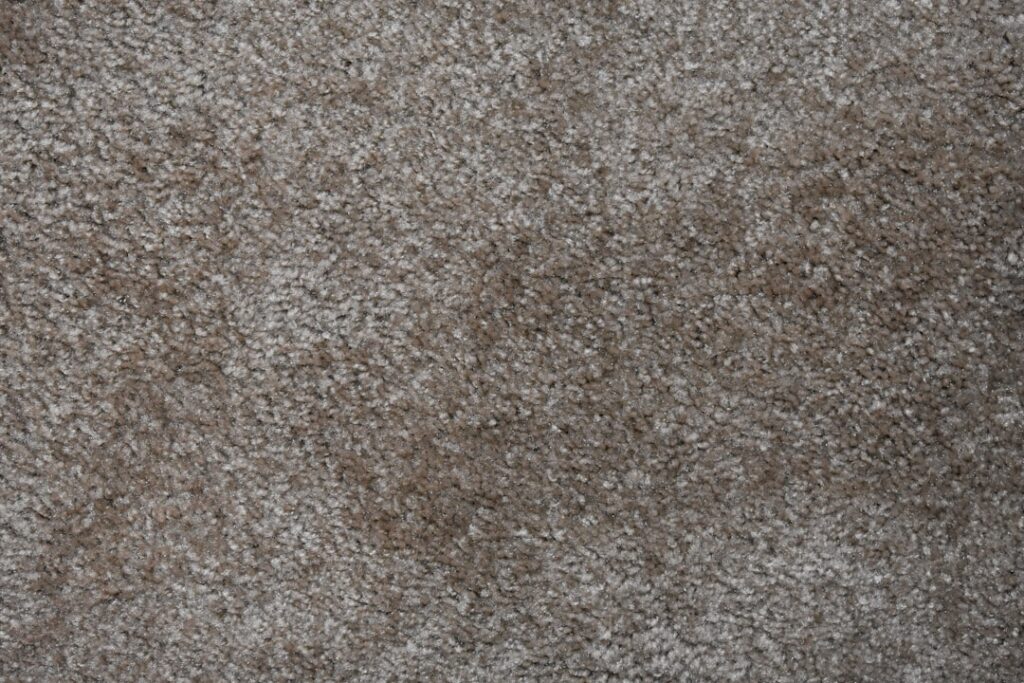
Saxony carpet is a cut-pile style where the yarn tips are sheared to stand upright, creating a soft, uniform surface. Traditional or straight Saxony has smooth, aligned fibers that look elegant but show every footprint and furniture mark. Textured Saxony changes that by heat-setting a twist into each strand so the fibers point in slightly different directions.
That varied fiber direction is the whole trick. It diffuses light and camouflages the crushing and shading that make plain Saxony look messy. The surface has a slightly casual, textured appearance rather than a formal, velvety sheen, which is exactly why it works so well in real homes.
Texture vs. Plush Saxony
People often confuse these two, so here’s the practical difference:
- Plush (straight) Saxony: Smooth, formal, luxurious, but shows footprints, vacuum marks, and shading badly.
- Textured Saxony: Twisted fibers hide those marks, offering a more forgiving, casual look for daily living.
If you want a formal living room or bedroom used mostly for show, plush Saxony delivers that velvet look. For a family room, a hallway, or any space where people actually walk, textured Saxony is the smarter choice. It gives you similar softness with far less maintenance stress.
Durability and Traffic Rating
Durability in textured Saxony depends heavily on the fiber and the twist level. The tighter and more heat-set the twist, the better the carpet resists crushing and matting over time. Look at the twist count and the face weight when comparing products; higher numbers generally mean a longer-lasting carpet.
Nylon is the most durable fiber and the best choice for busy households, holding up well in family rooms and hallways for 10-15 years with good care. Polyester and triexta are softer and more stain-resistant but a bit less resilient underfoot in the highest-traffic zones. For stairs and heavy-traffic areas, choose a dense nylon textured Saxony with a high twist count.
Best Rooms and Uses
This style is genuinely versatile, which explains its popularity. It fits well in:
- Bedrooms: Soft and cozy, with marks that disappear.
- Family and living rooms: Forgiving under daily foot traffic and furniture.
- Hallways and stairs: Hides wear patterns better than smooth pile.
- Home offices: Comfortable and quiet underfoot.
- Polyester textured Saxony: $2-$4 per sq ft
- Triexta: $3-$5 per sq ft
- Nylon: $4-$8 per sq ft
It’s less ideal for spill-prone spaces like dining rooms unless you choose a stain-resistant fiber, and it’s not suited to basements or bathrooms where moisture is a concern. For a whole-house carpet that works nearly everywhere people live, though, textured Saxony is hard to beat.
Cost Expectations
Pricing spans a wide range depending on fiber, density, and quality. Typical material costs:
Add roughly $1-$2 per square foot for a quality pad and another $1-$2 for professional installation. Don’t skimp on the pad; a good 8-pound rebond cushion under textured Saxony extends its life and improves the feel underfoot significantly. A cheap thin pad lets even good carpet crush and wear out years early.
Living With Textured Saxony
The care routine is refreshingly simple. Vacuum once or twice a week to keep grit from grinding into the fibers, using a vacuum with adjustable height so the beater bar doesn’t over-agitate the pile. Address spills quickly by blotting, and keep a carpet-safe spotter on hand for accidents.
Every 12-18 months, have the carpet professionally hot-water extracted to lift embedded soil and refresh the pile. Rotate furniture periodically and use coasters under heavy pieces to avoid permanent crush marks. Because the twisted pile hides so much, this carpet forgives a lighter maintenance touch than plush styles, though regular vacuuming still matters most.
What to Look For When Shopping
When you’re comparing samples on the showroom floor, bend a piece backward and look at the density; if you can easily see the backing through the fibers, the carpet is thin and will mat quickly. Rub your hand across it to feel the twist and resilience. Check the manufacturer’s traffic rating and warranty, which signal how the carpet should perform in your space.
Ask specifically about the fiber type and twist count rather than judging by feel alone. Two carpets can feel similar in the store yet perform very differently after a year of use, and those specs tell the real story of longevity.
Understanding a few carpet specs turns showroom shopping from guesswork into a real comparison. Face weight, measured in ounces per square yard, tells you how much fiber is packed into the carpet; 40 ounces or more is solid for a busy household. Twist level, sometimes printed as a TAC or twist number, indicates how tightly the yarn is wound, and higher twist resists matting longer. Density, which you can gauge by bending a sample and seeing how much backing shows, often matters most of all, since a dense carpet simply wears better regardless of the other numbers.
Warranty terms are worth reading closely too, because they reveal how the manufacturer expects the carpet to hold up. Look for separate coverage on texture retention, stain resistance, and wear, and note that most warranties require documented professional cleaning every 12-18 months to stay valid. A carpet with a 15-year texture-retention warranty is telling you it’s built to resist the crushing that makes cheaper cut pile look tired, which is exactly what you want in a textured Saxony that has to look good for years.
The Bottom Line
For most homeowners who want soft, comfortable carpet that stays looking good without constant fuss, a textured Saxony carpet is an excellent all-around choice. It marries the plush feel of cut pile with a twisted surface that hides footprints, vacuum marks, and everyday wear. Choose a dense nylon for busy areas or a stain-resistant polyester for softer budgets, pair it with a good pad, and keep up with regular vacuuming. Do that, and this practical, good-looking carpet will serve your home comfortably for a decade or more.
It helps to set expectations honestly against the alternatives. Textured Saxony won’t hide marks as aggressively as a highly twisted frieze or a busy Berber loop, and it won’t feel quite as formal and velvety as a smooth plush. What it does better than either is strike a middle ground: soft enough to feel luxurious, textured enough to forgive daily life. For the majority of homeowners furnishing bedrooms and family rooms, that balance is exactly the point. It’s the reason textured Saxony has stayed a top-selling residential style for decades rather than fading with passing trends, and why so many homes end up with it in room after room.