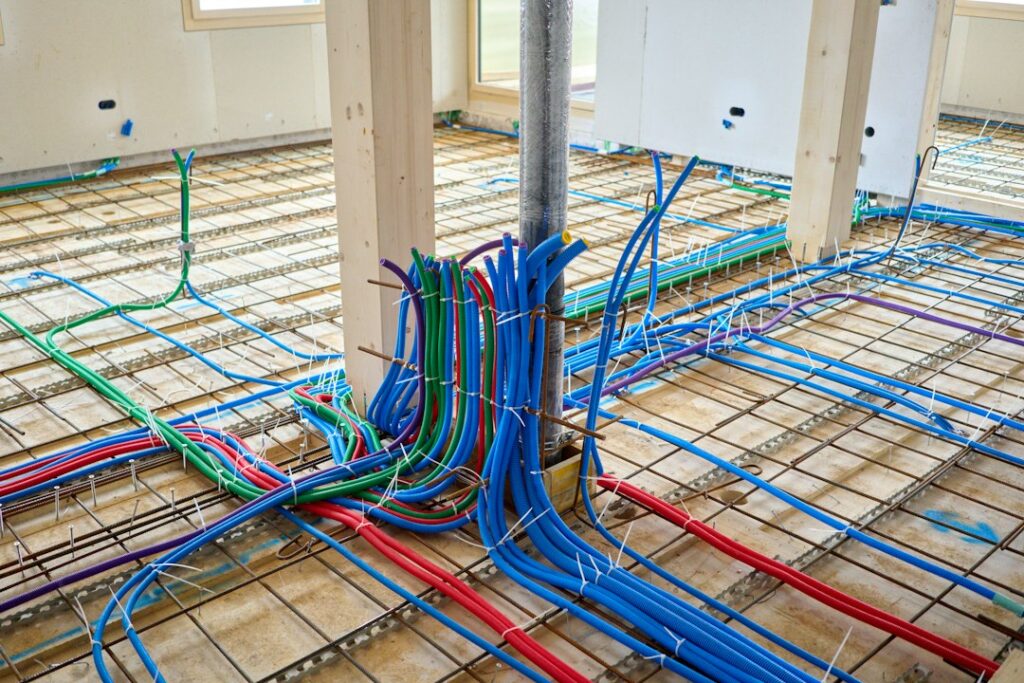
Stepping onto a warm bathroom floor on a January morning is one of those upgrades that feels like a luxury until you have it, and then you wonder how you lived without it. Thermal flooring refers to the floor surfaces engineered to work with radiant heating systems, where warm water tubing or electric mats sit beneath the floor and turn the entire surface into a gentle, even radiator. Not every floor plays nicely with heat underneath it, and choosing the wrong one means buckling, gapping, or a system that fights its own covering.
- How Radiant Heat Works Under the Floor
- The Best Floors for Radiant Heat
- What to Avoid or Use Carefully
- Understanding R-Value
- What Thermal Flooring Costs
- Installation Details That Matter
- Comfort, Efficiency, and Longevity
- Choosing Your Surface
- Electric vs. Hydronic: Which Fits Your Project
- Energy Use and Running Costs
How Radiant Heat Works Under the Floor
Radiant systems come in two flavors. Hydronic systems circulate warm water, usually 85°F to 120°F, through tubing in or under the subfloor and are the choice for whole-house heating. Electric systems use thin resistance mats or cables, typically run at 110°F or lower at the floor surface, and are popular for single rooms like bathrooms because they install with minimal height gain.
In both cases, the heat must pass up through your flooring to reach the room, so the floor’s thermal conductivity and temperature tolerance directly determine how well the system performs.
The Best Floors for Radiant Heat
- Porcelain and ceramic tile: the gold standard, dense, conductive, dimensionally stable, and immune to the heat itself
- Natural stone: excellent thermal mass that stays warm long after the system cycles off
- Engineered hardwood: the most stable wood option, with a multi-ply core that resists heat-driven movement
- Luxury vinyl (LVP/SPC): compatible with most systems if you stay within the manufacturer’s surface-temperature limit, usually 80°F to 85°F
- Polished concrete: ideal for slab-on-grade hydronic systems, with massive heat retention
What to Avoid or Use Carefully
Solid hardwood is risky over radiant heat because wide solid boards dry out and gap when warmed from below; if you insist on real wood, use narrow boards or, better, engineered planks. Thick carpet and dense pad act as insulation and waste the heat, so keep total carpet-plus-pad R-value low. And always check the surface-temperature cap on vinyl, since exceeding it can soften the planks and void the warranty.
The governing rule for any wood or vinyl product is the manufacturer’s stated maximum floor-surface temperature. Run the system above it and you own the consequences.
Understanding R-Value
R-value measures resistance to heat flow, and for thermal flooring you want it low so warmth passes through. Tile and stone have negligible R-value, which is why they heat fastest. A combined floor-and-underlayment R-value above roughly 2.0 starts to choke the system; most radiant manufacturers cap total covering R-value around 1.5 to 2.0. If you use an underlayment under vinyl or engineered wood, choose a thin, heat-rated product rather than a thick acoustic pad.
What Thermal Flooring Costs
The cost splits into the heating system and the floor on top of it. Electric mat systems run about $8 to $15 per square foot installed for a small room, while whole-house hydronic systems cost more upfront but heat more efficiently over time. The flooring itself adds the usual material cost: tile $5 to $15 installed, engineered wood $8 to $14, and LVP $4 to $9.
A heated 60-square-foot bathroom floor in tile, including the electric mat, commonly lands between $1,200 and $2,500 installed. The payback is comfort and, with hydronic whole-house systems, lower heating bills from running water at low temperatures.
Installation Details That Matter
Sequencing is everything. The heating element goes down first, embedded in thinset or a self-leveling compound, then your floor goes over it. A floor-sensor probe should be installed in the loop so the thermostat reads actual surface temperature, not just air temperature. For wood and vinyl, the system must be turned on and ramped up gradually before and after install to acclimate the material, raising the temperature only a few degrees per day.
Skipping the gradual ramp-up is the most common cause of gapping in engineered wood over radiant heat.
Comfort, Efficiency, and Longevity
Radiant heat warms objects and people rather than blowing hot air, so rooms feel comfortable at lower thermostat settings and there are no drafts or dusty vents. Tile over hydronic tubing can hold warmth for an hour after the system cycles off, smoothing out temperature swings. Properly installed hydronic tubing is rated for decades of service, often outliving the boiler that feeds it.
Choosing Your Surface
If maximum efficiency and warmth are the goal, tile or stone over a radiant slab is unbeatable. If you want the look of wood with radiant compatibility, engineered hardwood is the safe choice. For a budget-friendly waterproof option in a bathroom or kitchen, heat-rated LVP works as long as you respect its temperature ceiling. Match the floor to the system, mind the R-value, and thermal flooring delivers the kind of quiet, even comfort that forced-air heat never quite manages.
Electric vs. Hydronic: Which Fits Your Project
The choice between the two systems usually comes down to scope. Electric mat systems are the practical answer for a single room, a master bath, a kitchen, or a chilly home office, because they install with almost no height gain and tie into a simple programmable thermostat. They cost less upfront for small areas, but electric resistance heat is more expensive to run continuously, so they suit spot heating rather than whole-house warmth.
Hydronic systems cost more to install and need a boiler or water heater plus a manifold, but they heat large areas efficiently and cheaply once running, especially when paired with a high-efficiency heat source. For a new build or a major renovation where you can access the subfloor, hydronic is the long-term value play. For retrofitting one cold room, electric wins on simplicity and cost.
Energy Use and Running Costs
Thermal flooring can lower overall heating costs, but only when matched to the right system and surface. Because radiant heat warms people and objects directly, most homeowners find they are comfortable with the thermostat set 2 to 4 degrees lower than they would need with forced air, and that setback adds up over a winter. Pairing a hydronic system with a tile or stone floor maximizes the savings, since the thermal mass holds heat and the system cycles less often.
To keep running costs in check, use a programmable or smart thermostat with a floor sensor, set a gentle nighttime setback rather than a deep one (radiant systems recover slowly), and make sure the room is reasonably well insulated so the heat you pay for stays in the space. Done right, the comfort upgrade pays part of its own way.
Prefer to explore on your own?
See how new flooring looks in your actual room in seconds — free, no signup.
Try the free Floor Studio →