If your shower turns icy when someone flushes a toilet or scalding when the dishwasher kicks on, a thermostatic shower valve is the fix. This type of valve holds the water at the exact temperature you set, regardless of pressure swings or changes in the incoming hot and cold supply, and it shuts off automatically if the cold supply fails, preventing dangerous scalding. Increasingly common in modern bathrooms and required in many high-end and accessible builds, a thermostatic valve turns an unpredictable shower into a consistently comfortable and safe one.
Part of our Bathroom Remodeling & Flooring guide — explore the full guide →
- How a Thermostatic Shower Valve Works
- Thermostatic vs. Pressure-Balancing Valves
- Key Benefits
- Types and Configurations
- Cost of a Thermostatic Shower Valve
- Installation Considerations
- Setting and Adjusting the Valve
- Planning for Multiple Shower Heads
- Maintenance and Cartridge Replacement
- Common Mistakes to Avoid
- Is a Thermostatic Valve Worth It?
How a Thermostatic Shower Valve Works
Inside the valve is a temperature-sensitive element, usually a wax cartridge or a bimetallic coil, that expands and contracts as water temperature changes. When the incoming hot water gets hotter or the cold pressure drops, the element moves a piston that instantly adjusts the mix of hot and cold to keep the output at your set temperature. This all happens in a fraction of a second, so you never feel the swing. Most thermostatic valves separate the temperature control from the volume control, letting you set your preferred temperature once and simply turn the water on and off without re-adjusting.
Thermostatic vs. Pressure-Balancing Valves
It is important to understand the difference, because both are sold as anti-scald valves. A pressure-balancing valve, the more common and cheaper type, reacts to changes in water pressure and keeps the hot-cold ratio steady, but it does not hold a precise temperature if the incoming water temperature itself changes. A thermostatic valve responds to actual temperature, holding it constant even if the water heater output shifts. Thermostatic valves are more precise, more comfortable, and better for accessibility and safety, but they cost more. Pressure-balancing valves satisfy code in most homes; thermostatic valves are the premium upgrade.
Key Benefits
- Scald protection: The valve limits maximum temperature and shuts off if cold water fails, critical for children and older adults.
- Consistent comfort: No temperature swings when other fixtures draw water.
- Set-and-forget convenience: Your preferred temperature is remembered between showers.
- Fast, safe warm-up: Many models let you set and reach temperature quickly.
- Dual outlets: Thermostatic valves easily feed multiple heads and body sprays at a steady temperature.
Types and Configurations
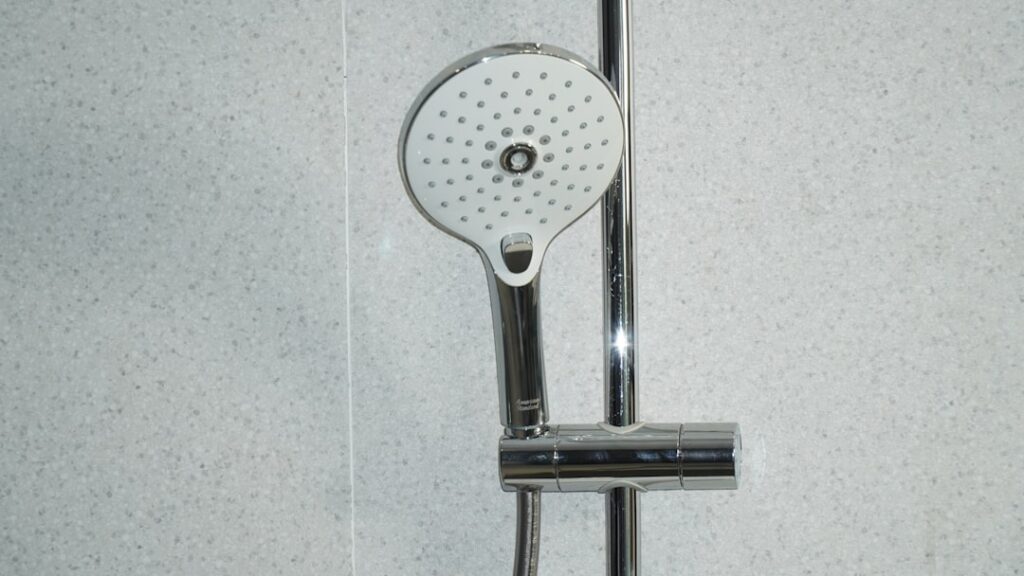
Thermostatic valves come in several configurations. A concealed valve mounts behind the wall with only the trim showing, giving a clean look. Exposed valves mount on the wall surface, common in retrofits and traditional designs. You will also choose the number of outlets: a single-function valve feeds one showerhead, while multi-function thermostatic valves with diverters feed a rain head, handheld, and body sprays independently. Major brands like Moen, Delta, Kohler, Grohe, and Hansgrohe all offer thermostatic lines, and it is essential to buy the matching rough-in valve and trim kit from the same series.
Cost of a Thermostatic Shower Valve
The valve and trim together typically cost $200 to $700 for mainstream brands, with luxury European models and multi-function systems running $800 to $1,500 or more. The rough-in valve body alone is often $100 to $300, and the visible trim kit adds the rest. By comparison, a pressure-balancing valve costs $80 to $250. Professional installation adds $250 to $600 if the plumbing is accessible, and considerably more if a wall must be opened. So a complete thermostatic shower valve upgrade often lands between $500 and $1,500 installed, more for elaborate multi-head systems.
Installation Considerations
Installing a thermostatic valve is a job most homeowners should leave to a licensed plumber unless they have real plumbing experience, because it involves soldering or press-fitting copper, PEX connections, or CPVC, and precise setting behind a finished wall. The valve must be plumbed with hot and cold on the correct sides, set at the proper depth for the finished wall thickness, and its high-temperature limit stop must be calibrated so the water never exceeds a safe maximum, usually around 120 degrees Fahrenheit. In new construction or a full bathroom remodel, the valve goes in while the wall is open, which is the ideal time. Retrofitting into a finished wall usually means cutting an access panel or opening tile.
Setting and Adjusting the Valve
After installation, the plumber sets the maximum temperature limit stop, which caps how hot the water can get to prevent scalding. Homeowners can usually fine-tune this themselves following the manufacturer’s instructions, since seasonal changes in incoming water temperature can shift the feel of the set point. If your shower gradually loses its ability to hold temperature over the years, the thermostatic cartridge may have failed and can typically be replaced without opening the wall, a repair that costs $50 to $150 in parts.
Planning for Multiple Shower Heads
One of the strongest reasons to choose a thermostatic valve is if you want more than one water outlet, such as a fixed rain head, a handheld sprayer, and body jets. A thermostatic valve holds a steady temperature across all of them, so switching from the rain head to the handheld does not bring a blast of hot or cold. But running multiple outlets demands enough hot water and flow to feed them, and this is where planning matters. Each showerhead and body spray adds to the total gallons per minute required, and if your water heater or supply lines cannot keep up, the pressure and temperature will drop when you open several outlets at once. Before committing to a multi-head system, calculate the combined flow rate of every outlet you intend to run simultaneously and confirm your water heater and half-inch or three-quarter-inch supply lines can deliver it. Many high-flow shower systems require a three-quarter-inch valve and larger supply lines, and some benefit from a dedicated or upsized water heater. Getting this right prevents the disappointment of a luxurious-looking shower that runs weak whenever you turn on more than one head.
Maintenance and Cartridge Replacement
Thermostatic valves are reliable, but the thermostatic cartridge is a wear part that can eventually lose its precision, especially in areas with hard water where mineral scale builds up inside it. The good news is that the cartridge is usually replaceable from the front of the valve without opening the wall. Signs that a cartridge is failing include water that no longer reaches the set temperature, temperature that drifts during a shower, or reduced flow. Replacing a cartridge typically costs $50 to $150 in parts and takes an hour or two, involving shutting off the water, removing the trim, extracting the old cartridge, and seating a new one. In hard-water regions, periodically cleaning the cartridge and using a whole-house water softener extends its life considerably. Keeping the model and series information for your valve on file makes ordering the correct replacement cartridge quick when the time comes, avoiding the frustration of a mismatched part.
Common Mistakes to Avoid
- Mixing brands: The rough-in valve and trim must be from the same manufacturer and series.
- Reversing hot and cold: Swapped supply lines make the valve behave backward.
- Wrong rough-in depth: Setting the valve too deep or shallow leaves the trim unable to reach or seal.
- Skipping the limit-stop calibration: An uncalibrated valve can still deliver scalding water.
- Undersizing the supply: Multi-head systems need adequate pipe size and flow, or pressure drops.
- DIYing beyond your skill: A leak behind a finished wall is far costlier than hiring a plumber.
Is a Thermostatic Valve Worth It?
For families with young children or elderly members, for anyone building an accessible bathroom, and for homeowners who simply want a luxurious, dependable shower, a thermostatic shower valve is well worth the premium over a basic pressure-balancing valve. The scald protection alone is a meaningful safety upgrade, and the steady, comfortable temperature you get every single shower is something people notice and appreciate daily. If you are already remodeling a bathroom and the wall is open, upgrading to a thermostatic valve adds relatively little to the total project cost while delivering safety and comfort you will enjoy for years.