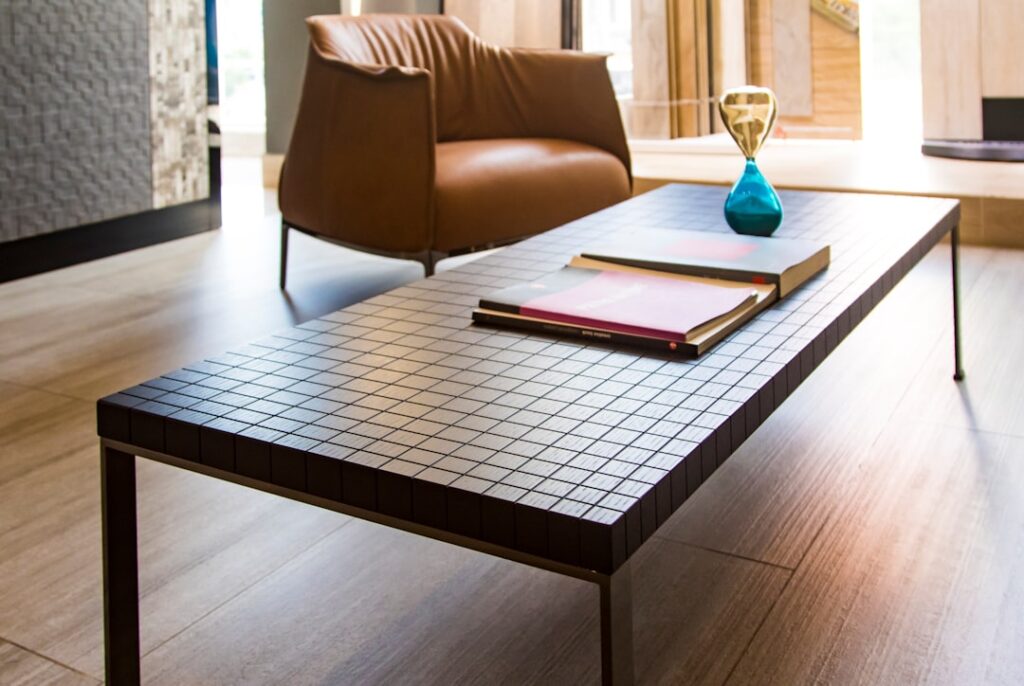
A tile coffee table solves a problem every living room eventually faces: the coffee table takes the most abuse of any piece of furniture in the house. Hot mugs, sweating glasses, spilled wine, and propped-up feet destroy a delicate wood finish in no time. A tiled top shrugs all of that off. The hard ceramic or porcelain surface resists heat, water, and stains, wipes clean in seconds, and brings color, pattern, and texture that a plain wood slab simply cannot. From hand-painted Spanish and Moroccan styles to sleek modern porcelain, the tile coffee table is as much a design statement as it is a practical workhorse.
Part of our Tile & Grout guide — explore the full guide →
Here is how to choose the right one, or build your own, and keep it looking great for years.
Why Choose a Tile Top
The case for tile comes down to durability and personality. Ceramic and porcelain handle the daily life of a coffee table far better than wood or laminate. A hot pizza box, a dripping ice tea, and a marker that escaped a kid’s hand are all minor events on a tiled surface. On top of that, tile gives you design range that other materials cannot match, from intricate patterned tiles that become the room’s focal point to monochrome stone-look porcelain for a minimalist space.
Popular Tile Coffee Table Styles
There is a tile table to fit nearly any room:
- Mediterranean and Spanish — Bright, hand-painted ceramic tiles with geometric or floral motifs, often on iron or carved wood bases.
- Moroccan and mosaic — Small zellige-style or mosaic tiles arranged in intricate patterns.
- Modern porcelain — Large-format, stone- or concrete-look tile for a clean, contemporary feel.
- Rustic and farmhouse — Terracotta or earthy tiles paired with reclaimed wood frames.
- Mid-century — A single decorative tile or small grid set into a wood frame with tapered legs.
Choosing the Right Tile
If you are buying or building, the tile itself drives both looks and performance:
- Porcelain — Dense, non-porous, and highly durable, the most stain- and water-resistant option.
- Glazed ceramic — A hard, sealed surface in endless colors and patterns, easy to clean.
- Natural stone — Marble, slate, or travertine for a high-end look, but it needs sealing and is more stain-prone.
- Mosaic tile — Great for detail, though more grout lines mean more cleaning.
For the most carefree top, glazed porcelain or ceramic with minimal grout is the practical winner.
Building or Refinishing Your Own
Tiling a tabletop is a very achievable weekend DIY project. The basic process:
- Start with a sturdy table or build a frame with a recessed top to hold the tile flush.
- Cut a cement backer board to fit the recess and fasten it down for a stable, moisture-resistant base.
- Dry-lay the tiles to plan your layout and spacing before committing.
- Set the tiles in thin-set mortar or a quality tile adhesive, using spacers for even joints.
- Once cured, grout the joints, wipe off the haze, and let it cure fully.
- Seal the grout, and the stone if you used natural tile, to keep stains out.
Choose a frame depth that leaves the tile surface flush or slightly recessed so the edges are protected and the top sits level.
Cleaning and Care
A tile coffee table is low-maintenance, which is much of its appeal. Wipe the surface with a damp cloth and mild dish soap for everyday cleaning. The grout lines are the main thing to watch, since they collect grime and can stain; a soft brush with a mild cleaner refreshes them, and sealing the grout makes routine cleaning easier. For natural-stone tops, use a stone-safe cleaner and avoid acidic products like vinegar that can etch the surface. Coasters are still a nice habit on stone, though glazed ceramic and porcelain rarely need them.
What a Tile Coffee Table Costs
Prices range broadly with size, materials, and craftsmanship. Mass-market tile coffee tables often run $120 to $400, artisan hand-painted and imported pieces commonly fall in the $400 to $1,200 range, and large custom or designer tables climb higher. A DIY build can be very economical, often under $150 in materials if you start with an existing table base and add the tile, mortar, and grout yourself.
Choosing the Right Base
The base is as important as the tile, both structurally and stylistically. A heavy tiled top needs a sturdy frame that will not rack or wobble, so look for solid joinery or welded metal rather than flimsy fasteners. Stylistically, the base sets the tone: a wrought-iron base reads Mediterranean, reclaimed wood feels rustic and farmhouse, and a sleek metal or hairpin base leans modern. If you are building your own, start with a base rated to hold the added weight of tile, mortar, and backer board, which can add a surprising amount of pounds to the finished piece. Felt pads or levelers on the feet protect your floor and keep the table from rocking on uneven surfaces.
Styling a Tile Coffee Table
A tile top is a strong design element, so style around it rather than over it. If the tile is bold and patterned, keep your decor restrained, with a simple tray, a stack of books, and maybe a single plant, so the table reads as the focal point. If the tile is a quiet stone-look porcelain, you have more freedom to layer in color and texture on top. Take advantage of the durable surface by actually using it, since you do not need to baby a tiled top the way you would a delicate wood finish. That blend of practicality and beauty is exactly what makes the tile coffee table such a satisfying choice for a busy living room.
The Bottom Line
A tile coffee table combines real durability with design flexibility, standing up to heat, water, and stains while adding pattern and personality to your living room. Pick glazed porcelain or ceramic for the easiest upkeep, keep the grout sealed and clean, and you will have a centerpiece that looks good and survives whatever daily life throws at it.
Prefer to explore on your own?
See how new flooring looks in your actual room in seconds — free, no signup.
Try the free Floor Studio →