Choosing the right tile glue adhesive is one of the most consequential decisions in any tiling project, because even the most beautiful tile will fail if it is bonded with the wrong product. The term covers several distinct materials, from powdered thin-set mortar to ready-mixed mastic and heavy-duty epoxy, each engineered for particular tiles, surfaces, and conditions. Picking correctly means the difference between a floor or wall that lasts for decades and one that cracks, loosens, or falls off within a year or two. This guide breaks down the main types and where each belongs.
Part of our Tile & Grout guide — explore the full guide →
- The Main Types of Tile Adhesive
- Thin-Set Mortar Explained
- Mastic and When to Use It
- Epoxy Adhesive for Demanding Jobs
- Matching Adhesive to Your Project
- Coverage, Trowels, and Drying Times
- Preparing the Substrate First
- Storage, Shelf Life, and Mixing
- Application Tips for a Strong Bond
- Frequently Asked Questions
The Main Types of Tile Adhesive
Tile adhesives fall into three broad families, and understanding the differences is the foundation of a lasting installation:
- Thin-set mortar, a cement-based powder mixed with water or latex additive, is the workhorse for floors, wet areas, and heavy tile.
- Mastic, a ready-mixed organic adhesive sold in a tub, is convenient for walls and dry areas but not for floors or wet zones.
- Epoxy adhesive, a two-part resin-and-hardener system, offers the strongest bond and chemical resistance for demanding jobs.
Each has a place, and the biggest mistakes homeowners make come from using mastic where thin-set is required, or from treating all three as interchangeable. The tile type, the substrate, and whether the area gets wet all dictate the right choice.
Thin-Set Mortar Explained
Thin-set is a cement-based adhesive that comes as a powder you mix on-site. It is the standard choice for floor tile, large-format tile, natural stone, porcelain, and any area exposed to water, such as showers and backsplashes near sinks. Because it is cement-based, it is strong, moisture-resistant, and able to support heavy tiles without slumping.
Thin-set comes in two main forms. Unmodified thin-set is plain cement, sand, and water-retaining agents, used with certain membranes and per manufacturer specs. Modified thin-set includes latex or polymer additives that boost bond strength and flexibility, making it the common all-purpose choice for most residential jobs. There are also large-and-heavy-tile mortars formulated to resist slumping under big or thick tiles. For porcelain, which is dense and nonabsorbent, always use a polymer-modified thin-set rated for it.
Mastic and When to Use It
Mastic is a premixed, ready-to-use adhesive that comes in a tub, requiring no mixing. Its convenience and strong initial grab make it popular for wall tile in dry areas, such as a ceramic backsplash above a counter or tile on a living-room accent wall. It holds tiles in place immediately, which is helpful on vertical surfaces.
Mastic has firm limits, though. It is organic and can re-emulsify when exposed to prolonged moisture, so it must never be used on floors, in showers, in steam rooms, or in any continuously wet area. It is also unsuitable for large-format tiles, which need the fuller, more supportive bed that thin-set provides, and for translucent glass or stone that could be discolored by it. When in doubt in a wet or heavy application, choose thin-set instead.
Epoxy Adhesive for Demanding Jobs
Epoxy tile adhesive combines a resin and a hardener that you mix immediately before use. Once cured, it forms an exceptionally strong, waterproof, and chemical-resistant bond. It is the choice for industrial and commercial settings, areas exposed to harsh chemicals, and situations where maximum bond strength is essential, such as bonding tile to metal or over difficult substrates. Epoxy is more expensive and less forgiving to work with because it cures fast and cleanup is harder, so most homeowners reserve it for specific problem areas rather than whole-room installations.
Matching Adhesive to Your Project
Use this quick logic to narrow your choice:
- Floors, showers, and any wet area: modified thin-set mortar.
- Large-format or heavy tile anywhere: large-and-heavy-tile thin-set.
- Dry interior walls with small ceramic tile: mastic is acceptable for convenience.
- Chemical exposure, metal substrates, or maximum strength: epoxy.
- Natural stone: check the product; some stones need white thin-set and specific formulas to avoid staining.
Always read the adhesive label against your specific tile and substrate. Manufacturers list approved uses, and following those specs is what keeps a warranty valid and a floor bonded.
Coverage, Trowels, and Drying Times
Coverage depends on tile size and the notched trowel you use, which meters the amount of adhesive. Larger tiles need a larger notch, such as a 1/2-inch square notch, while small mosaics use a 3/16-inch notch. As a rough guide, a 50-pound bag of thin-set covers roughly 40 to 95 square feet depending on notch size and tile. A gallon of mastic typically covers around 40 to 60 square feet on walls.
Drying and curing times vary. Thin-set generally needs 24 to 48 hours before grouting and light foot traffic, with full cure taking longer. Mastic can take longer to fully cure behind nonporous tile because air must reach it. Epoxy cures fastest but has a short working time once mixed. Always confirm the specific product’s times, and avoid grouting or walking on tile before the adhesive has set.
Preparing the Substrate First
No adhesive can compensate for a poorly prepared surface, so substrate prep is where a lasting installation truly begins. The surface must be clean, free of dust, grease, wax, and old adhesive, and structurally sound with no flex or movement. Tile bonded to a bouncy floor or a flaking wall will crack or delaminate no matter how good the adhesive. For floors, an approved backer board or an uncoupling membrane over plywood provides the stable, moisture-tolerant base tile needs.
Different substrates call for different preparation. Cement backer board is the standard for wet areas and should be taped and thin-set at the seams. Drywall is acceptable only for dry-area wall tile. Existing tile, painted surfaces, and glossy substrates usually need scuffing or a bonding primer so the adhesive can grip. Confirm the substrate is flat as well, since tile bridges low spots and rocks over high ones, and large-format tile is especially unforgiving of an uneven surface.
Storage, Shelf Life, and Mixing
Adhesive performance also depends on the product being fresh and correctly mixed. Cement-based thin-set has a shelf life and absorbs moisture from the air, so store bags sealed and dry, and discard powder that has hardened lumps. When mixing, add powder to water in the recommended ratio, mix to a smooth, peanut-butter consistency, and let it slake, or rest, for the specified time before a final remix. Do not add extra water later to loosen it, which weakens the bond. Premixed mastic should be stirred and protected from freezing, and epoxy must be mixed in the exact resin-to-hardener proportion and used within its short working window.
Application Tips for a Strong Bond
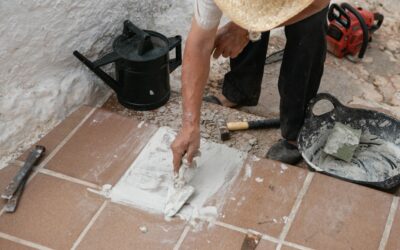
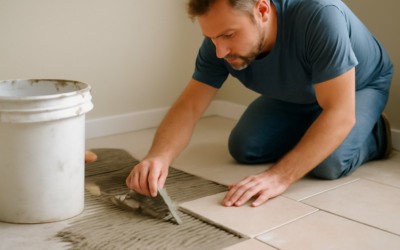
Good technique matters as much as the right product. Start with a clean, sound, and appropriately prepared substrate, since adhesive cannot bond to dust, grease, or a flexing surface. Spread thin-set with the flat side of the trowel first to key it into the substrate, then comb it with the notched side held at a consistent angle to create even ridges. Press each tile firmly and use a slight back-and-forth motion to collapse the ridges and achieve full contact. For large tiles and wet areas, back-butter the tile as well to reach the recommended coverage, generally 80 percent for dry areas and 95 percent for wet or exterior installations.
Choosing and applying the correct tile glue adhesive is the invisible foundation of a durable installation. Match the product to your tile, substrate, and moisture conditions, use the right trowel, and respect the cure times, and your tile will stay firmly, beautifully bonded for the long haul.
Frequently Asked Questions
What adhesive do you use for vinyl or VCT tiles?
Vinyl and VCT tiles do not use thin-set or mastic. VCT is laid with a thin-spread clear VCT adhesive applied with a fine-notch trowel, while luxury vinyl tile uses a pressure-sensitive or vinyl flooring adhesive specified by the tile maker. Let the adhesive flash (turn tacky) before setting tiles, and roll the floor afterward for full contact.
What glue is used for carpet tiles?
Carpet tiles are usually installed with a pressure-sensitive releasable adhesive or adhesive tabs, not permanent glue. The releasable adhesive is rolled thin and allowed to dry tacky, so individual tiles can be lifted and replaced later. Many carpet tiles with heavy backings need only a grid of adhesive or tabs at the corners, so check the manufacturer’s instructions.
Is tile adhesive waterproof?
Thin-set and epoxy are water-resistant and do not break down when wet, but neither is a waterproofing layer. Water can still pass through grout and thinset into the substrate, so showers and wet areas need a separate waterproof membrane or a waterproof backer system behind the tile. Mastic is not water-resistant and can soften with prolonged moisture.
What adhesive is used for pool tile?
Pool tile needs an adhesive rated for continuous submersion, typically a high-performance polymer-modified thin-set or an epoxy adhesive, used with a matching pool-rated grout. Mastic and standard thin-sets are not suitable underwater. Follow the product’s cure time before filling the pool, since water pressure and chemicals stress the bond, and consider a pool professional for large repairs.
Prefer to explore on your own?
See how new flooring looks in your actual room in seconds — free, no signup.
Try the free Floor Studio →