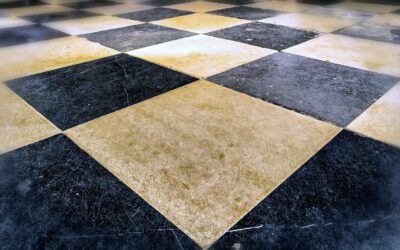
Tile is one of the few flooring categories where Home Depot legitimately competes with specialty showrooms on both price and selection. Walk the aisle on a weekday morning and you will find 800-plus SKUs in stock, from $0.78 white ceramic to $9.97 large-format wood-look porcelain. Tile Home Depot pricing looks straightforward but the per-square-foot number on the shelf rarely tells the full story. Boxing yields, dye lots, and substrate prep all factor into whether a tile project finishes on budget.
Part of our Tile & Grout guide — explore the full guide →
- Ceramic vs Porcelain: The First Decision
- House Brands and National Players
- Reading the Specs on the Box
- Pricing Tiers and Real-World Costs
- Installation Tools and Materials In-Aisle
- Substrate Prep: The Hidden Cost
- Pro Tips That Save Money
- Pro Xtra and Installation Services
- When to Buy at Home Depot
- Frequently Asked Questions
Ceramic vs Porcelain: The First Decision
Every tile sold at Home Depot fits into one of two categories. Ceramic is softer, easier to cut, and cheaper, running $0.78 to $2.99 per sq ft. Porcelain is denser, harder, and rated for higher traffic, priced from $1.79 to $7.99. The difference is water absorption: true porcelain absorbs under 0.5 percent, ceramic between 0.5 and 3 percent.
For bathrooms, kitchens, mudrooms, and outdoor patios, porcelain is the right pick almost every time. Ceramic still has a place on shower walls and budget laundry rooms but it should not be installed in high-traffic floor areas.
House Brands and National Players
Home Depot’s tile department leans on a mix of house labels and recognizable names. MSI, Daltile, and Florida Tile are the volume leaders. Marazzi sits in the premium tier with Italian-made lines around $4.49 to $6.99 per sq ft. Lifeproof, the house brand, dominates the LVP section but also extends to ceramic and porcelain at competitive prices.
- Daltile Restore — $1.97 per sq ft, classic 12×12 white ceramic
- MSI Brickstone — $4.99 per sq ft, wood-look porcelain in 6×36 planks
- Marazzi Studio Life — $5.49 per sq ft, large-format 12×24 polished porcelain
- Florida Tile Aspen Wood — $4.29 per sq ft, rustic wood-look
- Lifeproof Iverson — $2.69 per sq ft, glazed porcelain 12×24
Reading the Specs on the Box
Three numbers matter more than the picture on the front. PEI rating measures abrasion resistance on a 1-to-5 scale. Anything under PEI 3 should not go on a residential floor. PEI 4 covers kitchens, entryways, and busy living spaces. PEI 5 is commercial-grade and overkill for most homes.
DCOF measures slip resistance and must hit 0.42 minimum per ANSI A137.1 for any wet area. Frost rating per ASTM C1026 matters if you are tiling a patio, porch, or unheated garage in northern climates.
Pricing Tiers and Real-World Costs
Budget tier covers $0.78 to $1.99 per sq ft. Basic glazed ceramic in 12×12 or 18×18 formats, white or beige. Suitable for laundry rooms, rental properties, and shower walls. Wear shows within 5 years on busy floors.
Mid tier runs $2.00 to $4.99 per sq ft. Porcelain with PEI 4 ratings, sharper edges from rectified cuts, and realistic stone or wood looks. The sweet spot for most homeowners doing kitchens, bathrooms, and entries.
Premium tier hits $5.00 to $9.97 per sq ft. Large-format 24×48 tile, book-matched marble looks, and outdoor-rated 2 cm pavers. The visual upgrade from mid tier is substantial, especially in natural light.
Installation Tools and Materials In-Aisle
Home Depot stocks every consumable a tile project needs. Custom Building Products is the dominant brand for thinset, grout, and sealer. Versabond at $17 per 50-pound bag covers roughly 80 sq ft at standard trowel coverage. Polyblend grout runs $14 per 25-pound bag.
Rentable tools include a wet saw at $58 a day, a tile cutter for straight cuts at $24, and a profile gauge for trim work. Skip the cheapest plastic spacers. Spring-loaded leveling clips at $0.45 each save 30 minutes per square foot on large-format installs.
Substrate Prep: The Hidden Cost
The biggest tile failures come from substrate problems, not the tile itself. Concrete subfloors need moisture testing per ASTM F1869 (calcium chloride) or F2170 (in-situ probe). Wood subfloors require 1-1/4 inch total thickness with no deflection more than L/360.
Schluter Ditra at $1.65 per sq ft is the gold standard uncoupling membrane and prevents 90 percent of cracked-tile callbacks. Backerboard like HardieBacker at $14 per 3×5 sheet is the budget alternative but does not isolate movement the way Ditra does. For shower walls, Kerdi waterproofing membrane is non-negotiable.
Pro Tips That Save Money
Order 15 percent extra on standard layouts, 20 percent on diagonals, and 25 percent on herringbone or chevron. Always pull from a single dye lot. Lot numbers are stamped on the box ends and lighting conditions reveal mismatches that the warehouse fluorescents hide.
The clearance endcap at the back of the aisle holds discontinued and overstock product at 40 to 60 percent off. Check it on every visit. A homeowner doing a 60 sq ft mudroom can sometimes find premium Italian porcelain for $2.49 per sq ft if the store is closing out a SKU.
Pro Xtra and Installation Services
The Pro Xtra loyalty program is free and unlocks bulk pricing on quantities above 500 sq ft. Volume pricing tiers trigger at 500, 1,000, and 2,500 sq ft, with discounts ranging from 5 percent to 18 percent depending on the manufacturer and SKU.
Home Depot’s tile installation through their certified contractors runs $7 to $13 per sq ft, with the lower end on simple 12×12 over a flat substrate and the higher end on large-format diagonals or herringbone patterns. The install warranty is one year on labor, separate from the tile manufacturer’s warranty.
When to Buy at Home Depot
For 90 percent of residential tile projects, Home Depot is competitive on price, has the inventory in stock today, and stocks every consumable needed for installation. Where it falls short is on European premium lines, custom mosaics, and trade-only collections, which a showroom like Emser or Daltile’s Stone Center handles better. For everything else, the tile Home Depot aisle gets the job done at a fair price with a contractor referral network ready to install.
Frequently Asked Questions
How much floor tile do you need for a room?
Multiply the room length by the width to get square footage, add the waste allowance for your layout, then divide by the coverage printed on the box. A 10 by 12 foot room is 120 square feet; with 15 percent extra for a straight lay, that is 138 square feet. Round up to whole boxes from one dye lot, and keep a few spare tiles for future repairs.
Can you use large format tile on a floor?
Yes, but the floor must be flatter than for small tile. Industry standards call for no more than 1/8 inch of variation in 10 feet for tiles with any edge 15 inches or longer. Use a large-notch trowel, back-butter each tile for full coverage, and consider a leveling clip system to control lippage. Self-leveling underlayment fixes dips before tiling.
Is wood-look porcelain tile a good alternative to hardwood?
Yes, for wet or high-traffic rooms. Wood-look porcelain is waterproof, scratch resistant, and will not cup or warp, which makes it a strong choice for bathrooms, kitchens, mudrooms, and basements. It feels harder and colder than wood, so radiant heat or rugs help. Lay long planks with an offset of no more than about one third of the plank length to limit lippage from tile bow.
Is peel-and-stick tile good for floors?
It works for light-duty, low-cost updates. Peel-and-stick floor tiles are usually vinyl, go down quickly over a clean, flat, smooth surface, and suit laundry rooms, closets, and rentals. They are not as durable as ceramic or porcelain, can shift or lift edges in damp areas or over uneven floors, and dents show more. Rolling the tiles firmly improves adhesion.
What are interlocking floor tiles used for?
Interlocking floor tiles snap together at the edges without adhesive or grout, so they install fast and can be lifted later. Rigid polypropylene and PVC versions are common in garages and workshops, rubber versions in home gyms and play areas, and wood or composite deck tiles on patios and balconies. Most need a reasonably flat, solid base and are not a substitute for tile in showers.
Prefer to explore on your own?
See how new flooring looks in your actual room in seconds — free, no signup.
Try the free Floor Studio →