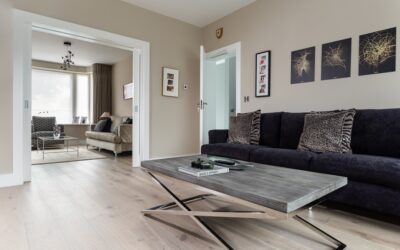
Everyone loves the look of polished concrete floors right up until they learn what real concrete involves: cracking, dusting, cold-hard maintenance, and a slab that has to be poured or ground to perfection. That is exactly why tile that looks like concrete has exploded in popularity. Modern porcelain reproduces the matte, mineral, industrial-cement aesthetic almost perfectly, then gives you durability, waterproofing, and easy maintenance that actual concrete cannot touch. I have installed concrete-look porcelain in kitchens, baths, and whole main floors, and clients are consistently amazed you cannot tell it from the real thing until you touch it. Here is the full rundown.
Part of our Tile & Grout guide — explore the full guide →
Why Choose Concrete-Look Tile Over Real Concrete
The appeal is having the look without the headaches. A real polished concrete floor can crack as the slab moves, needs periodic resealing, telegraphs every stain, and stays stubbornly cold and hard underfoot. It also demands a professional grinder and a lot of dusty labor to finish.
Concrete-look porcelain sidesteps all of that. Porcelain is fired dense and nonporous, so it does not stain or absorb water, never needs sealing, and comes in consistent sizes you install like any tile. You still get the cool, muted, contemporary look, but with a floor that shrugs off spills, resists scratching, and works over radiant heat to solve the cold-floor complaint. For most homeowners chasing the industrial aesthetic, the tile version is simply the smarter choice.
The Looks and Finishes Available
Concrete-look tile is not one flat gray. Manufacturers reproduce a range of cement surfaces, and the finish you pick sets the mood of the room.
- Smooth matte: The classic modern-industrial look, mimicking a hand-troweled or polished slab. Clean and minimal.
- Textured or slightly troweled: Subtle surface movement that reads like a real worked floor and adds slip resistance.
- Warm and cool tones: Beyond gray, you will find greige, taupe, and off-white cement looks that warm up a space or lean Scandinavian.
- Grid and cement-encaustic hybrids: Tiles with subtle geometric or aged patterns for a more designed, less utilitarian feel.
Large-format sizes like 24×24, 24×48, and 32×32 do the most to sell the illusion, because fewer grout lines make the floor read as one continuous slab. Match the grout color closely to the tile and the joints nearly disappear.
What Concrete-Look Tile Costs
Pricing sits in line with other quality porcelain, which is to say reasonable for the durability you get. Material typically runs $3 to $10 per square foot, with premium large-format and designer lines reaching $12 to $15. Professional installation adds $5 to $12 per square foot depending on tile size, since large-format pieces demand a flatter substrate and more skilled labor.
All in, expect roughly $8 to $22 per square foot installed. For comparison, a polished concrete floor often runs $6 to $15 per square foot but comes with the cracking and maintenance realities noted above. Large-format concrete-look tile lands at the higher end of the tile range because of both material cost and the extra care installation demands.
Where It Works Best
This tile is genuinely versatile, which is part of the appeal. In kitchens it delivers a clean modern backdrop that survives dropped pans and spilled wine. In bathrooms and showers, its waterproof nature makes it ideal, and you can run the same tile from floor to shower wall for a seamless wet-room look that is very on-trend.
Open-concept main floors benefit from running one large-format concrete-look tile throughout to unify the space. It also excels in high-traffic entryways and mudrooms where you want something tough and low-maintenance. Because porcelain handles freeze-thaw when rated for it, some lines even work on covered patios to blend indoor and outdoor living. Pair it with warm wood cabinetry or furniture to keep the cool tone from feeling cold.
Installation Considerations
Concrete-look porcelain installs like other porcelain, but the large formats that make it convincing also make it demanding. The substrate must be dead flat, within 1/8 inch over 10 feet for big tiles, or the pieces will lippage and rock. I self-level or grind any high spots before setting a single tile.
Use a large-format thinset or medium-bed mortar, back-butter each tile for full coverage, and use leveling clips to keep edges even across those big panels. Keep grout joints tight, around 1/16 to 1/8 inch, and choose a color that blends with the tile so the concrete illusion holds. On floors over wood subfloors, an uncoupling membrane helps prevent cracking from seasonal movement. This is a job where hiring an experienced tile setter pays off, because large-format mistakes are unforgiving.
Care and Maintenance
This is where concrete-look tile really beats the real thing. Because porcelain is nonporous, day-to-day care is nothing more than sweeping and damp-mopping with a pH-neutral cleaner. No sealing, no waxing, no special products. Spills wipe up without staining, and the matte finish hides everyday footprints and water spots better than a glossy tile.
The only maintenance point is the grout, which on a cement floor look you want to keep clean and, if cement-based, sealed periodically. Choose an epoxy grout in a matching tone and you eliminate even that chore. Between the low upkeep, the durability, and the convincing industrial look, tile that looks like concrete gives you the aesthetic designers love with the practicality real homeowners actually need.
How to Buy Concrete-Look Tile That Actually Convinces
Not all concrete-look tile sells the illusion equally, and a few buying habits separate a floor that looks like real polished cement from one that reads as obviously fake tile. The biggest factor is variation. Real concrete is never perfectly uniform, so look for a line with a high number of distinct faces, sometimes called V3 or V4 shade variation. Cheap tiles repeat the same printed pattern every few pieces, and your eye quickly catches the repetition across a large floor. Better lines use random-print technology so no two tiles look identical.
Size matters just as much. Small 12×12 concrete-look tiles never convince because real concrete does not come in a grid; the more grout lines you see, the more it reads as tile. Go as large as your substrate and budget allow, 24×24 at minimum and ideally 24×48 or larger, and keep the grout joints tight at 1/16 to 1/8 inch in a closely matched color. Finish is the third lever. A matte or lightly textured surface mimics honed concrete and hides footprints, while a glossy version rarely looks like real cement. Order a full box to see the variation before committing, and lay several tiles out dry on the floor to confirm the shade blend works in your light.
One more practical note: check the tile’s slip rating if you are using it in a bathroom, entry, or anywhere it gets wet, and confirm it is rated for floors and, for a patio, for freeze-thaw. Get variation, size, finish, and rating right, and concrete-look porcelain is nearly indistinguishable from the real thing while outperforming it in every practical way.