If you’ve ever stood in a Mediterranean villa or a high-end hotel lobby, you’ve likely walked on natural stone that looks a lot like the stones covered here. Travertine marble flooring brings that same earthy, timeless surface into a home, blending the warm, pitted character of travertine with the polished elegance people associate with marble. Both are calcium-based stones quarried from the earth, and both reward you with a floor that no manufactured product can fully imitate. This guide breaks down the real costs, the maintenance commitment, and how to decide whether stone belongs in your space.
Part of our Countertops guide — explore the full guide →
Travertine and Marble: How They Relate
People lump these two stones together, but they form differently. Travertine is a type of limestone deposited around mineral hot springs, full of natural voids that give it a porous, textured face. Marble is limestone that got cooked and compressed underground over millennia until it recrystallized, producing the dense, veined material sculptors prize. Both are softer than granite and both react with acids, so they share many of the same care rules even though their looks differ.
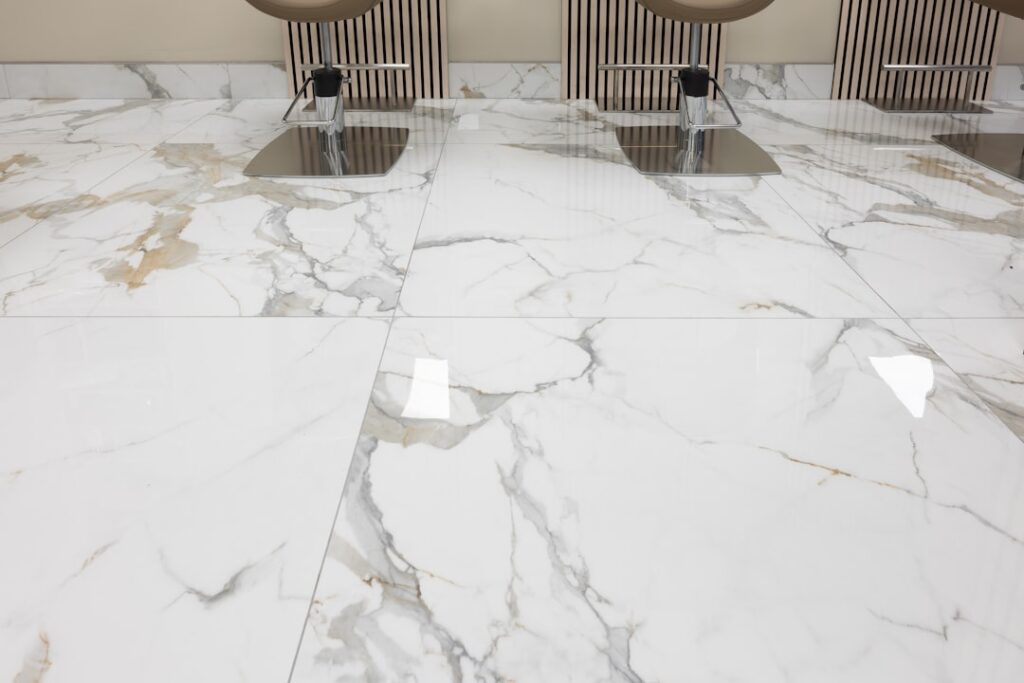
In practice, a “travertine marble” floor usually means a stone with travertine’s tumbled, honey-toned body and the dressed-up finish you’d expect from marble. You’ll see it sold in 12×12, 16×16, and 18×18 tiles, plus French-pattern sets that mix four sizes for an Old World layout.
Choosing a Finish
The finish changes everything about how the floor looks, feels, and performs underfoot.
Honed
A honed finish is matte and smooth with no shine. It hides etching and scratches better than polish and offers more traction, which makes it the better choice for kitchens and entryways.
Polished
Polishing brings out the deepest color and a mirror gloss, but it’s slippery when wet and shows every etch mark and water spot. Save it for low-traffic, dry rooms.
Tumbled and Brushed
Tumbled travertine has rounded edges and a weathered, rustic texture that’s forgiving and slip-resistant. It’s the classic patio and bathroom choice, though the open pores need filling and sealing.
The Pros of Stone Flooring
- Unmatched natural beauty. Every tile is unique, with veining and color movement that printed porcelain only mimics.
- Cool underfoot. Stone stays cool in hot climates and pairs beautifully with radiant in-floor heat in cold ones.
- Longevity. Properly sealed and maintained, a stone floor can last 50 to 100 years and can be honed back to fresh if it dulls.
- Adds perceived value. Natural stone reads as a premium, permanent finish to buyers.
The Cons You Need to Accept
Stone is gorgeous, but it demands respect. Because travertine and marble are calcium carbonate, any acid will etch them, dulling the surface in a permanent ring. That means a splash of orange juice, wine, vinegar, or even a cola can leave a mark within minutes. Both stones are also relatively soft and scratch more easily than porcelain or granite, and travertine’s natural holes can chip if a void wasn’t filled. The material is heavy and cold, it’s slick when polished and wet, and it absolutely cannot be neglected on the sealing schedule.
What Travertine Marble Flooring Costs
Here’s where realistic numbers help you plan. These are 2026 U.S. installed estimates.
- Travertine tile material: $3 to $8 per sq ft for standard grades, $10 to $15 for premium select.
- Marble tile material: $7 to $20 per sq ft depending on origin and grade.
- Professional installation: $7 to $14 per sq ft, since stone needs a flat substrate, larger-notch thinset, and careful leveling.
- Sealing and filling: $1 to $3 per sq ft initially.
All in, expect $12 to $25 per sq ft installed for most travertine marble floors. A 200-square-foot foyer therefore runs roughly $2,400 to $5,000. Stone is rarely a budget option, but it’s a once-in-a-lifetime install.
Sealing and Daily Care
The non-negotiable rule with travertine marble flooring is sealing. Apply a penetrating, impregnating sealer before grouting and again after, then reseal every 1 to 3 years depending on traffic. A simple water-drop test tells you when it’s due: if water beads, you’re protected; if it darkens the stone within a few minutes, it’s time to reseal.
For cleaning, use only pH-neutral stone cleaners. Never reach for vinegar, lemon, bleach, or generic tile cleaners, all of which will etch the surface. Sweep grit daily so it doesn’t act like sandpaper, wipe spills immediately, and place mats at entries and rugs in work zones. Even with perfect care, expect some patina over the years, which many owners come to love as part of the stone’s character.
Where It Works and Where It Doesn’t
Travertine shines in bathrooms, entryways, sunrooms, and patios where its slip resistance and warmth pay off, and honed marble dresses up a formal foyer or a powder room. Busy kitchens are a poor fit unless you commit to a honed finish and accept that acidic spills will eventually leave marks. With radiant heat below, stone becomes one of the most luxurious floors you can own, banishing the only complaint most people have about it.
Installation: What to Expect
Stone is unforgiving of a bad substrate, so prep is everything. The subfloor has to be flat within 1/8 inch over 10 feet and rigid enough that it won’t flex, because deflection cracks both the tile and the grout. Over a wood subfloor, that usually means installing a cement backer board or an uncoupling membrane like Schluter Ditra to absorb movement. Over concrete, the slab needs to be clean, cured, and crack-free, with control joints honored through to the finished floor.
Most installers set travertine and marble in a large-notch thinset mortar, back-buttering each tile so you get full coverage with no hollow spots underneath. Grout joints typically run 1/16 to 1/8 inch for a tight, formal look, and many pros choose an unsanded or fine grout to avoid scratching a polished surface. This is detailed, slow work, which is exactly why labor on a stone floor runs higher than ceramic or porcelain.
Is It Right for You
Choose stone if you want genuine, character-rich material and you’re willing to seal it on schedule and wipe up spills fast. Skip it if you have small kids spilling juice daily, a houseful of dogs, or no patience for maintenance. A good middle path is to use travertine marble flooring in the spaces where its beauty shows off, like the foyer, primary bath, or sunroom, and reserve harder-wearing porcelain for the busy kitchen. Done right, a travertine marble floor becomes the kind of surface that makes a whole house feel grounded and permanent, the same way it has for centuries. Buy an extra 10 to 15 percent of tile from the same lot at purchase, because dye lots and quarry runs vary and a future repair tile may never match what’s on the floor today.
Prefer to explore on your own?
See how new flooring looks in your actual room in seconds — free, no signup.
Try the free Floor Studio →