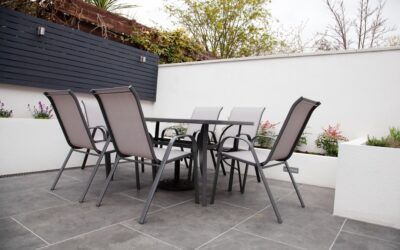
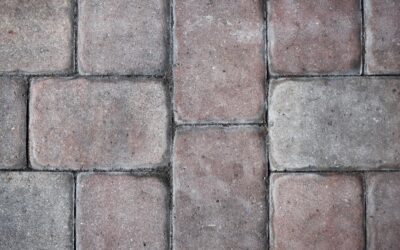
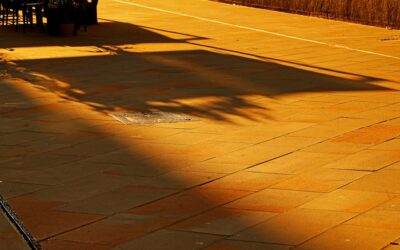
If you’ve ever walked barefoot across a patio in July and had to hop from the heat, you’ll appreciate the biggest selling point of travertine patio pavers: they stay noticeably cooler underfoot than concrete or dark stone, even in direct sun. This natural stone brings a timeless, earthy elegance to patios, pool decks, and walkways while offering excellent slip resistance and durability. It’s a premium material with real advantages and a few maintenance requirements worth understanding before you commit. This guide covers finishes, colors, cost, the honest pros and cons, sealing, and installation.
Part of our Decks & Outdoor guide — explore the full guide →
What Travertine Is
Travertine is a natural sedimentary stone, a form of limestone deposited by mineral springs, prized for its warm, earthy tones and characteristic pitted surface. Formed over thousands of years, it has a naturally porous texture with small holes and channels that give it visual depth and, importantly for outdoor use, grip underfoot. For patios, travertine is cut into pavers, typically thicker units meant to be set outdoors, in tumbled and other natural finishes that suit landscaping. The stone has been used in construction for millennia, from Roman architecture to modern pool decks, which speaks to its longevity.
Why Travertine Excels Outdoors
Several natural properties make travertine especially well-suited to patios and pool areas:
- Stays cool: Travertine reflects heat rather than absorbing it, so the surface stays comfortable for bare feet even in strong sun, a major advantage around pools.
- Slip-resistant: The naturally textured, porous surface (especially tumbled and honed finishes) provides grip when wet, ideal for pool decks and rainy climates.
- Durable and long-lasting: Properly installed and maintained travertine can last for decades and even generations.
- Naturally beautiful: Warm, varied tones and organic texture give a high-end, timeless look that pairs with nearly any home style.
These traits are why travertine is one of the most popular premium choices for pool decks in warm-climate regions.
Finishes and Colors
Travertine comes in several finishes, and the choice affects both look and traction. Tumbled travertine has soft, rounded edges and a matte, rustic surface with excellent slip resistance, the most popular outdoor finish. Honed travertine is ground smooth to a matte, even surface, refined but still grippy. Brushed and chiseled-edge options add texture and a more natural, aged appearance. Polished travertine, while beautiful, is generally reserved for indoors since it’s slicker when wet.
Color-wise, travertine spans warm neutrals: ivory and cream, walnut and golden browns, silver and gray tones, and blended “noce” and mixed hues. Lighter colors stay coolest in the sun and brighten a space, while walnut and gray tones hide dirt and lend a richer, more dramatic look. Because it’s natural stone, expect variation from piece to piece, which is part of its charm.
Travertine Patio Paver Cost
Travertine sits in the premium tier of patio materials, above concrete and standard concrete pavers but often comparable to or below high-end options. Material costs typically run $4 to $12 per square foot for the pavers themselves, with premium grades and thicker pool-coping pieces higher. Installed, expect roughly $15 to $30 per square foot depending on your region, base preparation, and the complexity of the layout. For a 400-square-foot patio, that puts a professional installation in the range of $6,000 to $12,000. Sealing, edging, coping around pools, and intricate patterns add to the total. While pricier upfront than a poured concrete slab, travertine’s longevity and looks make it a strong long-term value.
The Honest Drawbacks
Travertine is excellent, but it’s not maintenance-free. Because it’s porous, it needs periodic sealing to resist staining from oil, food, leaves, and pool chemicals, and to reduce moisture absorption. It can stain if spills sit unsealed, and it’s sensitive to acids, so acidic cleaners, certain fertilizers, and even acidic tree debris can etch or discolor the surface. The pitted holes may collect debris and, in some cases, are filled during manufacturing; over time fill can pop out and need patching. In freeze-thaw climates, travertine must be installed correctly with proper drainage, since trapped water that freezes can cause spalling, and a frost-resistant grade should be specified. Finally, it’s heavier and pricier than concrete pavers, and professional installation is recommended for best results.
How Travertine Pavers Are Installed
Installation follows standard paver methods, and a solid base is everything. The general process for a patio:
- Excavate and grade the area, sloping it slightly away from the house for drainage.
- Build a compacted base of gravel topped with a bedding layer of sand (a “sand-set” installation), or set the pavers in mortar over a concrete base for a more permanent bond.
- Lay the pavers in your chosen pattern, keeping joints consistent and checking level as you go.
- Fill the joints with polymeric sand (for sand-set) or grout (for mortar-set), which locks pavers in place and resists weeds and washout.
- Install edge restraints to keep the field from shifting over time.
- Seal the surface once installed to protect against stains and moisture.
Proper base preparation and drainage are the difference between a patio that stays flat for decades and one that shifts, settles, or heaves. For pool decks and freeze-prone climates especially, professional installation is well worth it.
Sealing and Maintenance
Travertine’s main upkeep is sealing and gentle cleaning. Apply a penetrating stone sealer after installation and reseal every two to five years depending on exposure and traffic; a water-bead test tells you when it’s due, if water soaks in and darkens the stone, reseal. For routine cleaning, sweep debris and rinse with water, using a pH-neutral stone cleaner for tougher grime. Avoid acidic cleaners, vinegar, and harsh chemicals, which etch the stone, and avoid de-icing salts in winter, which can damage the surface. Address oil and organic stains promptly, and refill any lost travertine fill as needed. With this modest care, travertine keeps its warm good looks for generations.
Is Travertine Right for Your Patio?
Travertine patio pavers are an outstanding choice for homeowners who want a cool-underfoot, slip-resistant, naturally beautiful surface for patios, pool decks, and walkways and are willing to seal and clean gently. It’s a premium material with premium looks and genuine longevity. If you want the lowest upfront cost or a zero-maintenance surface, concrete pavers may suit you better, but for a patio that feels comfortable barefoot in summer, grips underfoot by the pool, and only grows more characterful with age, travertine is hard to beat.