When homeowners want an outdoor surface that looks high-end and stays cool underfoot in summer, natural stone is hard to beat, and the travertine paver sits near the top of the list. A travertine paver is a thick tile of natural limestone-based stone designed for patios, pool decks, walkways, and driveways, prized for its earthy colors and naturally slip-resistant texture. It delivers the timeless appeal of stone at a price that often surprises people for the better.
This guide walks through what travertine is, the finishes and sizes you will encounter, realistic costs, how installation works, and the sealing and care that keep the stone looking great for decades outdoors.
What a Travertine Paver Is
Travertine is a form of natural limestone that forms around mineral springs over thousands of years. The stone develops a characteristic surface of small pits and channels, which give it a distinctive organic texture. Cut into thick pieces for outdoor use, a travertine paver is sturdier than a thin interior tile and built to handle foot traffic, weather, and ground movement.
Color is part of the appeal. Travertine ranges through warm ivories, tans, golds, walnut browns, and silvery grays, often within a single batch, which gives a finished surface natural depth and variation. Because the colors run through the stone rather than sitting on a printed surface, scratches and wear stay far less noticeable than on manufactured products.
Finishes and Edges
The finish on a travertine paver changes both its look and how it performs underfoot. Knowing the options helps you match the stone to the right space.
- Tumbled: softened, rounded edges and a matte, weathered surface that is naturally slip resistant and popular around pools.
- Honed: a smooth, flat matte finish that feels refined while staying non-glossy.
- Brushed: a lightly textured surface that adds grip and a subtle aged appearance.
- Chiseled or chipped edge: hand-worked edges for a rustic, old-world look.
For pool decks and patios, tumbled and brushed finishes are favored because their texture provides traction when the surface is wet, an important safety feature outdoors.
Common Sizes and Patterns
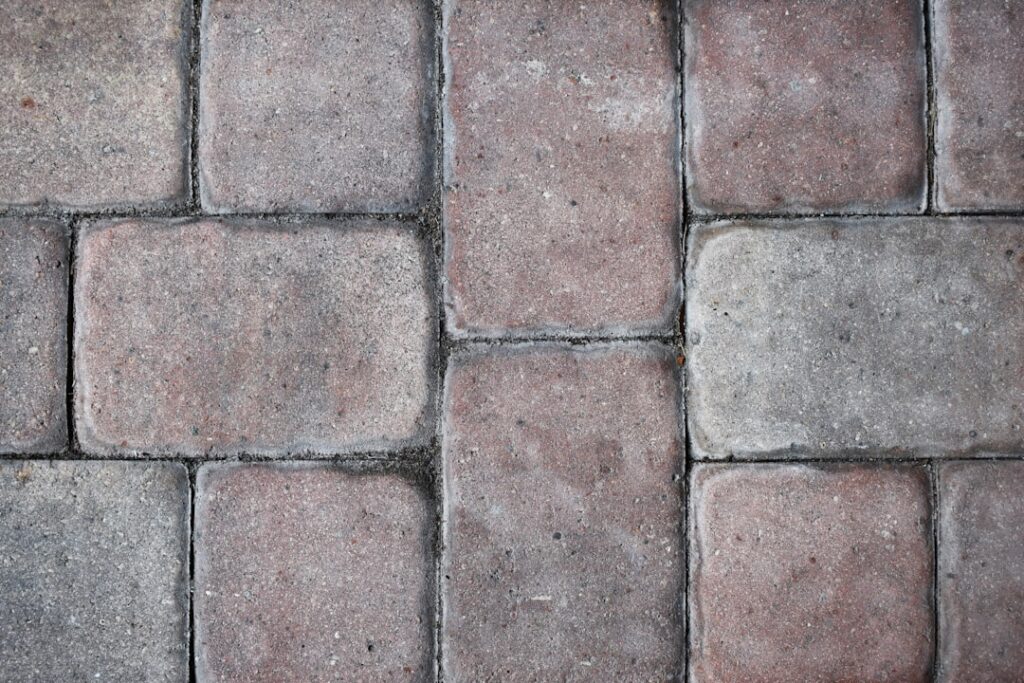
Travertine pavers come in a range of dimensions, from square tiles to rectangular planks. A very common option is the French pattern, also called a Versailles pattern, which combines four different sizes into a repeating layout that fills an area with pleasing variation and few visible repeats. Standard square sizes such as 16 by 16 inches and rectangular formats are also widely used.
Larger pavers create a clean, open look and install faster, while smaller pieces and mixed patterns add detail and work well for curved or irregular areas. Think about scale: big formats suit large patios, while a busy mixed pattern can overwhelm a small courtyard. Many suppliers sell French-pattern travertine in bundled kits that cover a set square footage, which simplifies ordering.
Cost Considerations
Travertine offers genuine natural stone at a mid-range price. Material costs commonly run from about $4 to $12 per square foot depending on grade, finish, and color, with premium selections costing more. Installed costs, including base preparation and labor, generally fall in the range of roughly $10 to $30 per square foot, varying widely with your region, site conditions, and the complexity of the layout.
Several factors push the price up or down: the paver grade and thickness, the difficulty of the site, whether the project needs significant excavation and drainage work, and the intricacy of the pattern. Always order extra material, around 10 percent, to cover cuts and to keep matching stone on hand for future repairs. Treat these figures as estimates, since stone pricing and local labor rates fluctuate.
Installation Methods
There are two main ways to install travertine pavers outdoors. The sand-set or dry-laid method places pavers over a compacted gravel base topped with bedding sand, much like concrete pavers. This approach allows water to drain through the joints, flexes with ground movement, and lets you lift and reset a stone if needed, making it popular for patios and pool decks in many climates.
The mortar-set method bonds the pavers to a concrete slab with thinset, creating a rigid, permanent surface often used where a solid substrate already exists. Either way, proper base preparation and grading for drainage are critical, because standing water and a poorly compacted base cause the most common failures. Because correct base work, slope, and joint detailing make or break the result, many homeowners hire an experienced stone or hardscape installer for larger projects.
Sealing and Maintenance
Travertine is porous, so sealing protects it from stains, especially around pools and outdoor kitchens where sunscreen, food, and drinks get spilled. A penetrating sealer designed for natural stone soaks in and guards against moisture and stains while letting the stone breathe. Plan to reseal periodically, often every couple of years outdoors, based on the sealer manufacturer’s guidance and how much wear the surface sees.
For routine care, sweep debris and rinse the surface, and clean with a pH-neutral stone cleaner rather than acidic products. Acidic cleaners, including vinegar and many general-purpose cleaners, can etch and dull travertine, so avoid them. Some homeowners fill the small natural holes in the stone with grout or filler for a smoother surface, while others leave them for a more natural look. Address weeds in dry-laid joints and keep the joints maintained to protect the base.
Is Travertine Right for Your Project
Travertine excels where beauty and comfort matter outdoors. The stone stays noticeably cooler than concrete and many darker materials in direct sun, which makes it a favorite for pool decks where bare feet are common. Its texture provides natural slip resistance, and its color variation hides everyday dirt and wear.
The trade-offs are real: it needs sealing, it can stain if neglected, and it is more sensitive to acids and freeze-thaw cycles than some alternatives, so harsh-winter climates require careful selection and installation. If you want a durable, elegant, naturally cool surface and are willing to seal it occasionally, a travertine paver patio or pool deck rewards the effort with a look that ages gracefully for many years.