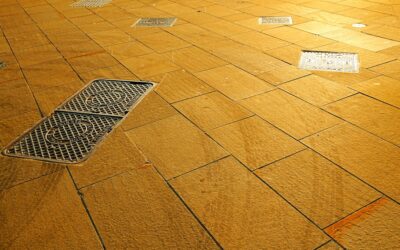
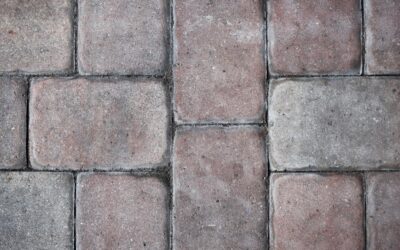
The reason a travertine patio can look like it has been part of a European villa for two centuries comes down to one clever arrangement of four different tile sizes. French pattern travertine, also called a Versailles or Ashlar pattern, is a layout that combines four distinct stone sizes into a repeating, interlocking module that reads as random and organic rather than gridded. It is one of the most popular ways to install travertine for patios, pool decks, and entryways because it captures an old-world, hand-laid charm that uniform tile simply cannot. Here is how the pattern works and what to know before you order it.
What the French Pattern Is
The French pattern is a specific arrangement of four tile sizes that fit together to fill a repeating square module without leaving gaps. The classic combination uses pieces sized 8 by 8, 8 by 16, 16 by 16, and 16 by 24 inches, which lock together into a roughly 4 by 4 foot repeating block. When laid out, the varied sizes scatter the grout lines so the eye never settles on a rigid grid, producing that relaxed, antique appearance.
Travertine itself is a natural limestone formed by mineral springs, prized for its warm earth tones and natural pitting that give it character no manufactured tile can match.
Why the Pattern Is So Popular
The appeal is both visual and practical. A few reasons it endures:
- Old-world elegance: the irregular layout mimics centuries-old European stonework.
- Hides imperfections: varied joints disguise minor size or color variation in natural stone.
- Sold as a kit: travertine is often sold in French pattern bundles with the four sizes pre-proportioned, simplifying ordering.
- Cooler underfoot: travertine stays cooler than concrete in the sun, making it a favorite for pool decks.
Because the proportions are worked out in advance, you order by the square footage of the repeating pattern rather than calculating each size yourself.
Finishes to Choose From
Travertine comes in several surface finishes, and the right one depends on where you are installing it.
- Tumbled: softened, rounded edges and a matte, rustic texture. The most popular for the antique French look.
- Honed: smooth, matte surface. Refined but can be slick when wet.
- Brushed and chiseled: textured surface with a worn, weathered feel.
- Polished: glossy and formal, better suited to indoor floors than wet exteriors.
For pool decks and patios, tumbled or brushed finishes provide the slip resistance you want underfoot, along with that quintessential old-world texture.
Cost Breakdown
Travertine sits in a moderate price range for natural stone. Materials for French pattern travertine typically run $4 to $10 per square foot, with premium colors and thicker pavers at the upper end. Installed, expect $12 to $25 per square foot, since the pattern and natural stone require careful layout and a skilled setter. Travertine pavers for patios, which are thicker than tile, cost a bit more but can be sand-set like other pavers. Compared to natural flagstone, it is often more affordable and far more uniform to work with.
How It Is Installed
Laying the pattern correctly is what makes or breaks the result. The process differs slightly for interior tile versus exterior pavers.
- Plan the layout. Dry-lay one full repeating module first so you understand how the four sizes fit together before mortaring anything.
- Prepare the base. Indoors, set tile on a flat, clean substrate with thinset. Outdoors, build a compacted gravel and sand base for pavers, or a concrete slab for mortared tile.
- Set the stone. Follow the pattern module across the area, maintaining consistent grout joints, usually 1/4 to 1/2 inch.
- Fill and grout. Grout the joints, or for pavers, sweep polymeric sand into the joints and compact.
- Seal. Apply a penetrating stone sealer once everything cures.
Because travertine is natural, blend stones from different bundles as you lay them so color variation distributes evenly across the surface.
Sealing and Maintenance
Travertine is porous, so sealing is essential, especially outdoors and around pools. Apply a quality penetrating sealer after installation and reapply every one to three years depending on exposure and traffic. Sealing guards against staining from food, leaves, oils, and pool chemicals, and it slows water absorption that can lead to spalling in freeze-thaw climates. For cleaning, use a pH-neutral stone cleaner only. Acidic cleaners like vinegar will etch and dull the limestone. Sweep regularly and rinse to keep grit from scratching the surface.
Where It Works Best
French pattern travertine excels outdoors and in grand indoor spaces. Pool decks top the list, since the stone stays cool, resists slips when tumbled, and looks resort-like. Patios and courtyards gain instant character from the irregular layout. Entryways and large foyers benefit from the upscale, old-world impression. It also suits Mediterranean, Tuscan, and traditional architectural styles beautifully. In freeze-thaw regions, confirm your travertine is frost-resistant and keep it well sealed.
When you order, plan your quantities and grout strategy carefully because the pattern affects both. Travertine is sold by the square foot in pre-proportioned French pattern bundles, but always add 10 to 15 percent extra for cuts at the borders, breakage, and future repairs, since matching the exact color lot later is nearly impossible. Decide early whether you want the grout joints filled or left as the popular unfilled look. Filled travertine has the natural pits and holes packed with grout for a smoother, easier-to-clean surface, while unfilled travertine shows those voids for a more rustic, textured character that some homeowners love and others find harder to keep clean. For pool decks, filled and honed surfaces shed water better, whereas a tumbled, partially filled finish gives the most authentic old-world look. Confirm your fabricator or supplier knows which finish and fill you expect so the bundles arrive ready to lay.
Final Thoughts
French pattern travertine delivers timeless, hand-laid European character by combining four tile sizes into an interlocking module that scatters the grout lines for a natural look. Sold as pre-proportioned kits at $4 to $10 per square foot in materials, it is an attainable luxury for patios, pool decks, and entryways. Choose a tumbled or brushed finish for slip resistance, dry-lay a module before you start, blend stones for even color, and seal the porous surface on a regular schedule. Done right, it brings centuries of old-world charm to your home.
Frequently Asked Questions
How thick are French pattern travertine tiles and pavers?
Interior French pattern travertine tile is usually about 1/2 inch thick and is set in thinset over a flat subfloor or slab. Paver versions for patios and pool decks are typically about 1 1/4 inches (3 cm) thick, strong enough to sand-set over a compacted gravel base. Order the thickness that matches the installation method, since thin tile laid on sand will crack.
Can you install French pattern travertine over an existing concrete patio?
Yes, if the slab is sound, drains well, and shows no active cracking or heaving. Clean the concrete, repair minor cracks, and set the stone with an exterior-grade mortar, adding a crack isolation membrane over small cracks. Check door thresholds first, because the stone raises the finished height, and keep the existing slope so water still runs away from the house.