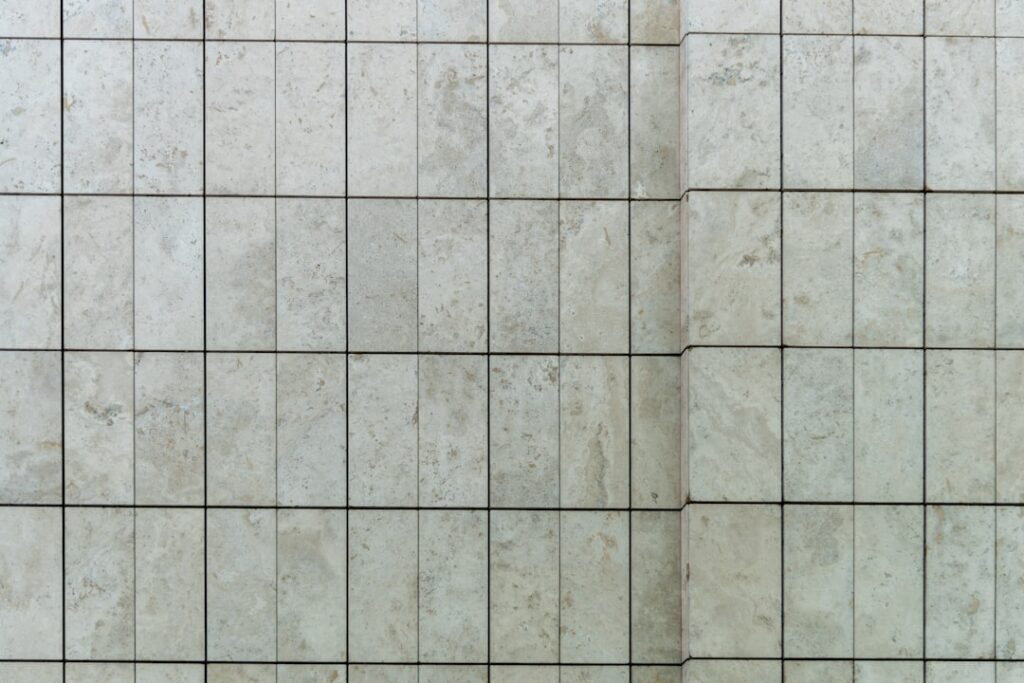
Large-format natural stone has a way of making a floor feel calm and expensive at the same time, and few sizes hit that sweet spot better than the 18-by-18-inch square. Travertine tile 18×18 covers ground fast, minimizes grout lines, and shows off the stone’s beautiful natural veining in generous, uninterrupted sweeps. If you’re drawn to the warm, earthy palette of Old World stone but want a practical tile size for real rooms, this format deserves a serious look.
Part of our Tile & Grout guide — explore the full guide →
Why the 18×18 Size Matters
Tile size affects far more than appearance. An 18-by-18-inch tile covers 2.25 square feet per piece, so a room fills in with noticeably fewer tiles and fewer grout joints than the once-standard 12-by-12. Fewer grout lines mean a cleaner, more continuous look and, just as importantly, less grout to clean and reseal over the years.
The larger format also flatters travertine’s natural movement. Each 18×18 tile displays a bigger, more complete section of the stone’s flowing veins and color banding, so the floor reads as authentic quarried stone rather than a busy grid. In open-concept spaces and larger rooms, this scale keeps the floor from looking chopped up.
Understanding Travertine as a Material
Travertine is a form of limestone that forms around mineral springs, laid down in layers over thousands of years. That natural process creates its signature pitted texture and warm color range, from ivory and beige to walnut, gold, and silver. Because it’s a natural stone, every tile is unique, and the veining, color, and small voids are inherent to the material rather than defects.
Those natural voids are worth understanding before you buy. Travertine comes either filled (voids filled at the factory with resin or cement for a smoother surface) or unfilled (voids left open for a more rustic, textured look). Most homeowners choose filled and honed travertine for floors because it’s easier to keep clean.
Finish Options for 18×18 Travertine
The finish dramatically changes both the look and the practicality of the floor:
- Honed: a smooth, matte, satin surface that’s the most popular choice for interior floors
- Polished: a glossy, reflective finish that shows the stone’s color best but can be slippery when wet
- Tumbled: softened, rounded edges and a weathered texture with a rustic, Old World feel
- Brushed: a textured matte surface with good slip resistance
For a busy household or a floor that might get wet, honed or tumbled finishes offer better traction than polished. Polished travertine looks stunning in a formal entry but can be treacherous in a bathroom.
What Travertine Tile 18×18 Costs
Travertine is a mid-range natural stone, more affordable than marble but a step above ceramic. Expect $3 to $8 per square foot for the tile itself, with premium grades and rarer colors like silver or noce reaching $10 or more. The large 18×18 size is widely stocked, so pricing is competitive.
Professional installation adds $7 to $15 per square foot, reflecting the care natural stone demands: a dead-flat substrate, careful handling of heavy tiles, and sealing. Don’t forget the ongoing cost of sealer, roughly $30 to $50 per gallon, since travertine must be sealed to resist stains. All in, a professionally installed travertine floor typically lands between $10 and $23 per square foot.
Installing Travertine Tile 18×18
Large-format stone is less forgiving than small tile, mainly because any dip or hump in the subfloor shows up as lippage, where one tile edge sits higher than its neighbor. A flat substrate is non-negotiable.
- Flatten the subfloor to within 1/8 inch over 10 feet. Self-leveling underlayment is often needed for large-format tile.
- Use a large-format thinset (medium-bed mortar) and a 1/2-inch notched trowel to fully support the big, heavy tiles.
- Back-butter each tile to guarantee full mortar coverage and prevent hollow spots that crack under load.
- Seal before grouting. Porous travertine will absorb grout pigment and stain permanently, so a pre-grout sealer coat is essential.
- Choose a tight grout joint, commonly 1/8 to 3/16 inch, and a color that complements the stone.
- Apply a penetrating sealer after grouting cures, and plan on resealing periodically.
Sealing and Everyday Care
Sealing is the heart of travertine maintenance. A quality penetrating sealer soaks in and blocks stains from wine, coffee, oil, and acidic spills. Depending on traffic, reseal every one to three years; a quick water-drop test tells you when it’s time, since water that soaks in rather than beading means the seal has worn.
For daily cleaning, sweep or dust-mop to remove grit, then damp-mop with a pH-neutral stone cleaner. This is critical: never use vinegar, lemon, or standard acidic bathroom cleaners on travertine. Acid etches the calcium carbonate in the stone, leaving dull spots that no amount of scrubbing removes. Wipe spills promptly and use coasters and mats in spill-prone zones.
Pros and Cons
- Pro: Warm, timeless natural stone with unique veining in every tile
- Pro: Large 18×18 format means fewer grout lines and faster coverage
- Pro: More affordable than marble, with a similar upscale feel
- Pro: Naturally cool underfoot, ideal for warm climates and radiant heat
- Con: Requires sealing and acid-free cleaning for life
- Con: Porous and prone to etching and staining if neglected
- Con: Demands a very flat subfloor to avoid lippage
- Con: Heavy tiles make DIY installation physically demanding
Layout and Pattern Ideas for 18×18 Travertine
The generous scale of an 18×18 tile opens up several attractive layouts. The simplest is a straight grid aligned with the room’s longest wall, which reads clean and lets the stone’s veining take center stage. A diagonal set, turned 45 degrees, adds energy and can make a square room feel larger, though it generates more cut waste at the perimeter. Many homeowners choose a subtle running-bond offset, staggering each row by a third rather than the full half, to break up the grid without introducing lippage risk.
A popular upgrade is the French or Versailles pattern, which combines the 18×18 with coordinating smaller sizes for an Old World, stone-courtyard effect. If you go this route, buy a pre-matched modular travertine set so the sizes and thicknesses align. Whatever layout you choose, dry-lay a representative section first and shuffle tiles to distribute the lighter and darker pieces evenly, since travertine’s natural color range looks best when it’s spread across the floor rather than clumped in one corner.
Frequently Asked Questions
Is travertine tile 18×18 good for bathrooms? Yes, with a honed or tumbled finish for slip resistance and diligent sealing. Avoid polished travertine on wet bathroom floors.
How many 18×18 tiles do I need per 100 square feet? Each tile covers 2.25 square feet, so about 45 tiles cover 100 square feet before adding 10 to 15 percent for cuts and waste.
Does travertine crack easily? Properly installed over a flat, supported substrate, travertine is durable and long-lasting. Cracks usually trace back to subfloor movement or poor mortar coverage, not the stone itself.
For homeowners who want authentic natural stone with a warm palette and an efficient, elegant scale, travertine tile 18×18 offers a floor that looks like it’s been part of the home for generations.
Prefer to explore on your own?
See how new flooring looks in your actual room in seconds — free, no signup.
Try the free Floor Studio →