Walk into the bit aisle at Home Depot and you will see 200 different drill bits arranged in a way that assumes you already know what you need. Understanding the types of drill bits and their uses turns that wall of confusion into a quick reference for the right tool. Most home projects need only six categories, and a $40 to $90 starter set covers the rest of your life.
- Twist Bits: The Default for Almost Everything
- Brad Point Bits for Clean Wood Holes
- Spade Bits for Fast Rough Holes
- Forstner Bits for Flat-Bottom Holes
- Masonry Bits for Concrete and Brick
- Step Bits for Sheet Metal and Thin Materials
- Glass and Tile Bits
- Auger Bits for Deep Wood Holes
- How to Choose the Right Set for Your Tool Box
Twist Bits: The Default for Almost Everything
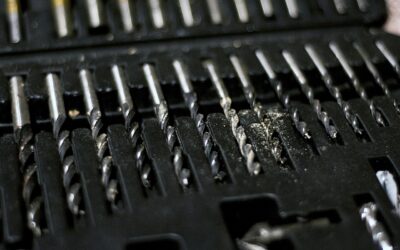
Twist bits are the standard helical bits in every starter kit. They drill wood, soft metal, plastic, and most general materials with a 118-degree split point. High-speed steel (HSS) versions handle softwoods and plastics. Cobalt M35 alloy bits with a 5% cobalt content tackle stainless steel, hardened steel, and cast iron without losing their edge.
Dewalt Pilot Point, Milwaukee Red Helix, and Bosch DareDevil all rank among the best mainstream twist bits. Sizes from 1/16 inch to 1/2 inch in 1/64 inch increments cover virtually every screw and dowel application. Titanium nitride (TiN) coatings extend bit life by 3 to 6 times in steel applications but add little benefit when drilling wood only.
Brad Point Bits for Clean Wood Holes
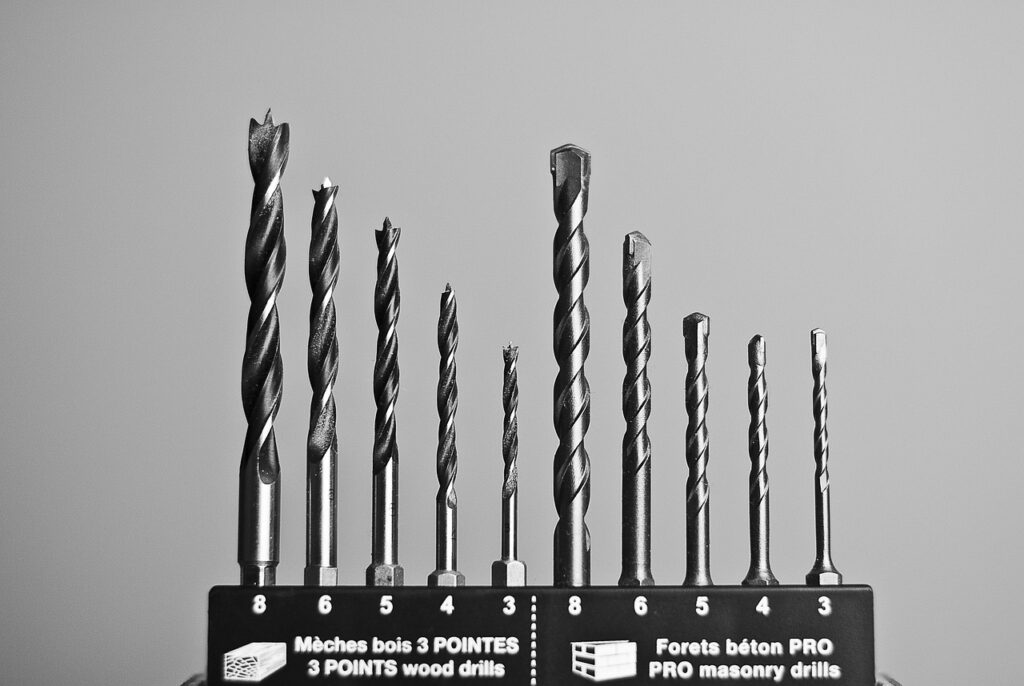
If you drill a lot of cabinet hardware or dowel joints, brad point bits are the upgrade. The center spike pierces the wood first, eliminating wander, and the outer cutting spurs sever the wood fibers cleanly before the body removes material. The result is a perfectly round hole with zero tearout on the entry side.
Lee Valley and Fisch make premium brad points around $8 to $14 each. CMT and Freud sets in 1/8 to 1/2 inch run $60 to $90 for a 7-piece kit. Use them at 1500 to 2500 RPM in hardwoods like oak and maple. Plywood requires lower speeds around 1000 RPM to avoid melting the bit edge.
Spade Bits for Fast Rough Holes
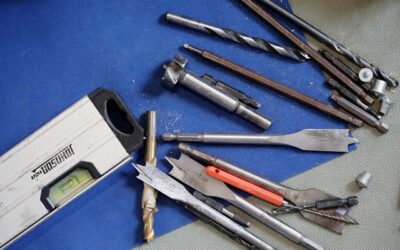
Spade bits, sometimes called paddle bits, drill 3/8 to 1.5 inch holes in lumber fast but messy. The flat blade with a center point removes wood aggressively, which is perfect for running Romex through studs, drilling drain rough-ins, or any framing job where appearance does not matter.
Irwin Speedbor and Bosch Daredevil spade bits feature self-feeding tips that pull the bit through the work without excessive pressure. Expect $2 to $5 per bit individually or $25 for a 13-piece set covering common sizes. Run them at 800 to 1500 RPM and back out frequently to clear chips. Pushing too hard burns the bit and overheats the motor.
Forstner Bits for Flat-Bottom Holes
Forstners are the cabinetmaker’s secret weapon. They cut precise flat-bottom holes for European cabinet hinges, partial-depth recesses, and overlapping holes that would chip out with any other bit. Standard sizes range from 1/4 inch to 2-1/8 inches, with the 35mm size being mandatory for any homeowner installing IKEA or other Euro-hinge cabinets.
WoodOwl and Freud Precision Shear make excellent Forstners that stay sharp through years of use. Cheap import sets from Amazon work for occasional jobs but dull quickly. Run Forstners at low RPM, between 250 and 700, depending on diameter. Larger bits need slower speeds and a drill press because the high torque can spin you off a hand drill.
Masonry Bits for Concrete and Brick
Standard twist bits will not touch concrete, brick, or stone. You need a masonry bit with a carbide tip, used in either a standard drill on hammer mode or a dedicated rotary hammer. Carbide handles the abrasion that destroys HSS in seconds. Bosch Bulldog, Milwaukee SDS-Plus, and Dewalt Rock Carbide bits are the industry workhorses.
Sizes from 3/16 inch for tapcon anchors to 1 inch for sleeve anchors cover most homeowner needs. SDS-Plus shanks fit rotary hammers like the Bosch 11255VSR Bulldog and deliver dramatically faster hole speed than standard round-shank bits in a regular drill. For occasional concrete work, a 1/4 inch SDS bit and a rented rotary hammer beat fighting a regular drill all afternoon.
Step Bits for Sheet Metal and Thin Materials
Step bits, also called unibits, drill multiple hole sizes in one tool. A single step bit might cover 1/8 to 1/2 inch in 1/16 inch increments. They excel at sheet metal, electrical boxes, and thin plastic where standard twist bits grab and tear the work.
Irwin Unibit and Klein Tools step bits are the electrician’s standard. Expect $15 to $35 per bit depending on size range. The cutting flute self-deburrs as it climbs, leaving a clean hole that needs no follow-up filing. Use them at 500 to 1000 RPM and apply steady pressure. Excessive speed melts plastic and work-hardens steel.
Glass and Tile Bits
Drilling ceramic tile, glass, or porcelain requires either a carbide spear-point tip or a diamond-grit hollow core bit. Carbide spears like the Bosch GT500 work for one or two holes in soft ceramic. Diamond core bits from QEP, Bosch, or RUBI handle dense porcelain and natural stone without cracking the tile.
Always drill tile at low speed, 300 to 600 RPM, with constant water cooling. A wet sponge held against the bit or a dedicated water-feed attachment prevents heat buildup that cracks tiles. Mark the drill point with masking tape to stop the bit from skating across the glaze. For glass, support the back side with a wood block to prevent blowout at exit.
Auger Bits for Deep Wood Holes
When you need to drill long holes through multiple studs for plumbing or wiring, auger bits are the right tool. The threaded screw tip pulls the bit through the wood and the long helical flutes evacuate chips efficiently. Ship auger bits from Irwin or Greenlee run $15 to $40 per bit and last decades.
Pair them with a heavy-duty corded drill or a right-angle drill like the Milwaukee Hole Hawg for joist drilling. A standard cordless will stall in seconds. Run at 500 to 800 RPM and let the screw tip do the pulling. Forcing them snaps the shank or burns out the motor.
How to Choose the Right Set for Your Tool Box
For a homeowner with a single cordless drill, the right starter kit looks like this: a 21-piece HSS twist bit set with index from Dewalt or Milwaukee at $35, a 6-piece spade bit set at $18, a 5-piece masonry set for brick and concrete at $20, and a single 35mm Forstner bit at $14 for cabinet hinges. Total spend lands under $90 and covers 95% of home repair drilling.
Add specialty bits as projects demand. Knowing the types of drill bits and their uses keeps you from overbuying and ensures every bit in the box earns its slot.