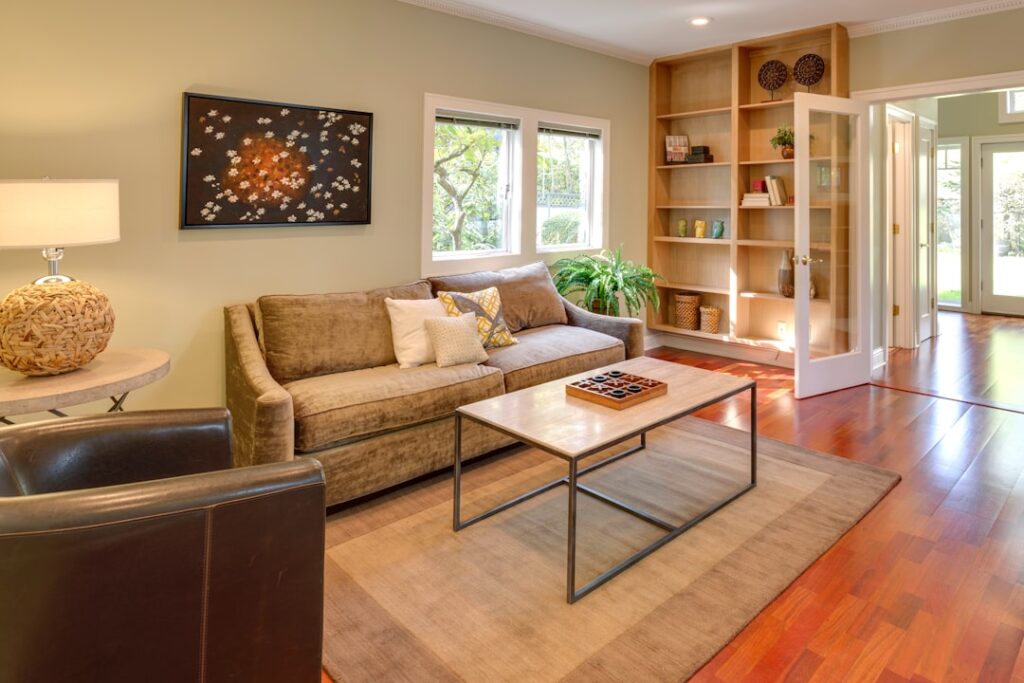
The living room is where natural light and views matter most, which makes the window you choose one of the room’s defining features. Understanding the types of living room windows helps you balance light, ventilation, energy efficiency, and budget so the space feels bright and comfortable year-round. This guide covers the main window styles, the frame materials behind them, and what you can expect to pay.
Part of our Windows & Doors guide — explore the full guide →
What Drives the Right Choice
Before browsing styles, think about how you use the room. Do you want a sweeping, unobstructed view, or do you need airflow on warm evenings? Is the window on a windy facade where a tight seal matters? Living rooms often favor large glass area and clean sightlines, but the best pick depends on your climate, the wall it sits on, and the look you’re after. With that in mind, here are the styles worth knowing.
Picture Windows
A picture window is a large, fixed pane that doesn’t open. Because there’s no operating hardware, it offers the broadest, clearest view and the most daylight, and it seals tightly for excellent energy efficiency. The trade-off is zero ventilation, so picture windows are often paired with operable windows on either side. They shine on a focal wall that frames a yard, skyline, or garden. Expect roughly $300 to $1,000 installed depending on size.
Bay and Bow Windows
Both project outward from the wall and create a sense of depth, but they differ in shape.
- Bay windows: typically three panels, a large center fixed pane flanked by two angled side windows. They form an interior nook or shelf and make a strong architectural statement.
- Bow windows: four or more panels arranged in a gentle curve, producing a softer, rounded projection and even more glass.
These are premium upgrades because they involve structural work and multiple sashes. Installed costs commonly range from $1,200 to $4,000 or more, but they add visual drama and extra interior space that smaller windows can’t match.
Casement Windows
Casement windows hinge on the side and swing outward like a door, operated by a crank. Because the entire sash opens, they deliver the best ventilation of any style and seal tightly against the frame when closed, giving them strong energy ratings. They suit living rooms where you want to catch a breeze and enjoy an unobstructed view. Plan on about $400 to $1,200 per window installed.
Double-Hung Windows
The classic American window, double-hung units have two sashes that slide vertically, and both the top and bottom can open. That lets warm air escape from the top while cooler air enters below. They’re versatile, easy to clean since most tilt inward, and fit nearly any architectural style. Expect roughly $300 to $1,000 installed, making them one of the more budget-friendly choices for a living room.
Sliding Windows
Sliding (or gliding) windows move horizontally along a track and are wider than they are tall, which fits modern living rooms and walls with limited height. They’re simple, durable, and easy to operate since there are no cranks or pulleys. Ventilation is limited to half the window opening at a time. Installed costs typically run $350 to $1,000, depending on width.
Awning Windows
Awning windows hinge at the top and open outward from the bottom, forming a small awning. Their best feature is that you can leave them open during light rain without water getting in. They’re often placed high on a wall or above a picture window for ventilation while preserving privacy and wall space. Figure about $400 to $1,200 installed.
Fixed and Specialty Windows
Beyond the picture window, fixed glass comes in geometric and accent shapes, like transoms above a main window, circular portholes, or tall narrow panels beside a door. These don’t open and exist mainly to add light and architectural character. Pricing varies widely with shape and size, but simple fixed accents often fall in the $250 to $800 range.
Frame Materials
The frame affects price, maintenance, insulation, and looks as much as the style does.
- Vinyl: the most popular and affordable choice. It never needs painting, resists moisture, and insulates well. Color options are more limited than other materials.
- Wood: warm and traditional with excellent insulation, but it requires periodic painting or staining and can rot if neglected. Often the priciest option.
- Fiberglass: strong, stable across temperature swings, low-maintenance, and energy efficient. It costs more than vinyl but lasts a long time.
- Aluminum: slim, modern, and very durable, but metal conducts heat and cold, so it’s less efficient unless it has a thermal break. Common in contemporary designs.
Combining Styles for Light and Function
One advantage of a living room is that it can usually accommodate more than one window style on the same wall. A large picture window in the center captures the view and the light, while a casement or awning unit on each side adds the ventilation the fixed pane lacks. Stacking a row of transom windows above a main window pulls daylight deeper into the room without sacrificing wall space for furniture. Mixing styles this way lets you solve for both airflow and openness rather than compromising on one. Just keep the frame material and color consistent across the grouping so the wall reads as a deliberate composition instead of a patchwork.
Energy Efficiency Considerations
Because living rooms often have large glass area, efficiency pays off here more than anywhere. Look for double or triple panes, an inert gas fill like argon between the panes, and a low-E coating that reflects heat while letting light through. Check the U-factor (lower means better insulation) and the solar heat gain coefficient, which you’ll want low in hot climates and higher in cold ones. An ENERGY STAR rating confirms the window meets regional efficiency standards. A poorly sealed window undermines even the best style, so professional installation matters as much as the glass.
Choosing the Right Window for Your Room
Start with the room’s primary goal. If the view is the star, a picture or bay window frames it beautifully. If you want a breeze on summer nights, casement or double-hung units give you control. For a wide, low wall, sliders fit naturally, and awning windows add ventilation up high. Then pick a frame material that matches your budget and maintenance tolerance, and confirm the energy specs suit your climate. Knowing the types of living room windows lets you combine styles, perhaps a central picture window flanked by casements, to get both the light and the function your space deserves.