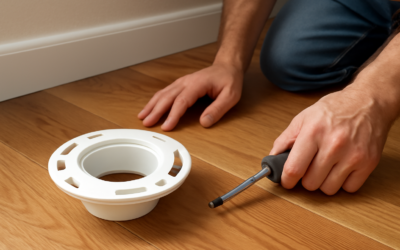
A toilet flange looks like a simple plastic or metal ring in the floor, but picking the wrong one can mean a rocking toilet, a leaking wax seal or a cracked fitting within a year. The types of toilet flanges differ in two ways: the material (PVC, ABS, cast iron, stainless steel, brass, copper or lead) and how they attach to the drain (glued, inside-fit compression, expandable or soldered). The right choice depends mostly on what drain pipe you have under the floor and how high the finished floor sits.
Part of our Bathroom Remodeling & Flooring guide — explore the full guide →
For most modern homes with plastic drains, a glue-on PVC or ABS flange with a stainless steel ring is the best all-around option. Older homes with cast iron or lead drains need flanges designed for those materials. Repairs where you cannot reach the pipe call for compression or expandable designs that seal inside the existing drain.
Types of Toilet Flanges by Material
PVC and ABS (Plastic) Flanges
A plastic toilet flange is the most common type in homes built since the 1970s. PVC is white, ABS is black, and each must match its drain pipe because they use different cements. Plastic flanges are inexpensive, corrosion-proof and easy to glue onto 3- or 4-inch pipe. Their weakness is the bolt slots: an all-plastic ring can crack if the toilet is over-tightened or rocks. Many versions add a stainless steel ring around the top for strength.
Metal Ring Plastic Flanges
A plastic flange body with a stainless steel or galvanized ring is the most popular upgrade. The plastic glues to the pipe, while the metal ring holds the closet bolts securely. This hybrid gives the best of both materials and is often what plumbers install by default.
Stainless Steel Toilet Flanges
A full stainless steel toilet flange or repair ring offers maximum strength and corrosion resistance. Repair rings screw on top of a broken flange so you can reset the toilet without cutting out the old one. A stainless steel toilet flange repair ring is one of the simplest fixes for a cracked plastic flange with a sound pipe connection.
Cast Iron Flanges
Older homes with cast iron drain stacks often have cast iron flanges caulked or leaded onto the pipe. They are strong but heavy and can rust over decades. Replacement usually involves an inside-fit compression flange or a transition fitting to plastic. Cast iron repair is its own specialty, especially when the pipe is cracked or corroded.
Brass and Copper Flanges
A brass or copper toilet flange is found mostly in older homes with copper drain lines or in specific commercial setups. Copper flanges are soldered to copper drain pipe. They resist corrosion well but cost more and require soldering skills to install, which places them in pro territory for most homeowners.
Lead Toilet Flanges
A lead toilet flange is typically part of a lead closet bend, common in homes built before the mid-1900s. The soft lead pipe was flared or wiped onto a brass flange. Modern repairs usually transition from lead to plastic using a toilet flange for lead pipe, which seals with a rubber gasket inside the lead bend, or by replacing the bend entirely.
Types of Toilet Flanges by Connection Style
Glue-On (Solvent Weld)
The standard for PVC and ABS. The flange either slides over the outside of the pipe or inside it, and solvent cement creates a permanent bond. These are the most secure option when you have access to clean, round pipe.
Inside-Fit and Compression Flanges
A compression toilet flange slides into the existing drain and seals with a rubber gasket that expands as you tighten bolts. A rubber toilet flange often uses this design. They work well when the old flange is cut out but the pipe stays in place, and they suit cast iron, lead and plastic drains. No glue or soldering is required.
Expandable Flanges
An expandable toilet flange is a variation of compression design with a mechanical expansion ring. Turning screws pushes the gasket outward against the pipe wall. These are popular for cast iron repairs because they adapt to slightly out-of-round pipes.
Offset Flanges
Offset flanges shift the toilet center by up to about 2 inches. They help when the drain is slightly too close to or too far from the wall, though they can reduce flow and are best used only when needed.
Low-Profile Flanges
A low profile toilet flange sits very close to the floor surface. It suits situations where the finished floor is thin or where a standard flange would sit too high and keep the toilet from seating. Low-profile designs often pair with a compression seal inside the pipe.
Adjustable and Extension Flanges
Adding tile or thick flooring can leave a flange below the finished floor. Adjustable flanges or extension spacers raise the flange to sit flush with or slightly above the new floor so the wax ring seals properly.
Quick Comparison
| Type | Best For | Install Method |
|---|---|---|
| PVC/ABS | Modern plastic drains | Solvent weld |
| Metal ring plastic | Plastic drains, extra bolt strength | Solvent weld |
| Stainless repair ring | Cracked flange, sound pipe | Screws to subfloor |
| Cast iron | Older iron stacks | Caulked or compression |
| Compression/expandable | Cast iron, lead, retrofit | Gasket inside pipe |
| Low profile | Thin floors, tight clearance | Compression or glue |
| Copper/brass | Copper drain lines | Soldered |
How to Choose the Right Flange
- Identify the drain pipe. Look under the floor or inside the flange. White plastic is PVC, black is ABS, dark heavy metal is cast iron, and dull gray soft metal is likely lead.
- Measure the pipe size. Most toilets drain into 3- or 4-inch pipe. Some flanges fit both.
- Check the floor height. The top of the flange should sit on top of the finished floor, not below it. Plan for tile or underlayment.
- Decide on repair vs replace. If only the ring is broken and the pipe connection is solid, a repair ring is faster. If the pipe is damaged, replace the flange.
- Choose metal for strength. A stainless ring or metal-reinforced flange resists cracking from bolts.
Installation Tips
- Secure the flange to the subfloor with corrosion-resistant screws. Use masonry anchors on concrete slabs.
- Set closet bolts in the side slots so they line up with the toilet base, parallel to the wall.
- Use a standard or extra-thick wax ring, or a wax-free foam seal, depending on flange height.
- Do not overtighten the toilet nuts. Snug them evenly and stop, or the flange or porcelain can crack.
- Shut off the water and drain the toilet before any flange work, and cap the open drain while you work.
Lead and Asbestos Precautions in Older Bathrooms
Older bathrooms may hide two hazards. Lead pipes and flanges are common in homes built before the mid-1900s, and lead-based paint is likely in homes built before 1978. Wear gloves when handling lead fittings, avoid cutting or sanding lead, wash hands thoroughly and keep children away from the work area. Old vinyl flooring, its adhesive and some old floor underlayments installed before the 1980s may contain asbestos. Have them tested before removing them to reach a flange, and hire a licensed abatement contractor if tests come back positive.
Troubleshooting
Toilet Rocks on the Flange
The flange may be too high, or the floor is uneven. Shim the toilet base with plastic shims, or lower the flange if it sits well above the floor.
Leaks at the Base
A flange below the floor surface often causes a poor wax seal. Add an extension ring or switch to a thicker seal.
Broken Bolt Slots
Install a stainless repair ring over the old flange instead of cutting out the pipe.
Costs
Plastic flanges typically run $5 to $20, metal ring and stainless versions about $10 to $35, and compression or expandable flanges roughly $15 to $45. Copper and brass cost more. A plumber replacing a flange usually charges a few hundred dollars, more for cast iron or lead work or if subfloor repair is needed.
When to Call a Plumber
Call a licensed plumber for cast iron, lead or copper drains, cracked pipe below the floor, rotten subfloor around the drain, or recurring leaks at the base. Some jurisdictions require permits for drain work. A plumber can also confirm the correct transition fittings so the new flange meets local code.
Frequently Asked Questions
What is the most common type of toilet flange?
A PVC or ABS flange with a stainless steel ring is the most common choice for homes with plastic drain lines.
Are metal toilet flanges better than plastic?
Metal rings are stronger and resist cracking at the bolt slots. A hybrid plastic flange with a metal ring offers strength without changing the pipe connection.
Which flange works with cast iron pipe?
Compression or expandable flanges that seal inside the pipe are the usual choice for cast iron, since they avoid cutting or caulking.
Can I replace a lead toilet flange myself?
It is possible with an inside-fit flange, but lead pipe is soft and easily damaged. Many homeowners hire a plumber to transition lead to plastic safely.
How high should a toilet flange sit?
The flange should sit on top of the finished floor, ideally flush or up to about 1/4 inch above it, so the wax ring seals properly.