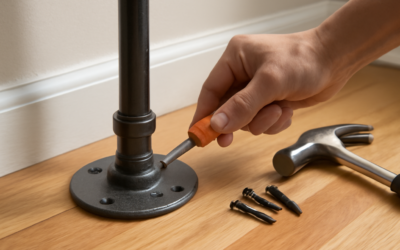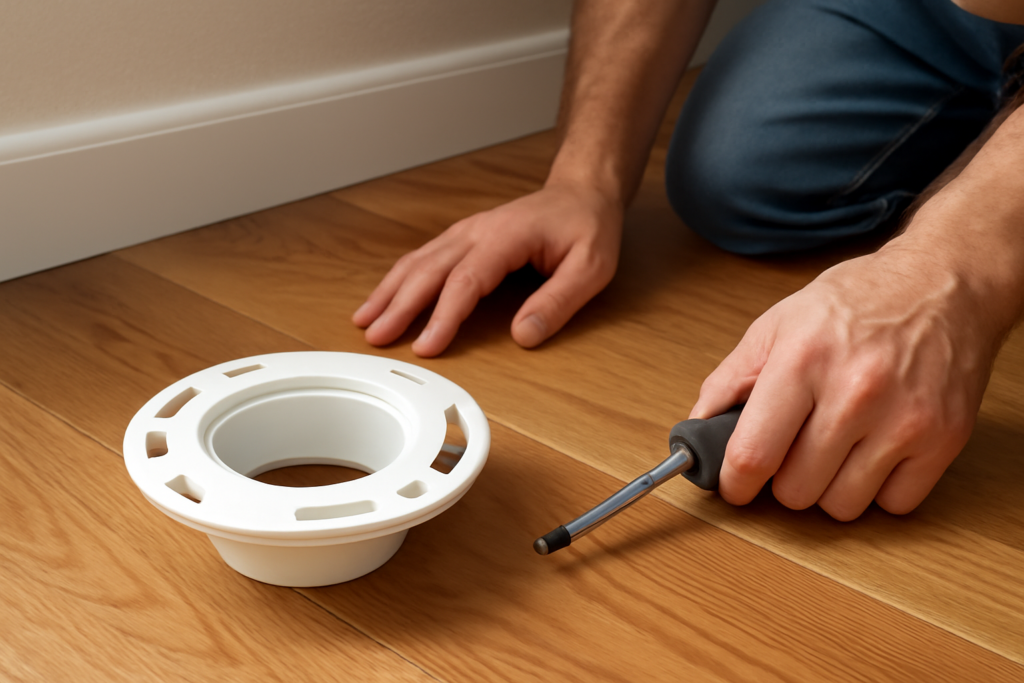
The humble pvc floor flange is one of the most important parts of your bathroom that you never see. Also called a toilet flange or closet flange, this fitting connects the toilet to the drainpipe and anchors the toilet securely to the floor.
When a flange is installed correctly, your toilet sits solid, seals tight, and stays leak-free for years. When it is the wrong height, cracked, or loose, the result can be rocking toilets, foul odors, and water damage to the floor below. This guide explains what the flange does, how to install or replace one, and when to bring in a plumber.
What a PVC Floor Flange Does
A PVC floor flange is a circular fitting that bonds to the top of the toilet drainpipe, sitting flush with or just above the finished floor. It serves two jobs at once: it provides the connection point for the toilet’s wax or rubber seal, and it gives the toilet bolts something to grab so the fixture is held firmly down.
The flange has a wide rim with slots that accept the closet bolts, and a hub or socket that slips over or into the drainpipe. Made from PVC, it resists corrosion and pairs naturally with the PVC drain lines common in modern homes. A good seal between the toilet, the wax ring, and the flange is what keeps sewer gas and water where they belong.
Why Flange Height Matters
Height is the single most important detail of a flange installation, and it trips up many homeowners. The ideal position places the bottom of the flange ring resting on top of the finished floor, not below it. A common target is to have the flange sit roughly a quarter inch above the finished floor surface.
When the flange sits too low, buried beneath tile or vinyl, the wax ring may not compress enough to seal, leading to leaks and odors. When it sits too high, the toilet may rock or fail to sit flat. Plan flange height around your finished floor, and if you are adding flooring later, account for that added thickness in advance.
Types of PVC Toilet Flanges
- Hub or socket flange: Slips over the outside of the pipe and is solvent-cemented in place.
- Inside-fit flange: Glues into the inside of the drainpipe, useful in tight spaces.
- Flanges with metal rings: A PVC body topped by a stainless or metal ring for stronger bolt support.
- Offset flange: Shifts the toilet position slightly when the drain is not perfectly placed.
- Repair and spacer flanges: Used to build up height or fix a damaged existing flange.
Tools and Materials
- PVC floor flange sized to your drainpipe
- PVC primer and PVC solvent cement
- Closet bolts and a new wax or rubber toilet seal
- A screwdriver and corrosion-resistant screws to anchor the flange
- A hacksaw or pipe cutter if you need to trim the pipe
- A rag, cleaning supplies, gloves, and eye protection
How to Install a PVC Floor Flange
Replacing or installing a flange follows a clear sequence. Work methodically, and dry-fit everything before applying any cement, since solvent cement bonds permanently within seconds.
- Turn off the water, drain and remove the toilet, and stuff a rag in the drain to block sewer gas.
- Remove the old flange if present, cleaning the pipe of debris and old cement.
- Dry-fit the new flange to confirm it sits at the correct height relative to the finished floor.
- Orient the bolt slots so the closet bolts will line up parallel to the wall behind the toilet.
- Apply PVC primer, then solvent cement, to both the pipe and the flange socket per the product directions.
- Press the flange firmly onto the pipe, hold briefly, and confirm the orientation before the cement sets.
- Anchor the flange ring to the subfloor with corrosion-resistant screws into solid material.
- Set the new closet bolts, install a fresh wax seal, and reset the toilet.
Safety and Code Considerations
PVC primer and solvent cement give off strong fumes, so work in a well-ventilated bathroom, wear gloves and eye protection, and keep the products away from open flames. Read and follow the manufacturer’s instructions, because primer and cement must be applied correctly and quickly to form a sound, permanent bond.
Plumbing is governed by local building codes, which can dictate flange type, fasteners, and connection methods. A flange that is loose, cracked, or improperly sealed can cause hidden leaks that rot the subfloor and damage ceilings below, so the work needs to be done right. If you are unsure about pipe sizing, height, or code requirements, it is wise to consult or hire a licensed plumber.
Common Problems and Fixes
A rocking toilet often points to a flange set too low or bolts that have lost their grip. A persistent sewer smell can mean a failed wax seal or a cracked flange letting gas escape. Water pooling around the base after each flush usually signals a seal or flange problem rather than the toilet itself.
For a flange set too low after new flooring, a spacer or repair ring kit can build it up to the right height. A cracked flange ring that still holds the pipe can sometimes be reinforced with a metal repair ring, while a badly damaged flange should be cut out and replaced. When repairs feel beyond your comfort level, a plumber can solve them quickly and correctly.
When to Call a Plumber
Many homeowners can replace a PVC floor flange with patience and the right materials, especially when the existing drainpipe is in good shape. Call a professional when the drainpipe is damaged, the flange is buried in concrete, the situation requires an offset or extensive rework, or local code is unclear to you.
Because a faulty flange can lead to leaks and costly water damage, there is no shame in hiring a plumber for a job that needs to be perfect the first time. A correctly installed PVC floor flange, sealed and anchored at the proper height, will keep your toilet solid and leak-free for the long haul.
Prefer to explore on your own?
See how new flooring looks in your actual room in seconds — free, no signup.
Try the free Floor Studio →