Walk into a showroom and nearly every wood floor on display is already sealed, glossy, and ready to install. That convenience hides a quieter option that many designers and craftsmen still swear by. Unstained hardwood flooring arrives raw and unfinished, leaving the sanding, staining, and sealing to be done on-site after the boards are down. It costs more in labor and patience, but it gives you a seamless, custom finish you simply cannot buy in a box. Here is what raw wood floors offer, where they fall short, and how to decide if site-finishing is worth it.
- What “Unstained” Really Means
- Site-Finished vs. Prefinished: The Core Trade-Off
- Why People Choose Unstained Hardwood
- The Natural, Unstained Look
- Pros of Unstained Hardwood Flooring
- Cons and Things to Plan For
- How to Buy Unstained Hardwood
- Cost and Timeline Expectations
- Common Species for Unstained Floors
- Final Take
What “Unstained” Really Means
Unstained, or unfinished, hardwood is solid or engineered wood sold with no factory stain or topcoat applied. After installation, a flooring crew sands the entire surface flat, then applies your chosen stain (or none at all for a natural look) followed by a protective finish such as oil-modified polyurethane, water-based poly, or a penetrating hardwax oil. Because the finishing happens after the floor is laid, every board blends into one continuous surface with no beveled edges or micro-gaps to trap dirt.
Site-Finished vs. Prefinished: The Core Trade-Off
The decision usually comes down to this comparison:
- Prefinished floors are sanded, stained, and coated in a factory under controlled conditions, often with ultra-hard aluminum-oxide finishes. They install fast and you walk on them the same day, but the boards have small beveled edges and you are locked into the colors offered.
- Site-finished (unstained) floors give you a perfectly flat surface, total control over color and sheen, and the ability to match existing woodwork exactly. The downside is days of sanding, coating, and dry time, plus dust and fumes during the process.
If you want a floor that looks like it grew with the house, unstained is the way. If you need the room usable tomorrow, prefinished wins.
Why People Choose Unstained Hardwood
A custom color is the headline reason. You are not stuck with a manufacturer’s stain chart; a finisher can mix to your sample, lighten an espresso to a soft greige, or leave the wood completely natural to show off its true grain. The smooth, edge-to-edge surface is the second big draw. Without micro-bevels, dust and crumbs sweep away cleanly and the floor reads as one solid plane of wood. Many homeowners also appreciate that a site-finished floor can be screened and recoated years later without the seam lines that prefinished bevels create.
The Natural, Unstained Look
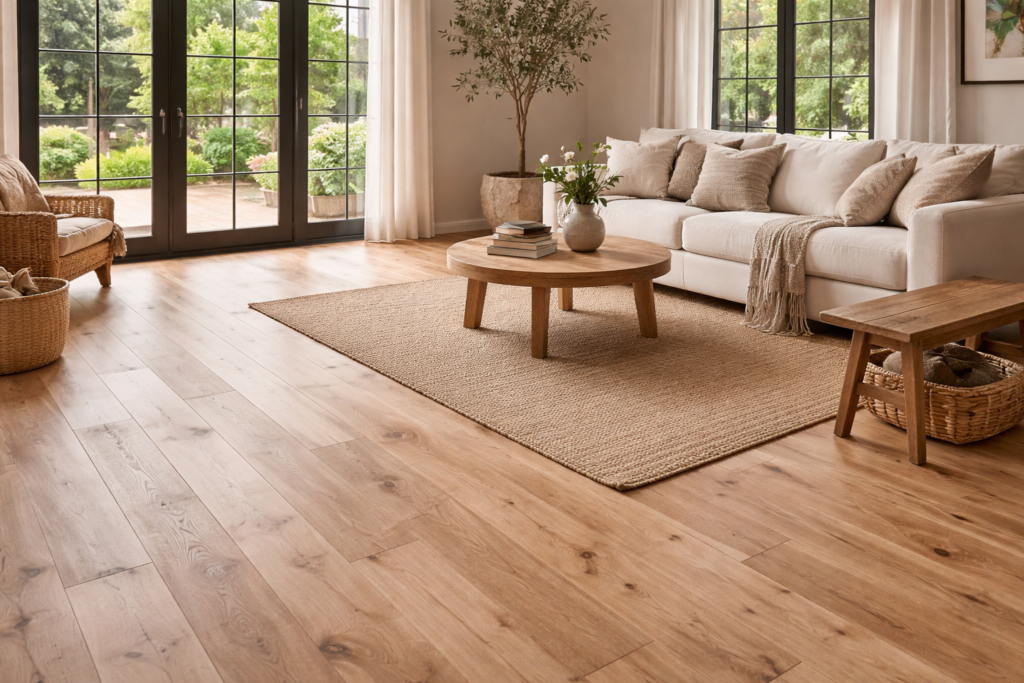
Leaving the wood unstained and sealing it with a clear coat has surged in popularity. White oak finished with a clear water-based poly or a natural hardwax oil keeps that pale, Scandinavian warmth without going orange. Maple stays bright and creamy. Even a clear finish slightly ambers oil-based species over time, so if you want to keep wood truly light, ask your finisher about water-based or no-VOC clear coats. The result is timeless, hides dust better than a dark stain, and never looks dated.
Pros of Unstained Hardwood Flooring
- Unlimited color control — match any sample or go fully natural.
- Seamless surface — no beveled edges, easier to clean.
- Better refinishing — recoats and full sands blend invisibly.
- Custom sheen — choose matte, satin, or semi-gloss on the day.
- Repairs disappear — a patched board can be sanded and finished to match.
Cons and Things to Plan For
Site-finishing is a multi-day project. Expect sanding, one or more coats of stain, and two to three coats of finish, with dry time between each. The room is off-limits during the process, and dust control matters even with modern dustless sanders. Fumes from oil-based products require ventilation, and full cure for foot traffic with furniture can take a week or more. Labor cost is higher than simply clicking down prefinished planks, and the quality depends entirely on the skill of your finisher, so vet their references and ask to see past work.
How to Buy Unstained Hardwood
Keep these points in mind when shopping:
- Pick a species that takes stain evenly if you plan to color it. Oak is forgiving; maple and birch can blotch without a conditioner.
- Buy 5 to 10 percent extra for waste, cuts, and future repairs from the same lot.
- Acclimate the wood in the room for several days before installation so it matches the home’s humidity.
- Confirm grade — select, common, or character grade changes the look and price significantly.
- Hire a proven finisher and agree on stain color and sheen with a sample on your actual wood, not a brochure.
Cost and Timeline Expectations
Raw hardwood material itself is often priced similarly to, or slightly less than, comparable prefinished planks, but the finishing labor is where the budget shifts. Site-finishing a floor typically adds several dollars per square foot for sanding, staining, and multiple finish coats, and it is skilled work you generally do not DIY on a whole house. Plan the timeline carefully: expect a day for sanding, a day for staining and dry time if you are adding color, and another two to three days for finish coats with cure time between each. Water-based finishes dry faster, often allowing light foot traffic within hours, while oil-based products take longer but build a warm, durable film. Furniture and rugs should wait the full cure window, which can be a week or more, to avoid trapping solvents and marring the soft new finish.
Common Species for Unstained Floors
White oak and red oak dominate unstained installations because they take stain evenly and sand beautifully, but you have other options. Maple offers a clean, contemporary look when left natural, though it benefits from a wood conditioner before staining to prevent blotching. Hickory delivers dramatic grain and high hardness for busy homes. Walnut brings rich, naturally dark tones that often need no stain at all. Whatever species you choose, buying it unstained lets the wood’s true character lead, rather than hiding it under a factory color.
Final Take
Unstained hardwood flooring rewards patience with a floor that is genuinely yours: any color, a flawless flat surface, and decades of easy refinishing ahead. It demands more time, a cleaner work plan, and a skilled finisher, so it is not the right pick when speed is the priority. But if you want a wood floor that looks custom-made for your home, raw boards finished on-site are tough to beat.
Prefer to explore on your own?
See how new flooring looks in your actual room in seconds — free, no signup.
Try the free Floor Studio →