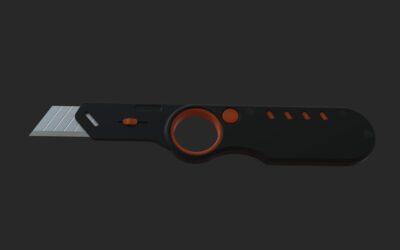
Most of the cuts you make on a vinyl plank job never touch a saw. A sharp utility knife for vinyl plank flooring handles the majority of crosscuts and rip cuts through score-and-snap, leaving cleaner edges with no dust and no noise. The catch is that not every knife or blade works equally well, and rigid core products need a different technique than flexible luxury vinyl. Choosing the right blade and knowing how many passes each core type needs is the difference between a crisp snap and a crumbled edge.
This guide narrows in on the knife itself: which body style to buy, when to use straight versus hook blades, snap-off versus fixed, and a pass-by-pass technique for LVP, WPC and SPC. For broader tool comparisons that include cutters, saws and oscillating tools, look for a general guide to cutting vinyl flooring.
- Choosing a Utility Knife for Vinyl Plank Flooring
- Straight vs Hook Blades
- Snap-Off vs Fixed Blades
- How Many Passes Each Core Type Needs
- Step-by-Step Score-and-Snap Technique
- Tools That Help the Knife Work Better
- Safety Tips for Scoring Vinyl
- Troubleshooting Common Cutting Problems
- Cost Ranges and When to Hire a Pro
- Frequently Asked Questions
Choosing a Utility Knife for Vinyl Plank Flooring
The knife body matters more than most people expect, because scoring hundreds of planks will expose a wobbly blade clamp or an uncomfortable grip fast. Look for these features:
- Rigid blade lock: The blade should not flex or rattle in the handle. Any play wanders the score line off your mark.
- Fast blade change: You will swap blades often, sometimes every 10 to 30 cuts on SPC. Tool-free change buttons save real time.
- Comfortable, full-hand grip: A rubberized or contoured handle reduces fatigue and helps you press consistently.
- Onboard blade storage: Handy on the floor so you are not hunting for a fresh blade mid-cut.
A basic utility knife with a retractable, standard trapezoid blade is enough for most homeowners. Heavy-duty models with metal bodies hold up better on large jobs, and many installers keep two knives on hand: one loaded with a straight blade and one with a hook blade.
Straight vs Hook Blades
Straight Trapezoid Blades
These are the familiar standard utility blades. A straight blade gives a clean, controlled score along a straightedge or speed square, making it the best choice for crosscuts and long rips on vinyl plank flooring. Use it for scoring the wear layer before snapping.
Hook Blades
Hook blades have a curved cutting edge that pulls through the material rather than pressing down. They excel on flexible sheet vinyl, underlayment and thin glue-down LVT, where you want to cut through in one pass. On rigid core planks, a hook blade can also cut a notch or trim around door casing where you pull toward yourself, but it offers less control than a straight blade when guided along a square. Keep your free hand well behind the blade path.
Snap-Off vs Fixed Blades
Snap-off blades have scored segments you break off to expose a fresh tip. The common 18mm and 25mm heavy-duty versions give a sharp point quickly, and their long, thin profile helps with flexible LVP. Their weakness is rigidity; thin snap-off blades can flex on dense SPC, leading to wavy scores.
Fixed trapezoid blades are thicker and stiffer. They track straighter along a guide and hold up better to the pressure needed on rigid core. Most flooring installers prefer fixed blades for SPC and WPC planks, and keep a snap-off knife for detail work.
Whichever you choose, change blades constantly. A dull blade is the biggest reason planks snap unevenly, chip at the edge or tear the wear layer.
How Many Passes Each Core Type Needs
Vinyl plank construction varies, so adjust your approach to the product in front of you.
- Flexible LVP (glue-down or thin click): One or two firm passes will usually score deep enough to fold and snap. For planks under about 3mm you may be able to cut all the way through.
- WPC (wood-plastic composite): Two or three passes are typical. The foamed core is lighter but tougher than it looks, and the snap can be soft; you may need to finish from the back.
- SPC (stone-plastic composite / rigid core): One firm, controlled pass is often enough to break the wear layer and create a snap line, but thicker planks may need two. Additional passes rarely help and increase the chance of the blade drifting.
If a plank refuses to snap cleanly, the score is usually too shallow, too uneven or made with a dull blade. Replace the blade before adding more pressure.
Step-by-Step Score-and-Snap Technique
- Measure and mark. Mark the cut line on the face of the plank with a pencil. Remember the expansion gap at walls, typically about 1/4 inch or as specified by the manufacturer.
- Set up a straightedge. Place a speed square or metal straightedge along the line. Hold it firmly so it cannot slide.
- Score the face. Keep the blade vertical and pull it along the straightedge in one smooth, even stroke. Start with a lighter pass to seat the blade, then follow with firmer pressure.
- Snap the plank. Lift the plank and bend it downward along the scored line, or position the score over a table edge and press. Rigid core usually snaps with a clean crack.
- Cut the back if needed. Flexible and WPC planks may hinge on the backing. Fold the plank and run the knife through the back layer or attached pad.
- Check the edge. Lightly clean up any burr with the knife held flat, then dry-fit the plank.
Tools That Help the Knife Work Better
- Speed square or drywall T-square: Makes 90-degree crosscuts fast and accurate.
- Straightedge with non-slip backing: Keeps rip cuts straight over long planks.
- Cut-resistant gloves: Especially on the hand holding the guide.
- Kneeling pad or work surface: Cutting on a stable surface improves control and protects the finished floor.
- Jigsaw or oscillating tool: For notches, curves and door casing undercuts that a knife cannot handle.
Safety Tips for Scoring Vinyl
- Always cut away from your body and keep the free hand behind the blade path.
- Retract or cover the blade when setting the knife down.
- Replace blades before they get dull; dull blades need more force and slip more often.
- Dispose of used blades in a blade bank or taped container, never loose in the trash.
- If you are removing old flooring before installing vinyl, test older sheet goods and adhesives for asbestos before cutting or scraping.
Troubleshooting Common Cutting Problems
- Plank snaps unevenly: The score was too shallow or wandered. Use a fresh blade and a clamped straightedge.
- Chipped edge on the face: Blade is dull or angled. Keep it vertical and change blades.
- Click lock breaks at the cut end: Support the plank fully when snapping near the joint; score the joint end last.
- Pad tears when folding: Cut the attached underlayment with a second pass from the back rather than tearing it.
- Wavy rip cuts: Switch from a thin snap-off blade to a stiffer fixed blade.
Cost Ranges and When to Hire a Pro
A quality utility knife typically costs between a few dollars and around twenty dollars, and a 100-pack of replacement blades is inexpensive by comparison. A dedicated vinyl plank cutter usually costs more and is worth considering if you are laying several rooms. Professional LVP installation generally runs a few dollars per square foot for labor on straightforward rooms.
Consider hiring a flooring installer if your subfloor needs extensive leveling, you have many angled cuts or complex transitions, or you are installing over radiant heat. A pro will also handle stair nosing and cabinet scribing efficiently. For most DIYers, though, the right utility knife for vinyl plank flooring and a steady supply of fresh blades cover the majority of cuts on the job.
Frequently Asked Questions
What is the best blade for cutting vinyl plank flooring?
A sharp, fixed straight trapezoid blade is best for scoring rigid core planks along a straightedge. Hook blades are better for flexible sheet vinyl, underlayment and thin glue-down planks.
Can you cut SPC flooring with a utility knife?
Yes. SPC scores and snaps cleanly with a sharp knife. One firm pass along a straightedge usually breaks the wear layer, then the plank snaps along the line.
How often should I change the blade?
Change it as soon as scores start to wander or edges chip. On SPC that may be every 10 to 30 cuts; on flexible LVP blades usually last longer.
Is a snap-off knife good for vinyl plank?
It works well on flexible LVP and for detail trimming, but the thin blade can flex on dense rigid core. A heavier fixed blade tracks straighter on SPC and WPC.
Do I need a saw for vinyl plank flooring?
Not for most straight cuts. A saw or oscillating tool is helpful for notches, curves, door jamb undercuts and cutting through very thick planks.
Prefer to explore on your own?
See how new flooring looks in your actual room in seconds — free, no signup.
Try the free Floor Studio →