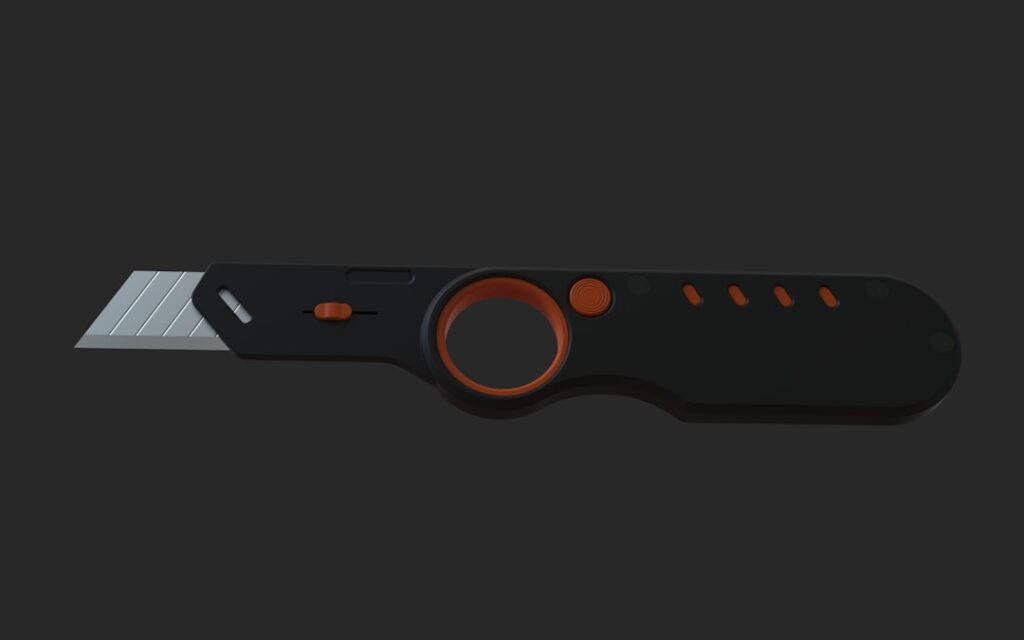
You’re mid-install, you need to trim one plank, and firing up a loud, dusty saw feels like overkill. So can you cut laminate flooring with a utility knife? Yes, you can, using a score-and-snap technique that works surprisingly well for straight lengthwise cuts. It’s quiet, dust-free, and perfect for apartments or late-night projects. But it has real limits, and knowing where those limits are will save you a pile of cracked planks and wasted material.
The Short Answer
A sharp utility knife handles rip cuts (cutting a plank down its length, along the grain) cleanly using the score-and-snap method. It struggles with crosscuts (cutting across the width), tight notches, and thick or high-density planks. For a few trim pieces along a wall, a utility knife is genuinely useful. For an entire room of crosscuts and door notches, you’ll want a saw. Think of the knife as a precision tool for specific cuts, not a replacement for a saw.
How the Score-and-Snap Method Works
The technique borrows from cutting drywall or glass. You weaken the plank along a line, then break it cleanly along that weakened path:
- Measure and mark your cut line with a pencil and a speed square
- Lay the plank decorative (finished) side up on a flat, hard surface
- Line up a metal straightedge on the cut line and hold it firmly
- Draw a fresh, sharp utility blade along the line with firm pressure, scoring the wear layer
- Repeat the pass 4 to 6 times, deepening the groove each time; press hard but keep the blade tracking straight
- Line the score up with the edge of a table or a length of scrap wood, then snap the plank downward
- The board breaks along the score; run the knife through any strands still connecting the two halves
The key is a deep, consistent score. A shallow scratch will snap raggedly or in the wrong place.
When a Utility Knife Works Best
Reach for the knife in these situations:
- Ripping the final row — cutting planks down to width along the wall, a long straight lengthwise cut the knife excels at
- Thin, standard laminate — 7 to 8 mm planks score and snap easily
- Noise-sensitive jobs — apartments, condos, or evening work where a saw would disturb neighbors
- Dust-free needs — the knife produces no airborne particles, unlike a saw
- A handful of cuts — quick trims where hauling out a saw isn’t worth it
Where It Falls Short
Be realistic about the limits. Crosscuts, cutting across the short width of a plank, are much harder to snap cleanly with a knife because you’re breaking across the dense fiberboard core; these come out ragged and are far easier with a saw. Notches around door casings, pipes, and corners can’t be done with a straight score at all. And thick planks, especially 12 mm laminate or products with a dense HDF core, resist scoring and often crack unpredictably.
Water-resistant laminate with a rigid or heavily coated core is also tough on a blade and dulls it quickly. If your first snap comes out jagged, the plank is probably too thick or dense for the knife method.
Tips for Cleaner Knife Cuts
A few habits dramatically improve results:
- Use a fresh blade. A dull blade forces you to press harder and wander off the line; snap in a new segment or swap blades often
- Score more than you think. Six deep passes beat two shallow ones every time
- Keep the straightedge locked down. Any movement ruins the line; clamp it if you can
- Snap decisively. A quick, firm downward break gives a cleaner edge than a slow bend
- Hide the cut edge. Score-and-snap edges aren’t factory-smooth, so place them against the wall where baseboard or quarter-round will cover them
Better Tools for the Tough Cuts
When the knife isn’t enough, these tools cover the rest:
- Laminate cutter (guillotine) — a manual lever cutter that shears crosscuts cleanly, silently, and dust-free; the best upgrade for a full install, around $40 to $80
- Miter saw or circular saw — fast, precise crosscuts, but dusty and loud; use a fine-tooth or laminate-specific blade to reduce chipping
- Jigsaw — the go-to for notches, curves, and cuts around door casings and pipes
- Fine-tooth handsaw — a quiet backup for occasional crosscuts
For most DIY installs, a manual laminate guillotine cutter paired with a jigsaw for notches is the ideal quiet, low-dust combo, and it makes the utility knife optional rather than a workaround.
How the Knife Method Compares on Cost and Cleanliness
Part of the appeal is simple economics and convenience. A utility knife you likely already own, and blades cost pennies. Compare the realistic tradeoffs before an install:
- Utility knife — near-zero cost, silent, no dust, but slow and limited to straight rip cuts
- Manual laminate cutter — $40 to $80, silent, no dust, fast clean crosscuts; the best all-around DIY tool
- Miter/circular saw — $60 and up, fast and versatile, but loud and very dusty; needs a fine-tooth blade to limit chipping
- Jigsaw — $40 and up, essential for notches and curves, moderate dust and noise
For a renter doing one small room quietly on a weeknight, the knife alone may be enough. For a whole house, spending on a manual cutter pays for itself in time and cleaner edges within the first day.
Which Laminates Resist the Knife
Product choice heavily affects whether the score-and-snap method is even viable. Thin, standard-density laminate around 7 to 8 mm scores and snaps cleanly. But three types fight back: thick 12 mm planks with deep, dense cores; water-resistant laminates with rigid or heavily sealed cores; and any product with a very hard aluminum-oxide wear layer that dulls blades fast. If your first test snap comes out ragged, splinters the core, or won’t break along the line despite deep scoring, stop forcing it. The plank is simply too dense for a knife, and you’ll waste material trying. Switch to a cutter or saw rather than fighting the product.
A quick way to gauge this before you buy is to check the plank thickness and core type on the product label. Anything marketed as waterproof, rigid-core, or SPC laminate is dense by design and generally too tough for reliable score-and-snap. Standard HDF-core laminate in the 7 to 8 mm range is your best candidate for the knife method, so if you already know you’ll want to hand-cut, factor that into which product you choose. Keep a few spare blades on hand as well, because even on ideal thin laminate the wear layer dulls a blade faster than you’d expect, and a dull edge is where most ragged snaps and wandering cuts come from.
Safety Notes
Utility knives cause plenty of injuries, so respect the blade. Always cut away from your body, keep your holding hand behind the blade path, and never let fingers stray in front of the cutting line. Retract the blade between cuts. Wear cut-resistant gloves if you’re scoring many planks, and work on a stable surface so nothing shifts mid-cut.
The Bottom Line
So, can you cut laminate flooring with a utility knife? Absolutely, for straight rip cuts on standard-thickness planks using the score-and-snap method, and it’s a quiet, dust-free winner for those jobs. Just don’t expect it to handle crosscuts, notches, or thick 12 mm planks; those call for a laminate cutter, jigsaw, or saw. Use a fresh blade, score deeply, snap firmly, and hide the cut edge under trim, and the humble utility knife earns its place in your flooring toolkit.
Prefer to explore on your own?
See how new flooring looks in your actual room in seconds — free, no signup.
Try the free Floor Studio →