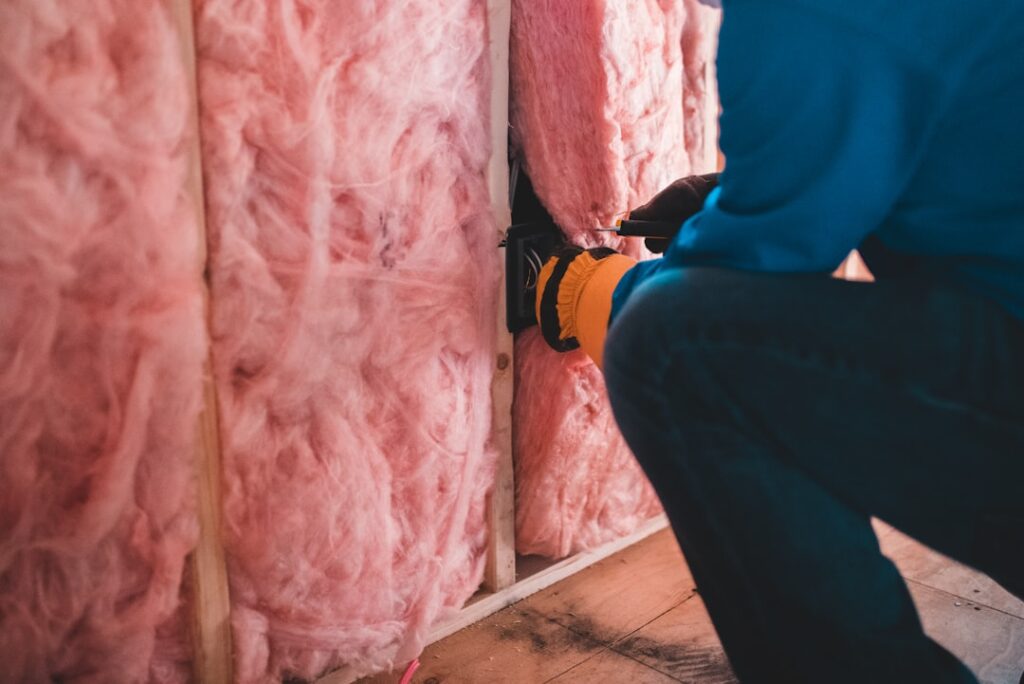
Vinyl faced insulation is fiberglass or mineral wool insulation covered on one side with a durable vinyl facing that acts as both a finished surface and a vapor retarder. It is commonly used in basements, crawl spaces, metal buildings, and exposed walls where appearance, moisture control, and easy cleaning matter. The vinyl layer gives the insulation a tidy, washable face while helping manage humidity, making it a practical choice for spaces that would otherwise show raw fiberglass.
This guide explains what vinyl faced insulation is, where it works best, how to read its R-value, the role of its vapor barrier, and how to install it safely and effectively.
What Vinyl Faced Insulation Is
At its core, this product is standard fiberglass or mineral wool batt or blanket insulation laminated with a vinyl sheet on the exposed face. The vinyl facing is typically white or light colored, giving walls and ceilings a clean, reflective, finished appearance without the need for additional drywall or paneling in some applications.
The facing serves several purposes at once. It resists moisture, wipes clean, holds up to handling, and presents a neat surface in areas left exposed. Because the vinyl acts as a vapor retarder, it also helps control how moisture moves through the assembly, an important factor in basements, metal buildings, and other spaces prone to condensation.
Where Vinyl Faced Insulation Works Best
This insulation shines in applications where the surface stays visible and moisture is a concern. Its washable, durable face makes it a favorite in utilitarian spaces.
- Metal buildings and pole barns, where the white facing brightens the interior and resists moisture from condensation.
- Basements and crawl spaces, where humidity control and a finished look are both valuable.
- Garages and workshops, where the surface needs to handle dust and occasional wiping.
- Agricultural and commercial structures, where a clean, hygienic surface is required.
Because the vinyl face is finished and washable, these spaces often skip additional wall covering, saving time and cost. It is less common in finished living areas, where drywall typically goes over standard faced or unfaced insulation, but it excels anywhere the insulation itself doubles as the visible surface.
Understanding R-Value
R-value measures how well insulation resists heat flow, and higher numbers mean better thermal performance. Vinyl faced insulation comes in a range of R-values depending on its thickness and the material, just like standard fiberglass.
The right R-value for your project depends on your climate, the part of the building you are insulating, and local building codes. Walls, ceilings, and floors each have recommended ranges, and colder climates call for higher values. The vinyl facing itself adds little to the R-value; its main jobs are moisture control and appearance. Always check the product’s stated R-value and confirm it meets the requirements for your region and application before buying.
The Vapor Barrier Role
One of the biggest advantages of vinyl faced insulation is its built-in vapor retarder. The vinyl facing slows the movement of water vapor, helping to prevent condensation from forming inside walls and ceilings where it could cause mold, rot, or reduced insulation performance.
Correct orientation is critical. As a general rule, the vapor retarder faces the warm, conditioned side of the assembly, but the right placement depends on your climate, so follow local building codes and the manufacturer’s guidance. Installing a vapor barrier on the wrong side can trap moisture and cause problems rather than prevent them. In metal buildings especially, controlling condensation is a primary reason to choose a faced product, since bare metal surfaces are prone to sweating.
Installation Tips
Proper installation determines how well the insulation performs. Take your time and follow the manufacturer’s instructions for your specific product and application.
- Measure and cut batts to fit snugly between framing or supports without compressing them, since compression reduces R-value.
- Orient the vinyl face toward the correct side of the assembly per code and manufacturer guidance.
- Fasten or secure the facing as directed, and seal seams and tabs to maintain a continuous vapor retarder.
- Fit insulation carefully around obstructions, wiring, and fixtures to avoid gaps that let heat and moisture pass.
- Overlap or tape seams where specified so the vapor barrier stays intact.
Gaps, compression, and torn facing all undermine performance, so work methodically and inspect your work for full, even coverage.
Safety When Handling Insulation
Fiberglass and mineral wool can irritate skin, eyes, and lungs, so protect yourself throughout the job. Wear long sleeves, gloves, safety glasses, and a properly rated dust mask or respirator to avoid inhaling fibers, and follow the safety directions printed on the product.
Work in a ventilated area, keep the workspace clean, and wash exposed skin afterward to remove any clinging fibers. Keep children and pets away from the work zone. If your project involves electrical work, large or complex assemblies, or you are unsure about vapor barrier placement in your climate, consult a qualified professional. Doing the job right and safely ensures the insulation performs as intended for the long haul.
Comparing Vinyl Faced to Other Facings
Insulation comes with several facing options, and understanding how vinyl compares helps you choose well. Kraft paper facing is the most common in standard wall and ceiling applications; it is inexpensive and acts as a vapor retarder but is flammable and not meant to be left exposed. Foil facing reflects radiant heat and resists moisture, making it useful in certain climates and applications, but it too is usually covered.
Vinyl facing stands apart because it is durable, washable, and designed to remain visible. That makes it the preferred choice in metal buildings, basements, and workshops where the insulation doubles as the finished surface. Unfaced insulation, by contrast, has no facing at all and is used where a separate vapor barrier is installed or where adding insulation over an existing vapor retarder. Match the facing to whether the surface will be covered, how much moisture is present, and how durable and clean the visible surface needs to be.
Is Vinyl Faced Insulation Right for You?
Vinyl faced insulation is an excellent choice when you want a single product that insulates, controls moisture, and provides a clean, washable finished surface, particularly in metal buildings, basements, crawl spaces, and workshops. It saves the step of adding wall covering in exposed applications and helps guard against condensation in moisture-prone spaces. For finished living rooms where drywall will cover the walls, a standard faced or unfaced insulation paired with the correct vapor strategy may be more appropriate. Match the R-value to your climate, orient the vapor barrier correctly, and install carefully, and this versatile product will keep your space comfortable, dry, and tidy for years.