Vinyl fencing is sold as “maintenance-free,” and that is mostly true, but it is not stain-free. Left alone, a white vinyl fence collects green algae, black mildew spots, orange rust streaks from sprinklers, and a gray film of dust and pollen that dulls the whole run. The right vinyl fence cleaner brings it back to bright white in an afternoon, and knowing which products to reach for, and which to avoid, keeps you from scratching or dulling the very surface you are trying to restore. Here is how to clean vinyl fencing the right way.
Part of our Decks & Outdoor guide — explore the full guide →
Why Vinyl Fences Get Dirty in the First Place
Vinyl (PVC) has a smooth, non-porous surface, which is why dirt sits on top rather than soaking in. But that same surface is a happy home for organic growth in shady, damp spots. Mold and mildew feed on airborne spores and moisture, algae greens up the north-facing sides that stay wet, and iron in sprinkler and well water leaves rust stains. Understanding the stain tells you which cleaner to use, since a rust streak needs a different approach than a mildew colony.
Everyday Cleaning: Start Simple
For routine dust, pollen, and light grime, you rarely need anything harsh. A bucket of warm water with a few squirts of dish soap and a soft-bristle brush or sponge handles most general cleaning. Wet the fence, scrub in sections, and rinse with a garden hose before the soap dries. Do this once or twice a year and you will keep most staining from ever taking hold. Always work top to bottom so dirty runoff does not streak areas you have already cleaned, then rinse bottom to top and top to bottom to finish.
Tackling Mold, Mildew, and Algae
Green and black growth is the most common vinyl complaint, and it responds well to a mild bleach or vinegar solution.
- Vinegar mix: One part white vinegar to one part water is a gentle, eco-friendly option for light mildew.
- Bleach mix: For stubborn black mildew, a solution of about one part bleach to four parts water is effective. Wear gloves and eye protection, and protect nearby plants by wetting them first and rinsing after.
- Oxygen bleach: A safer alternative to chlorine bleach that is gentler on landscaping and still kills growth.
Apply, let it dwell for several minutes so it can work, scrub with a soft brush, and rinse thoroughly. Do not let any bleach solution dry on the surface.
Commercial Vinyl Fence Cleaners
When you want a purpose-made product, several categories of commercial vinyl fence cleaner do the job well. Multi-surface outdoor cleaners and dedicated vinyl and PVC cleaners are formulated to lift grime without harming the material. Mold-and-mildew removers with mildewcides both clean and help slow regrowth. Popular options include general-purpose exterior cleaners and vinyl-siding cleaners, which work equally well on fencing since it is the same material. Always read the label, confirm it is safe for vinyl, and follow the dilution instructions exactly.
Removing Tough and Specialty Stains
Rust
Orange sprinkler and well-water stains need an oxalic-acid-based rust remover or a product made for rust on vinyl. General cleaners will not touch true rust. Apply per directions, keep it off surrounding metal hardware, and rinse well.
Scuffs and Marks
Black rubber scuffs and light marks often wipe away with a magic eraser (melamine foam) used gently. Test in an inconspicuous spot first, since aggressive rubbing can dull the sheen.
Grease and Grill Splatter
A degreasing dish soap or a diluted all-purpose degreaser cuts oily stains near cooking areas.
Should You Use a Pressure Washer?
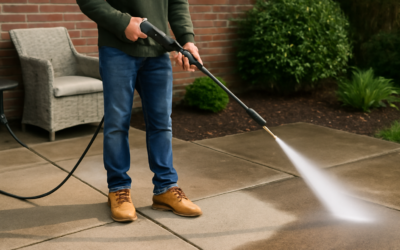
A pressure washer is fast and satisfying, but on vinyl it demands restraint. Use a wide fan tip, keep the pressure low (around 1,500 PSI or less), and hold the nozzle at least a foot from the surface. Too much pressure or too close a pass can gouge the vinyl, force water behind panels, or blast dirt into the material. For most homeowners, a garden hose with a spray nozzle plus a brush is safer and nearly as effective. If you do pressure wash, spray at an angle, never straight into seams and rail connections.
What Never to Use on Vinyl
The wrong tools cause permanent damage that no cleaner can fix. Avoid these entirely:
- Abrasive scrubbers like steel wool or scouring pads, which scratch the glossy surface and make future staining worse.
- Harsh solvents such as acetone, paint thinner, or nail polish remover, which can etch or cloud the vinyl.
- Undiluted bleach left to dry, which can discolor the surface and kill plants.
- High-pressure close-range washing, which gouges and drives water into the panels.
Keeping It Clean Longer
A little prevention stretches the time between deep cleans. Trim back shrubs and grass touching the fence to improve airflow and reduce the damp shade where mildew thrives. Aim sprinklers away from the fence to avoid rust and hard-water spotting. Some owners apply a vinyl-safe protectant or a car-wax-style product to the clean surface, which helps water and dirt bead off and slows regrowth. A quick hose-down every few weeks during pollen and algae season keeps buildup from setting in.
Bottom Line
Vinyl fencing cleans up beautifully when you match the method to the mess: soapy water for routine grime, a vinegar or diluted bleach solution for mold and mildew, and a dedicated rust remover for iron stains. Skip abrasives, harsh solvents, and high-pressure close washing that damage the surface. With a soft brush, the right cleaner, and a yearly routine, your fence will stay bright white and looking new for its full lifespan.