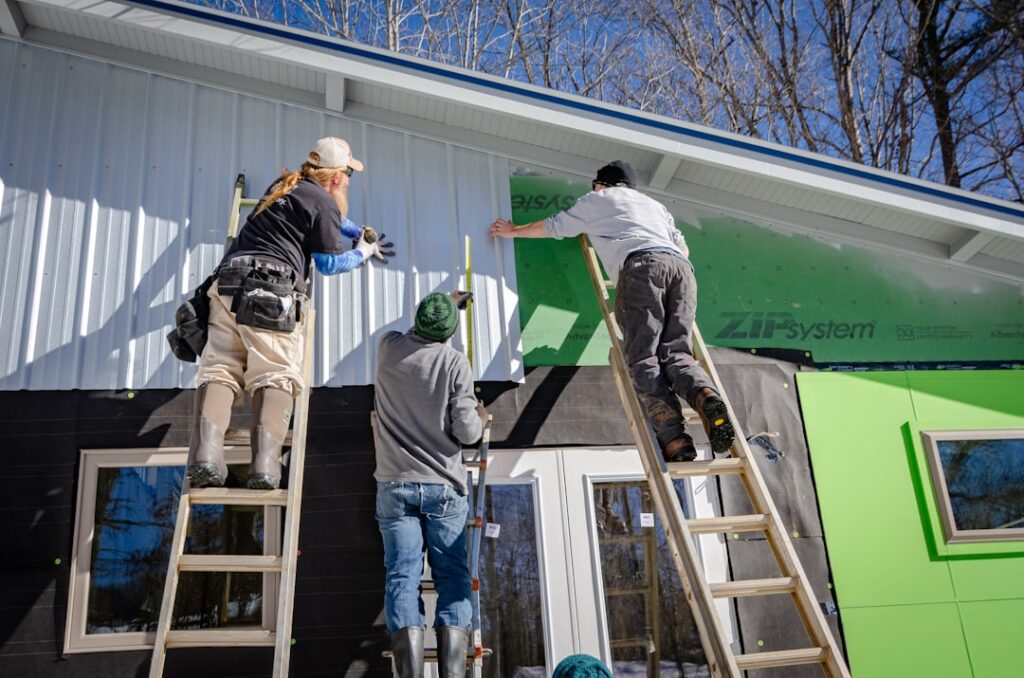
When your home’s siding starts cracking, warping, or looking worn out, understanding the vinyl siding replacement cost helps you budget properly and avoid sticker shock. Replacement is a bigger project than new installation because you’re paying for tear-off and disposal of the old material on top of the new siding and labor.
With over three decades of experience helping homeowners navigate exterior renovation projects, we’ve put together this comprehensive pricing guide so you know exactly what to expect. Every number here reflects real-world 2026 pricing, not outdated estimates.
Total Vinyl Siding Replacement Cost
The total vinyl siding replacement cost for a typical 1,500-square-foot home ranges from $7,000 to $18,000. The national average sits around $11,500. This includes removing the old siding, any necessary repairs to the underlying structure, new materials, and professional installation.
Here’s how that breaks down by component:
- Old siding removal and disposal: $1,000 – $3,500
- Sheathing and substrate repairs: $0 – $3,000 (if needed)
- New housewrap/moisture barrier: $500 – $1,500
- New vinyl siding materials: $2,000 – $7,000
- Trim, corners, and accessories: $500 – $2,500
- Installation labor: $2,500 – $6,000
- Permits and inspections: $100 – $500
The wide range reflects differences in home size, siding grade, geographic location, and the condition of the existing structure beneath the old siding. Homes with significant rot or damage underneath will cost more due to necessary structural repairs.
Old Siding Removal Costs
The removal phase is what separates replacement from new installation and adds $1,000 to $3,500 to your total project cost. Several factors affect removal pricing:
Type of existing siding. Vinyl-over-vinyl removal is the simplest and cheapest. Vinyl over wood clapboard is moderate. Removing old asbestos-containing siding (common on homes built before 1980) requires specialized abatement contractors and can cost $5,000 to $15,000 for safe removal and disposal.
Number of layers. Some homes have multiple layers of siding stacked on top of each other. Each layer adds removal time and disposal volume. Two-layer removal typically costs 50-75% more than single-layer.
Disposal fees. Most contractors include disposal in their removal quote, but confirm this in writing. Dumpster rental runs $300 to $600, and some landfills charge additional fees for construction debris. If asbestos is present, disposal must go to a certified facility at significantly higher cost.
Accessibility. Ground-level removal is straightforward. Second and third-story removal requires scaffolding or lift equipment, which adds $500 to $2,000 to the project. Complex architectural features also slow the process.
Replacement Cost by House Size
Your home’s size is the primary driver of total vinyl siding replacement cost. These estimates assume mid-grade vinyl siding with standard removal of one layer of existing siding:
- 1,000 sq ft home (approx. 1,200 sq ft exterior): $5,500 – $12,000
- 1,500 sq ft home (approx. 1,800 sq ft exterior): $7,000 – $18,000
- 2,000 sq ft home (approx. 2,500 sq ft exterior): $10,000 – $22,000
- 2,500 sq ft home (approx. 3,000 sq ft exterior): $13,000 – $28,000
- 3,000 sq ft home (approx. 3,500 sq ft exterior): $16,000 – $35,000
Remember that exterior square footage differs from interior living space. A two-story home has more exterior wall area per square foot of living space than a ranch. Your contractor will measure the actual exterior surface to provide an accurate quote.
New Siding Options and Their Costs
When replacing vinyl siding, you’re not limited to vinyl. Here are your options with installed costs per square foot:
Standard vinyl siding ($3 – $7/sq ft installed). The most budget-friendly option. Modern vinyl comes in a wide range of colors and profiles. Maintenance is minimal — just occasional cleaning. Lifespan of 20-40 years depending on grade.
Insulated vinyl siding ($5 – $10/sq ft installed). Foam-backed vinyl panels that improve energy efficiency by R-2 to R-5. The insulation also makes panels more rigid and impact-resistant. A smart upgrade if you’re in a climate with extreme temperatures.
Fiber cement siding ($8 – $15/sq ft installed). James Hardie is the dominant brand. Fiber cement resists fire, rot, and insects. It holds paint better than wood and is available in lap, shake, and panel profiles. Requires repainting every 10-15 years.
Engineered wood siding ($7 – $12/sq ft installed). LP SmartSide is the market leader. It offers the authentic look and feel of real wood with improved moisture and insect resistance. Requires painting or staining but less frequently than natural wood.
Natural wood siding ($10 – $20/sq ft installed). Cedar and redwood remain popular for their natural beauty. However, wood demands the most maintenance of any siding type — painting or staining every 3-7 years, plus regular inspection for rot and insect damage.
Hidden Costs to Watch For
The vinyl siding replacement cost quoted by a contractor doesn’t always include everything. Watch for these common extras that can inflate your final bill:
Structural repairs. Once old siding comes off, contractors sometimes discover rotted sheathing, damaged framing, or insect damage that wasn’t visible before. Budget a 10-15% contingency for unexpected structural repairs. Replacing a full sheet of OSB sheathing runs $75 to $150 per sheet installed.
Soffit and fascia replacement. If your soffit and fascia are deteriorating, it makes sense to replace them during a siding project while scaffolding is already in place. Expect $1,500 to $4,500 depending on your home’s perimeter.
Window and door trim. New siding often makes old trim look worn by comparison. Replacing exterior trim around windows and doors adds $150 to $400 per opening.
Gutter re-hanging. Gutters must come down before siding removal and be reinstalled after. If your gutters are old or damaged, this is an ideal time to replace them. New gutter installation runs $1,000 to $3,000.
Lead paint considerations. Homes built before 1978 may have lead paint on existing wood siding or trim. Federal RRP (Renovation, Repair, and Painting) rules require certified contractors to follow specific lead-safe work practices, which increases labor costs.
When to Replace vs. Repair
Full replacement isn’t always necessary. Here’s how to decide:
Repair makes sense when:
- Damage is limited to a few panels or a small section
- The rest of the siding is in good condition
- You can find matching replacement panels
- The underlying structure is sound
- Your siding is less than 15 years old
Replacement is the better choice when:
- Damage or deterioration is widespread across multiple walls
- Siding is warped, buckled, or cracked in numerous locations
- Matching panels are no longer available (the color or profile has been discontinued)
- You’re experiencing moisture problems behind the siding
- Energy bills have increased noticeably
- The siding is more than 25 years old and showing its age
Individual panel replacement costs $150 to $400 per panel including labor. A partial wall repair runs $500 to $2,000. When repair costs start approaching 30-40% of full replacement cost, replacement becomes the smarter investment.
Hiring the Right Contractor
Siding replacement is not a project to award to the lowest bidder. Here’s what to look for when selecting a contractor:
- Licensing and insurance: Verify active state and local licensing plus general liability and workers’ compensation insurance
- Experience with siding: Look for contractors who specialize in exterior cladding, not general handymen
- Manufacturer certification: Certified installers from brands like CertainTeed, Alside, or Ply Gem have completed training that general contractors may lack
- Written detailed estimates: Every cost component should be itemized — materials, labor, removal, disposal, permits, and contingencies
- References and portfolio: Ask for at least three recent references and photos of completed projects
- Warranty coverage: Understand both the manufacturer’s product warranty and the contractor’s workmanship warranty
Get a minimum of three quotes. Be wary of estimates that seem dramatically lower than others — they often indicate corners will be cut on materials, labor, or proper installation techniques.
Financing Your Siding Replacement
If the vinyl siding replacement cost exceeds your cash reserves, several financing options exist:
Home equity loan or HELOC: Typically the lowest interest rates since your home secures the loan. Interest may be tax-deductible. Best for homeowners with significant equity.
Personal loan: Unsecured loans from banks or online lenders offer fixed rates and terms of 3-7 years. Rates are higher than home equity products but approval is faster and your home isn’t collateral.
Contractor financing: Many siding companies offer financing through third-party lenders. Convenience is the main advantage, but compare rates carefully — they’re often higher than what you could find independently.
Energy efficiency incentives: If you’re upgrading to insulated vinyl siding, check for local utility rebates or state energy efficiency incentives. Some programs offer rebates of $500 to $2,000 for qualifying exterior insulation upgrades.
Frequently Asked Questions
How much does it cost to replace vinyl siding on a 1,500-square-foot house?
Replacing vinyl siding on a 1,500-square-foot home typically costs $7,000 to $18,000 including removal of old siding, new materials, and installation. The exact cost depends on the vinyl grade you select, your location, and the condition of the underlying structure.
Can you put new vinyl siding over old vinyl siding?
Technically yes, but we don’t recommend it. Installing over existing siding hides potential moisture damage and rot underneath. It also adds weight to the wall, can create an uneven surface, and may void the new siding warranty. The added cost of proper removal is worth it for a quality result that lasts.
How long does vinyl siding replacement take?
A typical siding replacement on a 1,500 to 2,000-square-foot home takes 5 to 10 working days. This includes 1-2 days for removal, 1-2 days for any necessary repairs and housewrap installation, and 3-5 days for new siding installation. Weather delays can extend the timeline.
Is it worth replacing vinyl siding before selling a house?
New siding can recoup 68-75% of its cost at resale and significantly improves curb appeal, which helps sell homes faster. If your existing siding is in poor condition, replacement before listing is usually a worthwhile investment. If it’s merely dated but functional, a professional power washing might be sufficient.
What time of year is cheapest for siding replacement?
Late fall and winter typically offer the best pricing because contractor demand drops. You can save 10-20% on labor during the off-season. However, extreme cold can make vinyl siding more brittle and difficult to work with, so discuss temperature limitations with your contractor if scheduling a winter project.