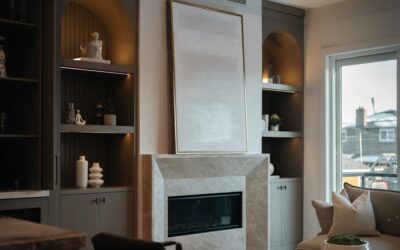
A floor-to-ceiling wall of bookshelves is the rare home upgrade that adds visual drama, real storage, and sound dampening all at once. Done well, it transforms a generic living room or home office into a space that feels custom and considered. Done poorly, it sags under the weight of paperbacks, wobbles on uneven baseboards, or looks like a cobbled-together IKEA stack. Here is what separates the libraries that look architectural from the ones that look DIY.
Design Direction Before Material Choice
Three styles dominate residential libraries. Built-in millwork (custom face frames, painted finish, integrated lighting) gives the most premium look and runs 8,000 to 25,000 dollars for an 8-foot wide installation. Modular floor-to-ceiling units (BILLY hacks, MALM-style, or California Closets) deliver 60-80 percent of the look for a fraction of the cost. Open metal-and-wood industrial systems work best in modern spaces.
Pick the style first, then size the materials and budget to match. Mixing direction mid-project always reads as compromise.
Real Cost Breakdowns
- IKEA BILLY hack with crown and base — 800 to 1,800 dollars in materials for an 8-foot wall
- Mid-range custom built-ins (paint-grade) — 5,000 to 12,000 dollars installed
- High-end built-ins (stain-grade hardwood, lighting) — 15,000 to 35,000 dollars installed
- Modular ladder systems with track — 2,500 to 6,000 dollars for an 8-foot wall
- Industrial pipe-and-board open shelving — 600 to 1,800 dollars in materials
Custom millwork commands premium pricing because of the labor involved in scribing to walls, integrating crown to ceilings, and finishing on site.
Wood Selection and Material Quality
Plywood with hardwood face veneer (typically maple, white oak, or walnut) is the gold standard for built-ins. The plywood core resists warping under weight, and the veneer face takes paint or stain beautifully. Avoid MDF for shelves longer than 30 inches; it sags within a few years under book weight.
For a paint finish, 3/4-inch maple plywood is standard. For stained natural finish, white oak or walnut plywood (around 100-180 per sheet) gives the cleanest grain. Edge banding the front of every shelf with matching solid wood prevents the plywood layers from showing.
Shelf Span and Sag Prevention
This is the most overlooked detail in DIY libraries. Books are heavy — about 25 pounds per linear foot for a packed shelf. Maximum recommended unsupported spans:
- 3/4-inch plywood: 30-32 inches max span
- 3/4-inch hardwood (oak, maple): 36 inches max span
- 3/4-inch MDF: 24 inches max (avoid for books)
- 1-inch hardwood: 42-48 inches max
For longer spans, add a sturdy back panel attached to the shelf with screws, or add a center vertical divider. A simple 1×2 hardwood strip glued and screwed to the front edge of a 3/4-inch plywood shelf nearly doubles the load capacity.
Anchoring to Walls and Floors
A wall of bookshelves loaded with books can hold 1,500-3,000 pounds. Anchoring is non-negotiable. Find studs with a magnetic stud finder, then drive 3-inch wood screws through the back panel into at least every other stud at top and bottom rails. Toggle bolts are inadequate for this kind of weight.
If your floors slope (most older homes do), shim the unit level before attaching. A bookshelf that is out of plumb by half an inch reads as crooked across an 8-foot height. Use a 6-foot level to confirm vertical alignment before fastening.
Lighting That Elevates the Wall
Three lighting layers transform a bookshelf from storage into a feature:
- Recessed LED strip on the underside of each shelf (Hue Lightstrip, Govee, or hardwired tape) — about 30 dollars per 16-foot run.
- Picture lights mounted at the top of the unit pointing down — gives a library/gallery feel.
- Dimmable warm-white bulbs at 2700K — never use cool white in a reading space.
For dramatic effect, install lighting on a separate switch from the room’s main lights. Reading nooks need 50-75 foot-candles; ambient bookshelf glow needs only 10-20.
Styling Beyond Books
A pure wall of bookshelves crammed with paperbacks looks academic. Mix in objects to break the visual rhythm. Aim for roughly 70 percent books and 30 percent objects. Good objects include framed art, ceramic vases, sculpture, baskets, and family photos in matched frames. Avoid mass-market knick-knacks; they read as clutter.
Group books by color for a designed look, or by category for a lived-in library feel. Both work. The mistake is mixing the two on the same shelf.
Common Mistakes to Avoid
Skipping the back panel saves money but eliminates the ability to securely anchor the unit and dramatically reduces rigidity. Using cheap melamine shelving on long spans guarantees sag within 3-5 years. Painting plywood without sealing the edges first creates fuzzy raw-grain edges that catch dust and look cheap.
Finally, do not undersize the unit. A built-in that stops 12 inches short of the ceiling looks like a budget compromise. Run shelves all the way up and add crown molding to seal the gap. The visual payoff is worth the extra material.
Hiring a Pro vs DIY
If you have intermediate woodworking skills, a track saw, and a Kreg jig, an IKEA-hack built-in is achievable in a weekend. True custom built-ins require a finish carpenter or cabinet shop. Vet the contractor by asking to see at least two completed projects in person, not just photos. Confirm they sized shelves correctly for book loads — many trim carpenters default to 36-inch spans without thinking about deflection over time. The right pro will save you from sag, sloppy scribes, and uneven finishes that haunt the wall for years.